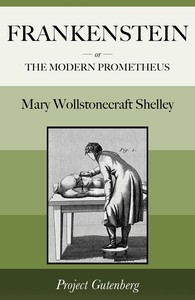
Frankenstein
Mary Shelley, 1818
A young scientist makes life and then cannot face what he has made. Told in nested voices, it asks who owes what to whom, and why ambition so often ends in solitude.
 BookFeed Ελληνικά
Solitude takes different shapes in these books: a scientist alone with what he has made, a clerk in sunstruck Algiers who reports his own indifference with unnerving calm, a shy lodger hiding upstairs while the neighbourhood dances below. You might want them when being alone feels like something to understand rather than fix.
A page that shows it
A mind wakes up with no history, and nobody to ask.
“But where were my friends and relations? No father had watched my infant days, no mother had blessed me with smiles and caresses; or if they had, all my past life was now a blot, a blind vacancy in which I distinguished nothing. From my earliest remembrance I had been as I then was in height and proportion. I had never yet seen a being resembling me or who claimed any intercourse with me. What was I? The question again recurred, to be answered only with groans. Mary Shelley, 1818
A young scientist makes life and then cannot face what he has made. Told in nested voices, it asks who owes what to whom, and why ambition so often ends in solitude.
Αλέξανδρος Παπαδιαμάντης, 1892
A shy, poetry-writing lodger hides upstairs while the whole neighbourhood dances below him — and spends Carnival night richer than anyone at the party.
Albert Camus, 1942
A clerk in sunstruck Algiers reports his own indifference to love, grief and guilt with unnerving calm.
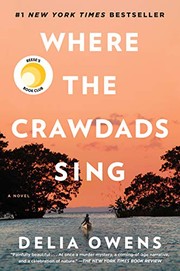
Delia Owens, 2018
A marsh-raised girl, a suspicious death, and a wild coast that keeps its secrets—for readers who want nature writing with a human mystery at the edge.
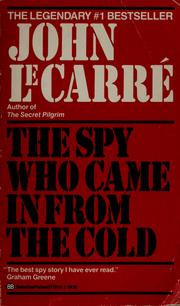
John le Carré, 1963
The spy novel that made betrayal a literary subject: a burned-out agent, a divided Berlin, and no clean hands.
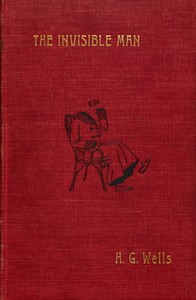
H. G. Wells, 1897
A stranger arrives at a country inn wrapped head to foot in bandages, and a small English village discovers that being unseen is not the same as being free.
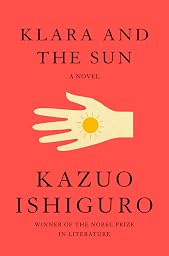
Kazuo Ishiguro, 2021
An artificial friend watches a child and the people who love her, trying to learn what makes a person singular—and whether love can be copied.
Κώστας Καρυωτάκης, 1928
The poet of Greek disillusionment: ironic, musical verses about failed hopes, dull offices, and the strange comfort of knowing nothing lasts.
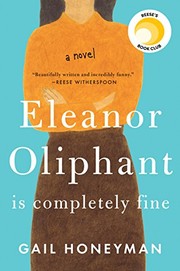
Gail Honeyman, 2017
A woman who has arranged her life into perfect, narrow routines discovers that a small kindness can crack it open.
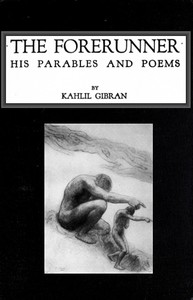
Kahlil Gibran, 1892
An allegorical journey into the deepest chambers of the human heart, where wisdom is found not in answers, but in the language of nature and solitude.
Anne Brontë, 1847
A clergyman's daughter with no money takes a post as a governess and learns how little the world allows a woman who must earn her own bread.
Henry David Thoreau, 1854
A two-year experiment in living cheaply beside a pond, written as a running argument with your own busyness, your possessions, and the life you assumed you had to lead.
Όμηρος, -750
A war ten years old and still not won: the quarrel, the losses, and the two impossible choices that keep people fighting.
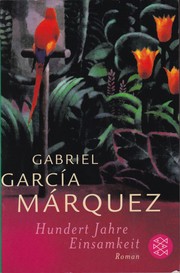
Gabriel García Márquez, 1967
Seven generations of the Buendía family in a town where magnets, ice and alchemy are real—and solitude runs in the blood.
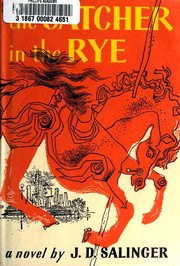
J. D. Salinger, 1951
A prep-school dropout drifts through New York for a few days, allergic to phonies and desperate to protect someone younger.
Κώστας Κρυστάλλης, 1890
Songs and poems of the mountains, village life, homesickness and desire, alive with the sounds and landscapes of Epirus.
Saul Bellow, 1959
A rich, enormous, furious American tells his own life at full volume: wives, a farm, a debt of love, and a hunger for something he can't name.
Nathaniel Hawthorne, 1837
Short fables from Puritan New England: veiled ministers, men who step out of their own lives, and the strange, small hours before dawn.
Carsten Henn, 2020
A bookseller who carries books to readers' doors, and a widowed reader who judges novels by their cover colour.
John Grisham, 2001
A couple decides to skip Christmas entirely—no tree, no gifts, no parties—and discovers how much the holiday costs them in every sense.
Κ.π. Καβαφης, 1935
The 154 poems Cavafy chose to keep, plus thirteen he hid — history, desire and irony in a voice that still sounds like nobody else's.
Γιώργος Σαραντάρης, 1935
A young Greek poet and diarist writes to a woman he loves and to his own disappearing self, in verse and feverish prose, months before his early death.
J.-K. Huysmans, 1884
A jaded aristocrat builds a house for one, fills it with jewels, liqueurs and strange books, and tries to live entirely on his nerves.
Μιχαήλ Μητσάκης, 1896
A stranger shoots himself in a Patras hotel. A passer-by walks the simmering town at night, and the night turns the suicide into a mirror.
The moment a man decides he has nothing left to confess.
I don’t know why, but something inside me snapped. I started yelling at the top of my lungs, and I insulted him and told him not to waste his prayers on me. I grabbed him by the collar of his cassock. I was pouring out on him everything that was in my heart, cries of anger and cries of joy.The Stranger · Albert Camus
The speech that strips the glamour off spying, one vice at a time.
What do you think spies are: priests, saints, and martyrs? They’re a squalid procession of vain fools, traitors too, yes; pansies, sadists and drunkards, people who play cowboys and Indians to brighten their rotten lives. Do you think they sit like monks in London balancing the rights and wrongs? I’d have killed Mundt if I could, I hate his guts; but not now. It so happens that they need him. They need him so that the great moronic mass that you admire can sleep soundly in their beds at night. They need him for the safety of ordinary, crummy people like you and me.The Spy Who Came in from the Cold · John le Carré
What it feels like to watch your own hands disappear.
“The pain had passed. I thought I was killing myself and I did not care. I shall never forget that dawn, and the strange horror of seeing that my hands had become as clouded glass, and watching them grow clearer and thinner as the day went by, until at last I could see the sickly disorder of my room through them, though I closed my transparent eyelids. My limbs became glassy, the bones and arteries faded, vanished, and the little white nerves went last. I gritted my teeth and stayed there to the end. At last only the dead tips of the fingernails remained, pallid and white, and the brown stain of some acid upon my fingers.The Invisible Man · H. G. Wells
Read pages from books like this, one at a time
Keep reading in the feedRead pages from books like this, one at a time
BookFeed is a feed of real passages from real books. It learns what moves you and finds your next book.
Open BookFeedFree, no sign-up.