
Agnes Grey
Anne Brontë (1820–1849), 1847
★ 3.72 from 88k ratings on Goodreads
A clergyman's daughter with no money takes a post as a governess and learns how little the world allows a woman who must earn her own bread. A quiet, first-person account of governess life, steady and plain in voice, with a melancholy undertow and sharp notice of social slights.
Feels like melancholy, tenderness and hope. About solitude, identity and love.
Who it’s for
You may like it if you appreciate quiet Victorian fiction about work, class and a woman’s sense of self. The period prose and Agnes’s narrow, often lonely governess routine can make some stretches feel slow and grim.
Why read it
It offers a clear-eyed look at how money and class shape a woman's choices, told with restraint and moral seriousness rather than romantic gloss.
Pages from the book
When the thought that hurts is the one you keep returning to.
But, if those thoughts brought delight, it was a painful, troubled pleasure, too near akin to anguish; and one that did me more injury than I was aware of. It was an indulgence that a person of more wisdom or more experience would doubtless have denied herself. And yet, how dreary to turn my eyes from the contemplation of that bright object and force them to dwell on the dull, grey, desolate prospect around: the joyless, hopeless, solitary path that lay before me. It was wrong to be so joyless, so desponding; I should have made God my friend, and to do His will the pleasure and the business of my life; but faith was weak, and passion was too strong. The last look back at a house you may never see again.
We crossed the valley, and began to ascend the opposite hill. As we were toiling up, I looked back again; there was the village spire, and the old grey parsonage beyond it, basking in a slanting beam of sunshine—it was but a sickly ray, but the village and surrounding hills were all in sombre shade, and I hailed the wandering beam as a propitious omen to my home. With clasped hands I fervently implored a blessing on its inhabitants, and hastily turned away, for I saw the sunshine was departing; and I carefully avoided another glance, lest I should see it in gloomy shadow, like the rest of the landscape. Why we hide the thoughts we are least ashamed of.
I began this book with the intention of concealing nothing; that those who liked might have the benefit of perusing a fellow-creature’s heart: but we have some thoughts that all the angels in heaven are welcome to behold, but not our brother-men—not even the best and kindest amongst them. Anne Brontë.Anne, the youngest Brontë, died at 29 in Scarborough — the only sister buried away from Haworth. Agnes Grey appeared the year before, in 1847.
Books that feel like this

More by Anne Brontë
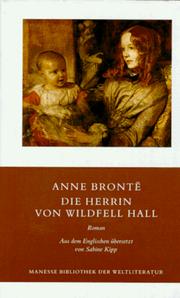
The Tenant of Wildfell Hall
Anne Brontë, 1847
In a world governed by rigid social expectations, one woman fights to protect herself and her son from a marriage that is destroying them.
Where to get it
Some of these links earn us a small commission, at no cost to you. It keeps BookFeed free.
Questions readers ask
- Is Agnes Grey for me?
- You may like it if you appreciate quiet Victorian fiction about work, class and a woman’s sense of self. The period prose and Agnes’s narrow, often lonely governess routine can make some stretches feel slow and grim.
- What is Agnes Grey like?
- A quiet, first-person account of governess life, steady and plain in voice, with a melancholy undertow and sharp notice of social slights. Feels like melancholy, tenderness and hope. About solitude, identity and love.
- What should I read after Agnes Grey?
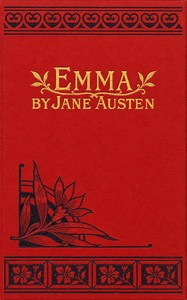
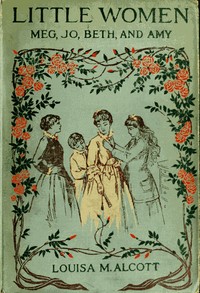
- If you liked Agnes Grey, try Tess of the d'Urbervilles (Thomas Hardy), Emma (Jane Austen) and Little Women (Louisa May Alcott).
A taste of the feed
The moment when the boundaries between sight, sound, and emotion collapse.
Tess was conscious of neither time nor space. The exaltation which she had described as being producible at will by gazing at a star came now without any determination of hers; she undulated upon the thin notes of the second-hand harp, and their harmonies passed like breezes through her, bringing tears into her eyes. The floating pollen seemed to be his notes made visible, and the dampness of the garden the weeping of the garden’s sensibility. Though near nightfall, the rank-smelling weed-flowers glowed as if they would not close for intentness, and the waves of colour mixed with the waves of sound.
Tess of the d'Urbervilles · Thomas Hardy
Every honest confession leaves something out, and it rarely matters.
Seldom, very seldom, does complete truth belong to any human disclosure; seldom can it happen that something is not a little disguised, or a little mistaken; but where, as in this case, though the conduct is mistaken, the feelings are not, it may not be very material.—Mr. Knightley could not impute to Emma a more relenting heart than she possessed, or a heart more disposed to accept of his.
Emma · Jane Austen
How hard it is to believe that other people are as real as you are.
We are all of us born in moral stupidity, taking the world as an udder to feed our supreme selves: Dorothea had early begun to emerge from that stupidity, but yet it had been easier to her to imagine how she would devote herself to Mr. Casaubon, and become wise and strong in his strength and wisdom, than to conceive with that distinctness which is no longer reflection but feeling—an idea wrought back to the directness of sense, like the solidity of objects—that he had an equivalent centre of self, whence the lights and shadows must always fall with a certain difference.
Middlemarch · George Eliot
Read pages from books like this, one at a time
Keep reading in the feed