
Ιλιάδα
Όμηρος, -750
★ 3.94 from 542.5k ratings on Goodreads
A war ten years old and still not won: the quarrel, the losses, and the two impossible choices that keep people fighting. A grave, swift-moving poem of rage and grief, with sudden tenderness, divine comedy, and long stretches of battlefield noise.
Feels like wonder, melancholy and longing. About love, death and nature.
Who it’s for
You may like it if you want a foundational war poem that takes gods, grief, and human stubbornness seriously. Be prepared for archaic language and long battle scenes with name lists that some readers find tedious.
Why read it
Read it for its unflinching look at quarrel and loss, and for the strange comfort of seeing the same human arguments echo across millennia.
Pages from the book
Two men meet between the armies, and one answers a question with leaves.
«Τὴν γενεάν μου τί ἐρωτᾶς, ἀτρόμητε Τυδείδη;Καὶ τῶν θνητῶν ἡ γενεὰ τῶν φύλλων ὁμοιάζει·τῶν φύλλων ἄλλα ὁ ἄνεμος χαμαὶ σκορπᾶ καὶ ἄλλαφυτρώνουν, ὡς ἡ ἄνοιξη τὰ δένδρ’ ἀναχλωραίνει·καὶ τῶν θνητῶν μιὰ γενεὰ φυτρώνει καὶ ἄλλη παύει. A man who has lost his son sits down to console the man who killed him.
Ἀλλ’ ἔλα τώρα κάθισε, καί, ἂν καὶ λυπημένοι,τοὺς πόνους τώρ’ ἂς κλείσωμεν στὰ βάθη τῆς ψυχῆς μας·καὶ τίποτε δὲν ὠφελοῦν τὰ μαῦρα κλάυματά μας˙ὅτι στοὺς ἄμοιρους θνητοὺς οἱ ἀθάνατοι δωρῆσαννὰ ζοῦν στὸν πόνον καὶ ἄλυποι μόνον ἐκεῖνοι μένουν.῞Οτι ἀπ’ ὅσα δίδει ὁ Ζεὺς πιθάρια δυὸ σιμά τουἔχει, τὸ ἕνα τῶν κακῶν, τῶν ἀγαθῶν τὸ ἄλλο.Καὶ σ’ ὅποιον δώσει ἀνάμικτα ὁ βροντητὴς Κρονίδης,ἐκεῖνος πότ’ ἔχει κακές, πότε ἀγαθὲς ἡμέρες,καὶ σ’ ὅποιον μόνον τὰ πικρά, τὸν κάμνει μαῦρον κι ἔρμονκαὶ στ’ ἅγιο πρόσωπο τῆς γῆς φρικτὴ τὸν σέρνει ἀνάγκηκαὶ ἀτίμητος ἀπὸ θεοὺς καὶ ἀνθρώπους παραδέρνει. The day an orphan is made is the day a child learns to beg at other people's tables.
Πάντερμο κάνει τὸ παιδὶ τῆς ὀρφανιᾶς ἡ μέρα·κορμὶ γέρνει καὶ πρόσωπο μὲ μάτια δακρυσμένα.Τὸν φέρν’ ἡ χρεία ν’ ἀνεβῆ στοὺς φίλους τοῦ πατρός του,τραβᾶ τοῦ ἑνὸς τὸ φόρεμα, τοῦ ἄλλου τὸν χιτώνα·καὶ ἂν κάποιος τὸν ψυχοπονῆ, καυκὶ μικρὸ τοῦ δίδει,δροσιὰ στὰ χείλη καὶ ποτὲ στὴν ἄκρην τ’ οὐρανίσκουΚαὶ κάποτε κτυπώντας τον ἀγόρι εὐτυχισμένοτὸν διώχνει ἀπὸ τὴν τράπεζαν, σκληρὰ τὸν ὀνειδίζει:«Γκρεμίσου, καὶ ὁ πατέρας σου στὸν δεῖπνον μας δὲν εἶναι». What readers say
Readers say the poem can feel hard going, with battle scenes and name lists that some find tedious, and a few prefer the Odyssey. Others are amused by the gods’ petty squabbling, gripped by the cinematic violence, or moved by its psychological depth.
Όμηρος.Which poems were Homer's and whether one man wrote them has been argued since antiquity; the Greeks themselves dated him right after the Trojan War.
Books that feel like this

More by Όμηρος
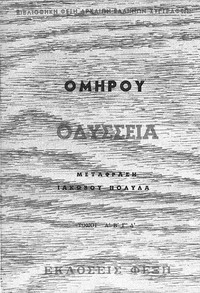
Ομήρου Οδύσσεια Τόμος Α
Όμηρος, -700
A prince discovers he is not the master of his house, a soldier turns down immortality, and a naked man falls asleep in a pile of leaves on a beach. The Odyssey, translated with a rough, sweet, immediate Greekness by the Ionian poet who gave it its modern Greek voice.

Οδύσσεια
Όμηρος, -750
The first road movie: a soldier spends ten years trying to get home, and every detour is a chance to get lost, forget who he is, or tell a very good story about it.
Where to get it
Some of these links earn us a small commission, at no cost to you. It keeps BookFeed free.
Questions readers ask
- Is Ιλιάδα for me?
- You may like it if you want a foundational war poem that takes gods, grief, and human stubbornness seriously. Be prepared for archaic language and long battle scenes with name lists that some readers find tedious.
- What is Ιλιάδα like?
- A grave, swift-moving poem of rage and grief, with sudden tenderness, divine comedy, and long stretches of battlefield noise. Feels like wonder, melancholy and longing. About love, death and nature.
- What should I read after Ιλιάδα?
- If you liked Ιλιάδα, try Μάκβεθ (Ουίλλιαμ Σαίξπηρ), Ανέκδοτα ποιήματα (Μαρία Πολυδούρη) and Έργα (Κώστας Κρυστάλλης).
A taste of the feed
The sentence you have heard a hundred times, in a translation that makes it hurt again.
ΣΕΥΤΩΝ Η βασίλισσα, αυθέντα σεβαστέ μου, απέθανε. ΜΑΚΒΕΘ Αργότερα ’μπορούσε ν’ αποθάνη (38). Ας ήτο κι’ άλλοτε καιρός αυτό να το ακούσω. Αύριον, και αύριον, και αύριον — και φεύγει ακολουθεί σιγά σιγά ημέρα την ημέραν, ως την εσχάτην συλλαβήν ’ς του Χρόνου το βιβλίον! Και κάθε χθες οπού περνά, ήτο φανός να φέξη μωρούς θνητούς να σκονισθούν ’ς τον δρόμον του θανάτου!
Μάκβεθ · Ουίλλιαμ Σαίξπηρ
Why a station the moment the train has gone is the loneliest place there is.
Τι θλιβερό πράμμα ο Σταθμός, που μόλις νάχη φύγει το τραίνο. Ούτε στιγμή, μολίς που εδώ στις ράγιες του βαριά σταματημένο και πηγαινοέρχονταν γοργά, ανίδεα γελώντας ταξειδιώτες. Κι’ όσοι που μείνανε κι’ αυτοί δεν έχουνε την όψη τους σαν τότες. Η άδεια θέση κ’ η σιωπή μεσ’ στο Σταθμό που τούφυγε το τραίνο. Κι’ αυτοί που μείνανε σκορπούν κ’ έχουν το βήμα το αποφασισμένο όσων τη μοίρα ακολουθούν.
Ανέκδοτα ποιήματα · Μαρία Πολυδούρη
The mountains renew themselves each spring; the speaker asks why he cannot.
Γεράματα δὲν ἔχετε καὶ χάρο δὲ φοβᾶστε· τὰ μεσημέρια ἁπλώνετε τὸν ἴσκιο στὸ διαβάτη, στὸ ζευγολάτη, στὸ βοσκό, στοῦ κοπαδιοῦ τὸν πλῆθο Τὴν νύχτα ὁλόρθα κι ἄγρυπνα πίνετε καὶ ροφᾶτε δροσιὰ βουνίσια ἀχόρταγα καὶ τὸ ταχύ, ὅταν φέγγη, ἐσεῖς παλάτια γίνεστε στὸν κότσυφα, στ’ ἀηδόνι. Ἐσᾶς σᾶς τρέφουν κρύα νερά, τὰ χιόνια σᾶς πλαταίνουν μωρὲ βουνά, ψηλὰ βουνά, ψηλὰ καὶ δασωμένα, τώρα ποὺ ὁ Μάης σᾶς γιόμωσε μ’ ἀνθούς, μὲ χλόη, μὲ νιάτα, γιατί δὲν ξανανιώνετε κι ἐσεῖς τὸ γέρο ἐμένα, σάμπως καινούργια γένονται καὶ σάμπως ξανανιώνουν τοῦτα τὰ χαμηλὰ κλαριὰ καὶ τὰ παλιὰ τὰ δέντρα, νὰ γίνω πάλι ὡς ἤμουν νιός, νὰ γίνω παλικάρι;
Έργα · Κώστας Κρυστάλλης
Read pages from books like this, one at a time
Keep reading in the feed