Ulysses
James Joyce, 1922
One Dublin day in 1904, followed through two men's minds — an ad-canvasser and a young writer — with every joke, smell and stray thought left in.
 BookFeed Ελληνικά
In «Ο δωδεκάλογος του Γύφτου», Kostis Palamas sets a lyre and a fiddle against every throne a city offers, and in «Ο Αρίονας» a poet sings for his life from the water. These books share a belief that art is a way of refusing what is handed to you, and that the refusal can be sung. You come to them when you want writing that takes art seriously as a subject and as a form of freedom.
A page that shows it
Numbers are music until you say them in the wrong order.
Numbers it is. All music when you come to think. Two multiplied by two divided by half is twice one. Vibrations: chords those are. One plus two plus six is seven. Do anything you like with figures juggling. Always find out this equal to that, symmetry under a cemetery wall. He doesn’t see my mourning. Callous: all for his own gut. Musemathematics. And you think you’re listening to the etherial. But suppose you said it like: Martha, seven times nine minus x is thirtyfive thousand. Fall quite flat. It’s on account of the sounds it is. James Joyce, 1922
One Dublin day in 1904, followed through two men's minds — an ad-canvasser and a young writer — with every joke, smell and stray thought left in.
Διονύσιος Σολωμός, 1859
The good poet of modern Greece whose greatest works survive as fragments. Read what he finished, what he abandoned, and what his friends remembered.
Ρολάν Μπαρτ, 2000
The critic who taught France how to look at a stage argues with Brecht, Vilar and the boxed-in bourgeois playhouse — and shows what theatre is for. In Greek.},
Oscar Wilde, 1890
A beautiful young man wishes his portrait would age in his place. It is a sharp, funny, then frightening study of vanity, charm and moral drift, still uncomfortably current.
Taylor Jenkins Reid, 2019
A rock band's rise, told as an oral history by everyone who lived it—and the singer at the center no one can agree on.
Virginia Woolf, 1927
A family's summer house, a postponed boat trip and a half-finished painting: Woolf gets family life from the inside, in sentences that think as they go.
Κωστής Παλαμάς, 1907
The Gypsy comes to a holidaying city with a lyre and a fiddle, and refuses every throne offered him. Twelve songs on freedom, labour and art.
James Joyce, 1916
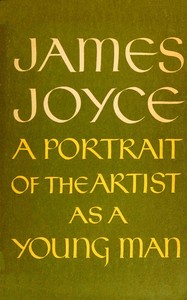
A boy in Dublin grows up inside a family, a religion and a language, and tries to invent a self that none of them wrote for him.
Kazuo Ishiguro, 2021
An artificial friend watches a child and the people who love her, trying to learn what makes a person singular—and whether love can be copied.
Γεράσιμος Μαρκοράς, 1890
The poet Arion, thrown into the sea by pirates, sings for his life — a Greek romance of music, rescue, and a love that turns poison into honey.
L. M. Montgomery, 1923
An orphan with a stub of pencil and an unshakeable inner life is sent to live with stern relatives on Prince Edward Island, and starts writing them all down.
George Steiner, 1975
A searching account of translation as both an art and a way of thinking about language, culture, and what it means to understand another person.
Κώστας Καρυωτάκης, 1928
The poet of Greek disillusionment: ironic, musical verses about failed hopes, dull offices, and the strange comfort of knowing nothing lasts.
Dan Brown, 2000
A Harvard symbologist is pulled from his bed into one night of pursuit beneath Rome, where a corpse is branded with a sign only he can read.
Kakuzo Okakura, 1906
A Japanese art critic explains why tea—its room, its flowers, its humility—is a philosophy for living, written to correct the West's picture of Asia.
Harold Bloom, 1998
Harold Bloom's case for Shakespeare as the inventor of the self-aware character: a lifetime of reading distilled into an argument about how fictional people learned to change.
Gaston Leroux, 1910
A masked figure haunts the Paris Opera, secretly tutoring a young singer — a gothic thriller about genius, ugliness, and what love demands.
John Keats, 1820
Poems that make beauty and mortality argue in the same breath—odes, sonnets, and mythic fragments from a writer who died at twenty-five.
Jane Austen, 1817
A woman of twenty-seven meets again the man she was talked out of marrying, and begins to wonder whether prudence was ever a virtue.
Robert W. Chambers, 1895
Stories from 1895: a forbidden play that drives its readers mad, a future New York with a suicide chamber, starving Paris under siege. Weird fiction before Lovecraft.
Natsume Sōseki, 1906
A painter escapes to a mountain inn to see the world as art, and finds a village, a strange woman, and a war that will not stay outside the frame.
Εμμανουήλ Ροΐδης, 1893
Why one writer would rather read Spencer than write a page: a comic, sharp argument against Greece's language split.
Willa Cather, 1915
A Colorado minister's daughter with a voice too big for her town spends twenty years getting out — and finding out what the leaving costs.
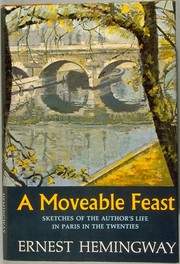
Ernest Hemingway, 1964
Hemingway's posthumous memoir of 1920s Paris: cheap oysters, cold wine, Cézanne in the Luxembourg, and the making of a writer.
Some first impressions stay untouched by time.
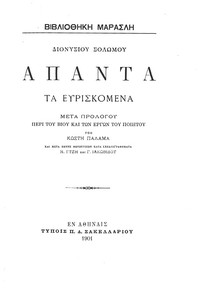
Η Ζάκυνθος. Ανάμεσα ’ς τα τόσα, ’ς τα γοργά και τα διαβατικά που μας εντυπώνονται, και που τα γράφ’ η μνήμη και τα ξεγράφει, κάποιες ενθύμησες από τα πρώτα χρόνια, κρατειούνται πλέον επίμονα, απείραχτες από τον καιρό. Μια τέτοια ενθύμηση μου απομένει του τόπου που γεννήθηκεν ο Σολωμός, όταν επρωτοπέρασ’ από κείθε, παιδί. Διάβα γληγωρότατο, μιας ώρας μόλις· και ζωηρότατη εντύπωση κόσμου αγνώριστου ως τότε, ονειρευτού. Του αέρα ήταν η αξεθύμαστη μοσκοβολιά· άρχιζε ’ς του νησιού το σίμωμα μέσ’ από το καράβι ακόμα, σα να μη χύνονταν η ευωδιά μονάχ’ από τα περιβόλια, σα να ήταν εκείνη το μοναδικό και το μυστικό χάρισμα γης και αέρα και ουρανού εκεί.Διονυσίου Σολωμού · Διονύσιος Σολωμός
What it feels like to envy your own portrait.
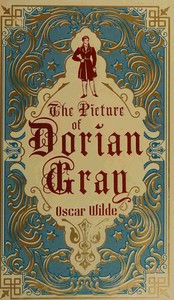
“I am jealous of everything whose beauty does not die. I am jealous of the portrait you have painted of me. Why should it keep what I must lose? Every moment that passes takes something from me and gives something to it. Oh, if it were only the other way! If the picture could change, and I could be always what I am now! Why did you paint it? It will mock me some day—mock me horribly!” The hot tears welled into his eyes; he tore his hand away and, flinging himself on the divan, he buried his face in the cushions, as though he was praying.The Picture of Dorian Gray · Oscar Wilde
The story we tell ourselves to explain what we couldn't refuse.
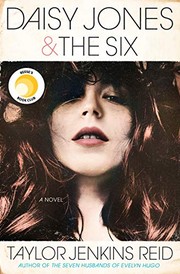
I had no idea what I was doing or why I was doing things I knew I didn’t want to be doing. But I’ve had a lot of therapy in my life now. And I mean a lot of therapy. And I see it now. I see myself clearly now. I wanted to be around these men—these stars—because I didn’t know how else to be important. And I figured I had to please them if I wanted to stay.Daisy Jones & The Six · Taylor Jenkins Reid
Read pages from books like this, one at a time
Keep reading in the feedRead pages from books like this, one at a time
BookFeed is a feed of real passages from real books. It learns what moves you and finds your next book.
Open BookFeedFree, no sign-up.