
Poetry
John Keats (1795–1821), 1820
Poems that make beauty and mortality argue in the same breath—odes, sonnets, and mythic fragments from a writer who died at twenty-five. Lyrical, wondering, and often melancholy, these poems move at a measured pace through nature, art, and the nearness of death.
Feels like wonder and melancholy. About morality, nature and art.
Who it’s for
You may like it if you enjoy richly musical verse that thinks aloud about beauty, time, and myth. The early nineteenth-century diction and dense allusions can make some passages slow going.
Why read it
Keats wrote these poems while his health and time were failing, and they ask what beauty is worth when it cannot last. You get odes and sonnets that stay with you by sound as much as sense.
Pages from the book
A song that makes one night feel as old as the species.
Thou wast not born for death, immortal Bird!No hungry generations tread thee down;The voice I hear this passing night was heardIn ancient days by emperor and clown:Perhaps the self-same song that found a pathThrough the sad heart of Ruth, when, sick for home,She stood in tears amid the alien corn;The same that oft-times hathCharm’d magic casements, opening on the foamOf perilous seas, in faery lands forlorn. The people missing from every perfect work of art.
Who are these coming to the sacrifice?To what green altar, O mysterious priest,Lead’st thou that heifer lowing at the skies,And all her silken flanks with garlands drest?What little town by river or sea shore,Or mountain-built with peaceful citadel,Is emptied of this folk, this pious morn?And, little town, thy streets for evermoreWill silent be; and not a soul to tellWhy thou art desolate, can e’er return. Autumn answers the question everyone asks about spring.
Where are the songs of Spring? Ay, where are they?Think not of them, thou hast thy music too,—While barred clouds bloom the soft-dying day,And touch the stubble-plains with rosy hue;Then in a wailful choir the small gnats mournAmong the river-sallows, borne aloftOr sinking as the light wind lives or dies;And full-grown lambs loud bleat from hilly bourn;Hedge-crickets sing; and now with treble softThe redbreast whistles from a garden-croft,And gathering swallows twitter in the skies. John Keats.Keats trained as an apothecary-surgeon and could legally have practiced medicine; he chose poetry instead, and died of tuberculosis at twenty-five.
Books that feel like this

More by John Keats
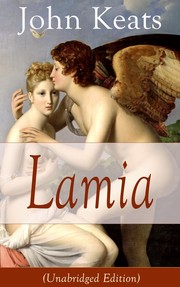
Lamia
John Keats, 1820
A serpent becomes a woman, a philosopher refuses to look away, and a feast is conjured out of nothing: Keats's late poem of magic against analysis.
Where to get it
Some of these links earn us a small commission, at no cost to you. It keeps BookFeed free.
Questions readers ask
- Is Poetry for me?
- You may like it if you enjoy richly musical verse that thinks aloud about beauty, time, and myth. The early nineteenth-century diction and dense allusions can make some passages slow going.
- What is Poetry like?
- Lyrical, wondering, and often melancholy, these poems move at a measured pace through nature, art, and the nearness of death. Feels like wonder and melancholy. About morality, nature and art.
- What should I read after Poetry?
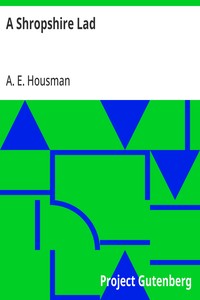
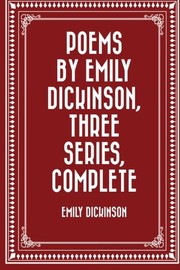
- If you liked Poetry, try A Shropshire Lad (A. E. Housman), Poems by Emily Dickinson, Three Series, Complete (Emily Dickinson) and Poetry (Henry van Dyke Jr.).
A taste of the feed
What if the landscape of your happiest memories is closed to you now?
Into my heart an air that kills From yon far country blows: What are those blue remembered hills, What spires, what farms are those? That is the land of lost content, I see it shining plain, The happy highways where I went And cannot come again.
A Shropshire Lad · A. E. Housman
What keeps singing in the worst weather and never sends a bill.
Hope is the thing with feathers That perches in the soul, And sings the tune without the words, And never stops at all, And sweetest in the gale is heard; And sore must be the storm That could abash the little bird That kept so many warm. I ‘ve heard it in the chillest land, And on the strangest sea; Yet, never, in extremity, It asked a crumb of me.
Poems by Emily Dickinson, Three Series, Complete · Emily Dickinson
A sailor's love for the sea has fear in it; landsmen never understand.
We men hat go down for a livin’ in ships to the sea— We love it a different way from you poets that ’bide on the land. We are fond of it, sure! But, you take it as comin’ from me, There’s a fear and a hate in our love that a landsman can’t understand. Oh, who could help likin’ the salty smell, and the blue Of the waves that are lazily breathin’ as if they dreamed in the sun? She’s a Sleepin’ Beauty, the sea—but you can’t tell what she’ll do; And the seamen never trust her—they know too well what she’s done!
Poetry · Henry van Dyke Jr.
Read pages from books like this, one at a time
Keep reading in the feed