
A Portrait of the Artist as a Young Man
James Joyce (1882–1941), 1916
A boy in Dublin grows up inside a family, a religion and a language, and tries to invent a self that none of them wrote for him. The prose moves from plain boyhood scenes into dense, lyrical passages, carrying faith, longing and a slow, searching pace.
Feels like longing, wonder and unease. About faith, art and home.
Who it’s for
You may like it if you enjoy lyrical, inward stories about growing up and wrestling with religion, family and language. Be ready for demanding prose, especially the long sermons and the shifting styles that can make stretches feel slow.
Why read it
It shows a mind forming itself against the institutions that raised it, and the language stays with you as much as the story.
Pages from the book
The moment beauty stops being an idea and stands in the water.
A girl stood before him in midstream, alone and still, gazing out to sea. She seemed like one whom magic had changed into the likeness of a strange and beautiful seabird. Her long slender bare legs were delicate as a crane’s and pure save where an emerald trail of seaweed had fashioned itself as a sign upon the flesh. Her thighs, fuller and softhued as ivory, were bared almost to the hips, where the white fringes of her drawers were like feathering of soft white down. Her slateblue skirts were kilted boldly about her waist and dovetailed behind her. Her bosom was as a bird’s, soft and slight, slight and soft as the breast of some darkplumaged dove. But her long fair hair was girlish: and girlish, and touched with the wonder of mortal beauty, her face. Ten years later, he still cannot stop rehearsing one tram ride.
He had written verses for her again after ten years. Ten years before she had worn her shawl cowlwise about her head, sending sprays of her warm breath into the night air, tapping her foot upon the glassy road. It was the last tram; the lank brown horses knew it and shook their bells to the clear night in admonition. The conductor talked with the driver, both nodding often in the green light of the lamp. They stood on the steps of the tram, he on the upper, she on the lower. She came up to his step many times between their phrases and went down again and once or twice remained beside him forgetting to go down and then went down. Let be! Let be! A small boy tries to work out what a kiss actually is.
The cold slime of the ditch covered his whole body; and, when the bell rang for study and the lines filed out of the playrooms, he felt the cold air of the corridor and staircase inside his clothes. He still tried to think what was the right answer. Was it right to kiss his mother or wrong to kiss his mother? What did that mean, to kiss? You put your face up like that to say goodnight and then his mother put her face down. That was to kiss. His mother put her lips on his cheek; her lips were soft and they wetted his cheek; and they made a tiny little noise: kiss. Why did people do that with their two faces? James Joyce.It began in 1904 as a short story written in a single day for Dubliners; when a magazine rejected it, Joyce kept expanding it until it became a novel.
Books that feel like this
More by James Joyce
Ulysses
James Joyce, 1922
One Dublin day in 1904, followed through two men's minds — an ad-canvasser and a young writer — with every joke, smell and stray thought left in.
Poetry
James Joyce, 1907
The poems Joyce wrote before Ulysses: love lyrics built like songs, and later, darker pieces from Trieste and Paris, short enough to read standing up.
Dubliners
James Joyce, 1914
Fifteen short stories of ordinary Dubliners, from a boy's first crush to a party that ends in a quiet shock, written with a precision that makes small lives feel enormous.
Where to get it
Some of these links earn us a small commission, at no cost to you. It keeps BookFeed free.
Questions readers ask
- Is A Portrait of the Artist as a Young Man for me?
- You may like it if you enjoy lyrical, inward stories about growing up and wrestling with religion, family and language. Be ready for demanding prose, especially the long sermons and the shifting styles that can make stretches feel slow.
- What is A Portrait of the Artist as a Young Man like?
- The prose moves from plain boyhood scenes into dense, lyrical passages, carrying faith, longing and a slow, searching pace. Feels like longing, wonder and unease. About faith, art and home.
- What should I read after A Portrait of the Artist as a Young Man?
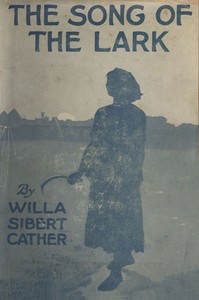
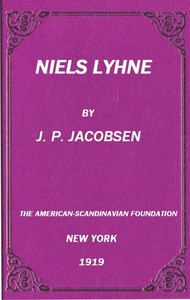
- If you liked A Portrait of the Artist as a Young Man, try The Song of the Lark (Willa Cather), Kusamakura (Natsume Sōseki) and Niels Lyhne (J. P. Jacobsen).
A taste of the feed
The fear of people who feel too much, and the wish to burn slowly.
Involuntarily he made a gesture as if to ward it off with his hand. After all, he was afraid in his inmost heart of this mighty thing called passion. This storm-wind sweeping away everything settled and authorized and acquired in humanity as if it were dead leaves. He did not like it! This roaring flame squandering itself in its own smoke—no, he wanted to burn slowly.
Niels Lyhne · J. P. Jacobsen
Somewhere along the way, the ordinary laws stopped applying.
But most people pass over incrementally, making a series of perforations in the membrane between here and there until an opening exists. And who can resist an opening? In the parallel universe the laws of physics are suspended. What goes up does not necessarily come down1 a body at rest does not tend to stay at rest1 and not every action can be counted on to provoke an equal and opposite reaction. Time, too, is different. It may run in circles, flow backward, skip about from now to then. The very arrangement of molecules is fluid: Tables can be clocks; faces, flowers.
Girl, Interrupted · Susanna Kaysen
Read pages from books like this, one at a time
Keep reading in the feed