
The Picture of Dorian Gray
Oscar Wilde (1854–1900), 1890
★ 4.13 from 2m ratings on Goodreads
A beautiful young man wishes his portrait would age in his place. It is a sharp, funny, then frightening study of vanity, charm and moral drift, still uncomfortably current. Wilde's prose sparkles with epigrams, then darkens into a queasy study of vanity and consequence.
Feels like curiosity, longing and unease. About identity, morality and art.
Who it’s for
You may enjoy this if you like elegant, talky Victorian fiction that turns from comedy to moral unease. Be warned that some stretches are slow, and the author's attitudes can trouble modern readers.
Why read it
It gives you Wilde's wit at full stretch and a portrait of charm curdling into cruelty, still sharp on vanity and self-deception.
Pages from the book
What it feels like to envy your own portrait.
“I am jealous of everything whose beauty does not die. I am jealous of the portrait you have painted of me. Why should it keep what I must lose? Every moment that passes takes something from me and gives something to it. Oh, if it were only the other way! If the picture could change, and I could be always what I am now! Why did you paint it? It will mock me some day—mock me horribly!” The hot tears welled into his eyes; he tore his hand away and, flinging himself on the divan, he buried his face in the cushions, as though he was praying. The case that experience teaches us nothing but how to repeat ourselves.
He began to wonder whether we could ever make psychology so absolute a science that each little spring of life would be revealed to us. As it was, we always misunderstood ourselves and rarely understood others. Experience was of no ethical value. It was merely the name men gave to their mistakes. Moralists had, as a rule, regarded it as a mode of warning, had claimed for it a certain ethical efficacy in the formation of character, had praised it as something that taught us what to follow and showed us what to avoid. But there was no motive power in experience. It was as little of an active cause as conscience itself. All that it really demonstrated was that our future would be the same as our past, and that the sin we had done once, and with loathing, we would do many times, and with joy. Why cramming your head with facts may be a way of fearing time.
It is a sad thing to think of, but there is no doubt that genius lasts longer than beauty. That accounts for the fact that we all take such pains to over-educate ourselves. In the wild struggle for existence, we want to have something that endures, and so we fill our minds with rubbish and facts, in the silly hope of keeping our place. The thoroughly well-informed man—that is the modern ideal. And the mind of the thoroughly well-informed man is a dreadful thing. It is like a bric-à-brac shop, all monsters and dust, with everything priced above its proper value. I think you will tire first, all the same. Some day you will look at your friend, and he will seem to you to be a little out of drawing, or you won’t like his tone of colour, or something. What readers say
Readers are captivated by the witty prose and the dark psychological study of beauty, vanity, and consequence. Some find stretches slow or the author’s views troubling, but the novel’s moral complexity and elegant language linger.
Oscar Wilde.The novel first ran in Lippincott's Monthly Magazine in 1890 in thirteen chapters. For the 1891 book Wilde expanded it to twenty and added the famous preface about art.
Books that feel like this
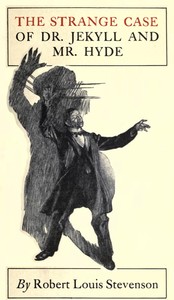
The strange case of Dr. Jekyll and Mr. Hyde
Robert Louis Stevenson, 1886
Also identity and morality.
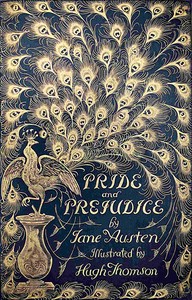
Pride and Prejudice
Jane Austen, 1813
A sharp-eyed comedy about money, manners and misjudgment, in which a quick-witted woman and a proud man keep being wrong about each other. Funnier and more cutting than its reputation suggests.
More by Oscar Wilde
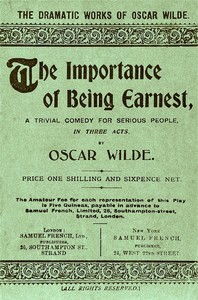
The Importance of Being Earnest
Oscar Wilde, 1895
Two friends invent imaginary relatives to escape their obligations, and their inventions collide in one country house full of people who talk in epigrams.
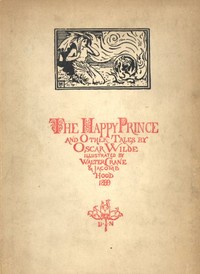
The Happy Prince, and Other Tales
Oscar Wilde, 1888
Five short fairy tales where a statue, a nightingale, a giant and a boastful firework teach tenderness and vanity with a sharp wit, in less time than a commute.
Where to get it
Some of these links earn us a small commission, at no cost to you. It keeps BookFeed free.
Questions readers ask
- Is The Picture of Dorian Gray for me?
- You may enjoy this if you like elegant, talky Victorian fiction that turns from comedy to moral unease. Be warned that some stretches are slow, and the author's attitudes can trouble modern readers.
- What is The Picture of Dorian Gray like?
- Wilde's prose sparkles with epigrams, then darkens into a queasy study of vanity and consequence. Feels like curiosity, longing and unease. About identity, morality and art.
- What should I read after The Picture of Dorian Gray?
- If you liked The Picture of Dorian Gray, try The strange case of Dr. Jekyll and Mr. Hyde (Robert Louis Stevenson), Jane Eyre (Charlotte Brontë) and Dracula (Bram Stoker).
A taste of the feed
Looking at someone you shouldn't, knowing precisely what it will cost.
No sooner did I see that his attention was riveted on them, and that I might gaze without being observed, than my eyes were drawn involuntarily to his face; I could not keep their lids under control: they would rise, and the irids would fix on him. I looked, and had an acute pleasure in looking,—a precious yet poignant pleasure; pure gold, with a steely point of agony: a pleasure like what the thirst-perishing man might feel who knows the well to which he has crept is poisoned, yet stoops and drinks divine draughts nevertheless.
Jane Eyre · Charlotte Brontë
A mind wakes up with no history, and nobody to ask.
“But where were my friends and relations? No father had watched my infant days, no mother had blessed me with smiles and caresses; or if they had, all my past life was now a blot, a blind vacancy in which I distinguished nothing. From my earliest remembrance I had been as I then was in height and proportion. I had never yet seen a being resembling me or who claimed any intercourse with me. What was I? The question again recurred, to be answered only with groans.
Frankenstein · Mary Shelley
A man reframes his self-interest as an act of atonement.
Having now a good house and a very sufficient income, he intended to marry; and in seeking a reconciliation with the Longbourn family he had a wife in view, as he meant to choose one of the daughters, if he found them as handsome and amiable as they were represented by common report. This was his plan of amends—of atonement—for inheriting their father’s estate; and he thought it an excellent one, full of eligibility and suitableness, and excessively generous and disinterested on his own part.
Pride and Prejudice · Jane Austen
Read pages from books like this, one at a time
Keep reading in the feed