
Ulysses
James Joyce (1882–1941), 1922
One Dublin day in 1904, followed through two men's minds — an ad-canvasser and a young writer — with every joke, smell and stray thought left in. A day in Dublin told with restless wit, shifting voices and lyrical attention to smells, jokes and stray thoughts.
Feels like humor, wonder and melancholy. About art, identity and society.
Who it’s for
You may enjoy it if you like language that plays, puzzles and changes shape from chapter to chapter. Be prepared for a long, demanding book with dense allusions and stretches where the style itself becomes the obstacle.
Why read it
It rewards patience with comedy, feeling and a close look at ordinary city life; read it for the pleasure of noticing how a mind moves.
Pages from the book
A dog on a beach is not looking for anything it can name.
Their dog ambled about a bank of dwindling sand, trotting, sniffing on all sides. Looking for something lost in a past life. Suddenly he made off like a bounding hare, ears flung back, chasing the shadow of a lowskimming gull. The man’s shrieked whistle struck his limp ears. He turned, bounded back, came nearer, trotted on twinkling shanks. On a field tenney a buck, trippant, proper, unattired. At the lacefringe of the tide he halted with stiff forehoofs, seawardpointed ears. His snout lifted barked at the wavenoise, herds of seamorse. They serpented towards his feet, curling, unfurling many crests, every ninth, breaking, plashing, from far, from farther out, waves and waves. The thing you decided not to think about has been waiting, patiently.
There are sins or (let us call them as the world calls them) evil memories which are hidden away by man in the darkest places of the heart but they abide there and wait. He may suffer their memory to grow dim, let them be as though they had not been and all but persuade himself that they were not or at least were otherwise. Yet a chance word will call them forth suddenly and they will rise up to confront him in the most various circumstances, a vision or a dream, or while timbrel and harp soothe his senses or amid the cool silver tranquillity of the evening or at the feast at midnight when he is now filled with wine. An argument about God, horses, and the only tense you can actually live in.
Unsheathe your dagger definitions. Horseness is the whatness of allhorse. Streams of tendency and eons they worship. God: noise in the street: very peripatetic. Space: what you damn well have to see. Through spaces smaller than red globules of man’s blood they creepycrawl after Blake’s buttocks into eternity of which this vegetable world is but a shadow. Hold to the now, the here, through which all future plunges to the past. James Joyce.The first edition was published in Paris in 1922 by Sylvia Beach's Shakespeare and Company, after printers in Britain and America refused to set it.
Books that feel like this

More by James Joyce

Poetry
James Joyce, 1907
The poems Joyce wrote before Ulysses: love lyrics built like songs, and later, darker pieces from Trieste and Paris, short enough to read standing up.
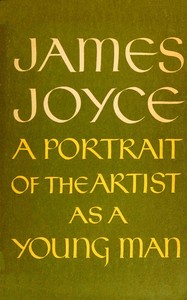
A Portrait of the Artist as a Young Man
James Joyce, 1916
A boy in Dublin grows up inside a family, a religion and a language, and tries to invent a self that none of them wrote for him.
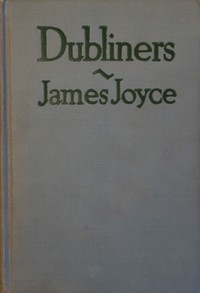
Dubliners
James Joyce, 1914
Fifteen short stories of ordinary Dubliners, from a boy's first crush to a party that ends in a quiet shock, written with a precision that makes small lives feel enormous.
Where to get it
Some of these links earn us a small commission, at no cost to you. It keeps BookFeed free.
Questions readers ask
- Is Ulysses for me?
- You may enjoy it if you like language that plays, puzzles and changes shape from chapter to chapter. Be prepared for a long, demanding book with dense allusions and stretches where the style itself becomes the obstacle.
- What is Ulysses like?
- A day in Dublin told with restless wit, shifting voices and lyrical attention to smells, jokes and stray thoughts. Feels like humor, wonder and melancholy. About art, identity and society.
- What should I read after Ulysses?
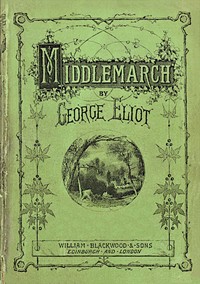
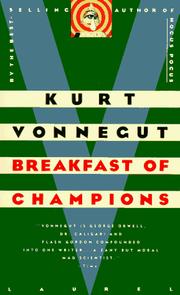
- If you liked Ulysses, try Middlemarch (George Eliot), A Midsummer Night's Dream (William Shakespeare) and Breakfast of Champions (Kurt Vonnegut).
A taste of the feed
How hard it is to believe that other people are as real as you are.
We are all of us born in moral stupidity, taking the world as an udder to feed our supreme selves: Dorothea had early begun to emerge from that stupidity, but yet it had been easier to her to imagine how she would devote herself to Mr. Casaubon, and become wise and strong in his strength and wisdom, than to conceive with that distinctness which is no longer reflection but feeling—an idea wrought back to the directness of sense, like the solidity of objects—that he had an equivalent centre of self, whence the lights and shadows must always fall with a certain difference.
Middlemarch · George Eliot
A description of a place so lush it can put a queen to sleep.
I know a banke where the wilde time blowes, Where Oxslips and the nodding Violet growes, Quite ouer-cannoped with luscious woodbine, With sweet muske roses, and with Eglantine; There sleepes Tytania, sometime of the night, Lul’d in these flowers, with dances and delight: And there the snake throwes her enammel’d skinne, Weed wide enough to rap a Fairy in.
A Midsummer Night's Dream · William Shakespeare
What happens to a country that mistakes itself for a story.
As I approached my fiftieth birthday, I had become more and more enraged and mystified by the idiot decisions made by my countrymen. And then I had come suddenly to pity them, for I understood how innocent and natural it was for them to behave so abominably, and with such abominable results: They were doing their best to live like people invented in story books. This was the reason Americans shot each other so often: It was a convenient literary device for ending short stories and books.Why were so many Americans treated by their government as though their lives were as disposable as paper facial tissues?
Breakfast of Champions · Kurt Vonnegut
Read pages from books like this, one at a time
Keep reading in the feed