
To the Lighthouse
Virginia Woolf (1882–1941), 1927
★ 3.81 from 228.4k ratings on Goodreads
A family's summer house, a postponed boat trip and a half-finished painting: Woolf gets family life from the inside, in sentences that think as they go. Woolf's sentences move like thought itself, lyrical and unhurried, circling family tenderness, art and the melancholy pull of time.
Feels like melancholy and tenderness. About time, art and family.
Who it’s for
You may like it if you enjoy family scenes, painterly attention and prose that follows thought rather than plot. The sentences are dense and interior, so it asks for quiet, patient reading.
Why read it
It gives you a close, lyrical look at how a family holds together and changes, and at what art can catch of that.
Pages from the book
The relief, once the children are in bed, of becoming no one at all.
No, she thought, putting together some of the pictures he had cut out—a refrigerator, a mowing-machine, a gentleman in evening dress—children never forget. For this reason, it was so important what one said, and what one did, and it was a relief when they went to bed. For now she need not think about anybody. She could be herself, by herself. And that was what now she often felt the need of—to think; well not even to think. To be silent; to be alone. All the being and the doing, expansive, glittering, vocal, evaporated; and one shrunk, with a sense of solemnity, to being oneself, a wedge-shaped core of darkness, something invisible to others. Although she continued to knit, and sat upright, it was thus that she felt herself; and this self having shed its attachments was free for the strangest adventures. The great revelation never arrives; small ones come sideways instead.
“Like a work of art,” she repeated, looking from her canvas to the drawing-room steps and back again. She must rest for a moment. And, resting, looking from one to the other vaguely, the old question which traversed the sky of the soul perpetually, the vast, the general question which was apt to particularize itself at such moments as these, when she released faculties that had been on the strain, stood over her, paused over her, darkened over her. What is the meaning of life? That was all—a simple question; one that tended to close in on one with years. The great revelation had never come. The great revelation perhaps never did come. Instead there were little daily miracles, illuminations, matches struck unexpectedly in the dark; here was one. How much of us stays in a room after we have left it.
So with the house empty and the doors locked and the mattresses rolled round, those stray airs, advance guards of great armies, blustered in, brushed bare boards, nibbled and fanned, met nothing in bedroom or drawing-room that wholly resisted them but only hangings that flapped, wood that creaked, the bare legs of tables, saucepans and china already furred, tarnished, cracked. What people had shed and left—a pair of shoes, a shooting cap, some faded skirts and coats in wardrobes—those alone kept the human shape and in the emptiness indicated how once they were filled and animated; how once hands were busy with hooks and buttons; how once the looking-glass had held a face; had held a world hollowed out in which a figure turned, a hand flashed, the door opened, in came children rushing and tumbling; and went out again. Virginia Woolf.As a child Woolf spent summers at Talland House in St Ives, with a lighthouse across the bay; the novel returns to that house and to her parents.
Books that feel like this
More by Virginia Woolf
Jacob’s Room
Virginia Woolf, 1925
An intimate dive into the fractured consciousness of modern life, exploring how a single glance, a passing thought, or a shared moment can alter our understanding of existence.
Mrs. Dalloway
Virginia Woolf, 1925
One June day in London, a society wife prepares a party while a shell-shocked veteran sits in the park. A novel written the way a mind actually moves.
Where to get it
Some of these links earn us a small commission, at no cost to you. It keeps BookFeed free.
Questions readers ask
- Is To the Lighthouse for me?
- You may like it if you enjoy family scenes, painterly attention and prose that follows thought rather than plot. The sentences are dense and interior, so it asks for quiet, patient reading.
- What is To the Lighthouse like?
- Woolf's sentences move like thought itself, lyrical and unhurried, circling family tenderness, art and the melancholy pull of time. Feels like melancholy and tenderness. About time, art and family.
- What should I read after To the Lighthouse?
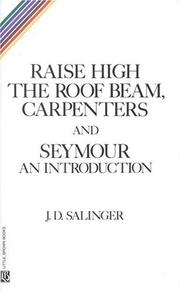
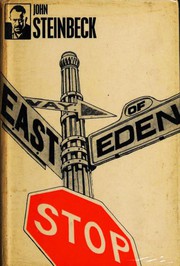
- If you liked To the Lighthouse, try Raise High the Roof Beam, Carpenters (J. D. Salinger), One Hundred Years of Solitude (Gabriel García Márquez) and East of Eden (John Steinbeck).
A taste of the feed
Someone reads your job title back to you and quietly disagrees.
Do you know what I was smiling at? You wrote down that you were a writer by profession. It sounded to me like the loveliest euphemism I had ever heard. When was writing ever your profession? It’s never been anything but your religion.
Raise High the Roof Beam, Carpenters · J. D. Salinger
The moment you realise time isn’t passing but turning in circles.
—Qué quería —murmuró—, el tiempo pasa. —Así es,—dijo Úrsula—, pero no tanto. Al decirlo, tuvo conciencia de estar dando la misma réplica que recibió del coronel Aureliano Buendía en su celda de sentenciado, y una vez más se estremeció con la comprobación de que el tiempo no pasaba, como ella lo acababa de admitir, sino que daba vueltas en redondo.
One Hundred Years of Solitude · Gabriel García Márquez
What it costs to become real, told by someone who has already paid.
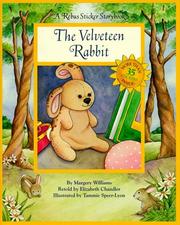
“It doesn’t happen all at once,” said the Skin Horse. “You become. It takes a long time. That’s why it doesn’t happen often to people who break easily, or have sharp edges, or who have to be carefully kept. Generally, by the time you are Real, most of your hair has been loved off, and your eyes drop out and you get loose in the joints and very shabby. But these things don’t matter at all, because once you are Real you can’t be ugly, except to people who don’t understand.”
The Velveteen Rabbit · Margery Williams Bianco
Read pages from books like this, one at a time
Keep reading in the feed