
Kusamakura
Natsume Sōseki (1867–1916), 1906
★ 3.74 from 6.1k ratings on Goodreads
A painter escapes to a mountain inn to see the world as art, and finds a village, a strange woman, and a war that will not stay outside the frame. The narrative moves with a lyrical pace, blending the quiet observation of nature with a subtle, growing sense of unease.
Feels like wonder and unease. About art, nature and war.
Who it’s for
You may like it if you enjoy literary fiction that uses natural settings to explore deeper human anxieties. Be prepared for a tone that balances artistic appreciation with a somber awareness of political unrest.
Why read it
This novel gives you a quiet, beautiful study of how art confronts the violent changes of the modern world.
Pages from the book
Delicate spring air conceals the scent of far-off blood.
My old host volunteered in his nephew’s place to let me understand that the youth was destined to leave for Manchuria in a day or two. I had thought that there was only feathered songsters to listen to, only flowers to see fall, only hot spring to warble forth in this dreamy land of poetry in a mountain bosom, in peaceful Spring. Alas, the living world had come crossing the sea and mountain and oozing into this home of a forgotten tribe, and the time may come when a small fraction of blood making a crimson sea of bleak Manchuria may flow from this youth’s arteries. This very youth is sitting next to an artist who sees nothing worth seeing in human life but dreaming. He sits so near that the artist may hear his heart throb. Some flowers look beautiful until you notice what they are saying.
A huge tree stood over my new position of vantage, screening me from the sun and making me feel chilly. Near the water’s edge, on the other side of the pond, was an overhanging camellia tree in full bloom. There is something very heavy and dull in the green of camellia leaves, even when seen in the sunshine, and I would have never known this particular plant but for its blood red flowers, which are never attractive, though fiery and striking. I never look at camellia flowers in a deep forest or mountain without wishing that I had not seen them; their red is not a common red, but a red with something weird in it like a she-demon in a fair woman’s mask, who fascinates you with her black eyes and beauty and breathes poison into your pores before you know it. What spring does to a mind that has forgotten it has a soul.
But the lark! It was Spring—Spring, when the whole creation feels blasé to drowsiness; cheerful to ecstasy. The cat forgets to pounce on the mice. Men become oblivious of being in debt; so oblivious, indeed, that they even fail to locate their own souls. But they come back to themselves, when they see a distant field waving with a golden sea of flowers, such as I was looking down upon in the valley. And they may locate their souls when they hear the lark. The lark does not sing with his throat; but it is his whole soul that sings. Of all creatures, of which you hear their soul’s activity in their songs, none is as lively as the lark. It was, indeed, joy itself, and as I thus thought, I became joyful, and thus, was Poetry. Natsume Sōseki.Sōseki was a devoted haiku poet and a professor of English literature; Kusamakura's painter-narrator reflects both passions.
Books that feel like this



Where to get it
Some of these links earn us a small commission, at no cost to you. It keeps BookFeed free.
Questions readers ask
- Is Kusamakura for me?
- You may like it if you enjoy literary fiction that uses natural settings to explore deeper human anxieties. Be prepared for a tone that balances artistic appreciation with a somber awareness of political unrest.
- What is Kusamakura like?
- The narrative moves with a lyrical pace, blending the quiet observation of nature with a subtle, growing sense of unease. Feels like wonder and unease. About art, nature and war.
- What should I read after Kusamakura?
- If you liked Kusamakura, try The Book of Tea (Kakuzo Okakura), A Portrait of the Artist as a Young Man (James Joyce) and Poetry (John Keats).
A taste of the feed
A song that makes one night feel as old as the species.
Thou wast not born for death, immortal Bird! No hungry generations tread thee down; The voice I hear this passing night was heard In ancient days by emperor and clown: Perhaps the self-same song that found a path Through the sad heart of Ruth, when, sick for home, She stood in tears amid the alien corn; The same that oft-times hath Charm’d magic casements, opening on the foam Of perilous seas, in faery lands forlorn.
Poetry · John Keats
What a palace looks like a hundred years after the queens have gone.
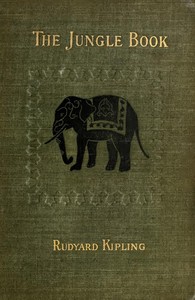
He set his teeth and said nothing, but went with the shouting monkeys to a terrace above the red sandstone reservoirs that were half full of rainwater. There was a ruined summerhouse of white marble in the center of the terrace, built for queens dead a hundred years ago. The domed roof had half fallen in and blocked up the underground passage from the palace by which the queens used to enter; but the walls were made of screens of marble tracery—beautiful, milk-white fretwork, set with agates and cornelians and jasper and lapis lazuli, and as the moon came up behind the hill it shone through the openwork, casting shadows on the ground like black-velvet embroidery.
The Jungle Book · Rudyard Kipling
The night sea does not look like water; it looks like a mind.
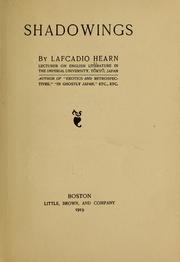
THE moon had not yet risen; but the vast of the night was all seething with stars, and bridged by a Milky Way of extraordinary brightness. There was no wind; but the sea, far as sight could reach, was running in ripples of fire,—a vision of infernal beauty. Only the ripplings were radiant (between them was blackness absolute);—and the luminosity was amazing. Most of the undulations were yellow like candle-flame; but there were crimson lampings also,—and azure, and orange, and emerald. And the sinuous flickering of all seemed, not a pulsing of many waters, but a laboring of many wills,—a fleeting conscious and monstrous,—a writhing and a swarming incalculable, as of dragon-life in some depth of Erebus.
Shadowings · Lafcadio Hearn
Read pages from books like this, one at a time
Keep reading in the feed