
The Book of Tea
Kakuzo Okakura (1862–1913), 1906
★ 3.85 from 19k ratings on Goodreads
A Japanese art critic explains why tea—its room, its flowers, its humility—is a philosophy for living, written to correct the West's picture of Asia. A quiet, witty tour through tea rooms and gardens, moving between art, history and a gentle philosophy of humility.
Who it’s for
You may like it if you enjoy essays on art and Japanese culture that think through small details like a tea room or a garden path. The prose dates from 1906 and can feel formal and allusive when it turns to Zen and old tea masters.
Why read it
It offers a short, clear way into the aesthetics of tea and a view of Asia written from the inside, at a time when Western readers rarely got one.
Pages from the book
A spotless path can still be missing something.
Rikiu was watching his son Shoan as he swept and watered the garden path. “Not clean enough,” said Rikiu, when Shoan had finished his task, and bade him try again. After a weary hour the son turned to Rikiu: “Father, there is nothing more to be done. The steps have been washed for the third time, the stone lanterns and the trees are well sprinkled with water, moss and lichens are shining with a fresh verdure; not a twig, not a leaf have I left on the ground.” “Young fool,” chided the tea-master, “that is not the way a garden path should be swept.” Saying this, Rikiu stepped into the garden, shook a tree and scattered over the garden gold and crimson leaves, scraps of the brocade of autumn! What Rikiu demanded was not cleanliness alone, but the beautiful and the natural also. A garden full of flowers, and one flower left to speak for all.
In the sixteenth century the morning-glory was as yet a rare plant with us. Rikiu had an entire garden planted with it, which he cultivated with assiduous care. The fame of his convulvuli reached the ear of the Taiko, and he expressed a desire to see them, in consequence of which Rikiu invited him to a morning tea at his house. On the appointed day Taiko walked through the garden, but nowhere could he see any vestige of the convulvulus. The ground had been leveled and strewn with fine pebbles and sand. With sullen anger the despot entered the tea-room, but a sight waited him there which completely restored his humour. On the tokonoma, in a rare bronze of Sung workmanship, lay a single morning-glory—the queen of the whole garden! A room built to be unfinished, so your imagination can move in.
The tea-room (the Sukiya) does not pretend to be other than a mere cottage—a straw hut, as we call it. The original ideographs for Sukiya mean the Abode of Fancy. Latterly the various tea-masters substituted various Chinese characters according to their conception of the tea-room, and the term Sukiya may signify the Abode of Vacancy or the Abode of the Unsymmetrical. It is an Abode of Fancy inasmuch as it is an ephemeral structure built to house a poetic impulse. It is an Abode of Vacancy inasmuch as it is devoid of ornamentation except for what may be placed in it to satisfy some aesthetic need of the moment. It is an Abode of the Unsymmetrical inasmuch as it is consecrated to the worship of the Imperfect, purposely leaving some thing unfinished for the play of the imagination to complete. Kakuzo Okakura.Okakura wrote The Book of Tea in English and later became curator of Japanese art at the Museum of Fine Arts, Boston.
Books that feel like this

Where to get it
Some of these links earn us a small commission, at no cost to you. It keeps BookFeed free.
Questions readers ask
- Is The Book of Tea for me?
- You may like it if you enjoy essays on art and Japanese culture that think through small details like a tea room or a garden path. The prose dates from 1906 and can feel formal and allusive when it turns to Zen and old tea masters.
- What is The Book of Tea like?
- A quiet, witty tour through tea rooms and gardens, moving between art, history and a gentle philosophy of humility. Feels like wonder. About art.
- What should I read after The Book of Tea?
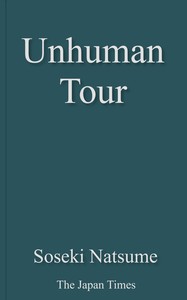
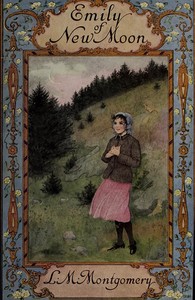
- If you liked The Book of Tea, try Kusamakura (Natsume Sōseki), A Daughter of the Samurai (Etsu Inagaki Sugimoto) and Emily of New Moon (L. M. Montgomery).
A taste of the feed
A mother unpicks generations of needlework so her daughter can pass unnoticed.
All that winter the household was busy getting me ready for school. The pathos of these preparations I did not realize; nor, I think, did any of us. Mother spent evening after evening bending her stately head over wonderful embroidered garments, ripping out, stitch by stitch, the exquisite work of hands folded in rest generations ago. Then Ishi would dye the silk and make it into plain garments suitable for my school life.
A Daughter of the Samurai · Etsu Inagaki Sugimoto
A dog on a beach is not looking for anything it can name.
Their dog ambled about a bank of dwindling sand, trotting, sniffing on all sides. Looking for something lost in a past life. Suddenly he made off like a bounding hare, ears flung back, chasing the shadow of a lowskimming gull. The man’s shrieked whistle struck his limp ears. He turned, bounded back, came nearer, trotted on twinkling shanks. On a field tenney a buck, trippant, proper, unattired. At the lacefringe of the tide he halted with stiff forehoofs, seawardpointed ears. His snout lifted barked at the wavenoise, herds of seamorse. They serpented towards his feet, curling, unfurling many crests, every ninth, breaking, plashing, from far, from farther out, waves and waves.
Ulysses · James Joyce
The particular loneliness of a room shared with someone you once loved.
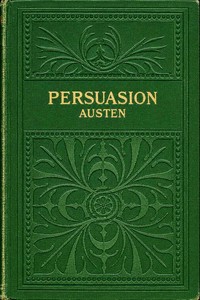
They had no conversation together, no intercourse but what the commonest civility required. Once so much to each other! Now nothing! There had been a time, when of all the large party now filling the drawing-room at Uppercross, they would have found it most difficult to cease to speak to one another. With the exception, perhaps, of Admiral and Mrs. Croft, who seemed particularly attached and happy (Anne could allow no other exception even among the married couples), there could have been no two hearts so open, no tastes so similar, no feelings so in unison, no countenances so beloved. Now they were as strangers; nay, worse than strangers, for they could never become acquainted. It was a perpetual estrangement.
Persuasion · Jane Austen
Read pages from books like this, one at a time
Keep reading in the feed