BookFeed Ελληνικά

Poetry: books to read

These poems keep returning to the same few things: a home you can't quite reach, a defeat you turn over in your mind, a freedom worth staying for. Cavafy's «Ποιήματα» gives you a civil servant in Alexandria making Greek history speak to anyone who has failed at something, while Solomos in «Οι Ελεύθεροι Πολιορκημένοι, σχεδίασμα Β΄» sets hunger and danger against spring's beauty at the siege of Missolonghi. You come to them for the plain, immediate way they hold a moment and let it stay.

A page that shows it

On a wild beach, a man who has lost everything hides in dead leaves like a fire that won't go out.

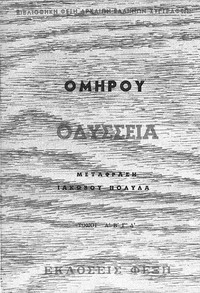
Και τούτο συμφερώτερο του εφάνη• προς το δάσοςεκίνησε, και τωύρηκεν εις το νερό πλησίον,’ς ανοικτόν τόπον• έσκυψε κάτω από δυό δενδρούλιαομόρριζα, και το ’να εληά, και τ’ άλλο ήταν αγρίλι•κει μέσα ούτ’ άνεμοι φυσούν με την υγρή πνοή τους,ούτε του ηλιού πότ’ έφθασαν η φωτειναίς ακτίνες,ούτε η βροχή τα έσπασε• τόσο πυκνά πλεγμέναήσαν μαζή• κ’ εσύρθηκε ’ς εκείν’ ο Οδυσσέας,κ’ ευθύς στρώσιν εστοίβασε πλατειά με τα δυο χέρια•ότ’ ήσαν φύλλα περισσά χυμέν’ αυτού, ’π’ αρκούσαννα φυλαχθούν άνθρωποι δυο και τρεις ’ς ώρα χειμώνος,και αν ψύχος έπνεε δριμύ• τα είδε κ’ εχάρη ο θείοςο άνδρας ο πολύπαθος, και του σωρού ’ς την μέσηεπλάγιασε κ’ επάνω του έχυσε φύλλα πλήθος.
— Ομήρου Οδύσσεια Τόμος Α, Όμηρος (-700)
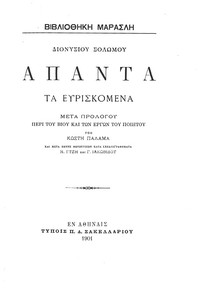
  1. Ἡ Τρίχα

    Διονύσιος Σολωμός, 1830

    Ο εθνικός ποιητής γράφει σάτιρα: ένας ζυγιαστής ζυγίζει ανθρώπους, πουλιά και πολιτικούς, κι ένα ποίημα βγαίνει από ένα όνειρο και μια τρίχα.

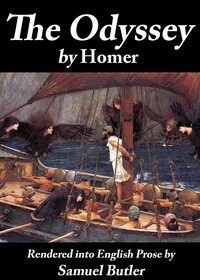
  2. The Odyssey

    Homer, -800

    The first great story about a journey home — and every stop along the way is a good reason to give up.

  3. Συλλογές

    Κωστής Παλαμάς, 1886

    The great popular poet of modern Greece: ballads, island legends and small elegies, in the language people actually spoke. Look for the human gesture inside the folk song. At his best there is no one warmer and more exact about the things he loved. Still, some verse is more pastiche than lived experience, but the ambition is real. But the book has real ballads and real feeling, and a warm, generous voice, and Palamaς is a key figure in Greek letters. Read him as a poet who came from the folk tradition. Read him for the ballads and the small elegies. In the end, you get a sense of the poet's world and a few lines to underline. That is the honest case for this book,

  4. The Iliad

    Homer, -750

    A war stalled outside a city, a commander's wounded pride, and the best fighter in the army refusing to fight. Seven weeks of rage, grief and armour.

  5. Paradise Lost

    John Milton, 1667

    A blind poet turns the fall of Adam and Eve into an epic of free will, ambition, and married love, and gives the devil its most persuasive voice.

  6. Poetry

    James Joyce, 1907

    The poems Joyce wrote before Ulysses: love lyrics built like songs, and later, darker pieces from Trieste and Paris, short enough to read standing up.

  7. Συλλογή Αλαφροΐσκιωτος (1907)

    Άγγελος Σικελιανός, 1907

    A young poet on Lefkada hears a voice on the mountain calling him to carry a promise into word and deed. Greek lyricism at full lung. Emblematic title: αλαφροΐσκιωτος = «ελαφρά σκιασμένος» — touched, shadow-lit. The text is scan-prone (verse, breathless voice). For Greek readers, a card by a poet who believed poetry could found a religion. It opens with a question about beauty and ends with a vision of Odysseus and Ajax. Some of the 40 samples are compelling, a few are very weak and uneditable. Tags: purely the book as a whole and Greek/English variants allowed but only if they truly reflect the content. Any modern English renderings have to be clearly translations, because the book is in Greek; but the actual feed will show the Greek passage. A good mix of cards should feel like this collection: the opening ecstatic question, a sea-bath, a thirst, the olive grove, the people, the descent into a folk mourning, a wedding dance, the spring charm, the mountain ascent, the 'other gods' closing line. I'll return all cards with Greek field text and english objects.

A taste of the feed

  1. At night, things without names walk through your room.

    Την νύκτα, Δέσποτα Χριστέ μου, τον νου και την ψυχή μου φύλαττέ μου σαν γύρω μου αρχινούν και περπατούνε Όντα και Πράγματα που όνομα δεν έχουν και τ’ άσαρκα ποδάρια των στην κάμαρή μου τρέχουν και κάμνουν στο κρεβάτι μου κύκλο για να με διούνε — και με κοιτάζουν σαν να με γνωρίζουν σαν να καγχάζουν άφωνα που τώρα με φοβίζουν.

    Ανέκδοτα · Κωνσταντίνος Καβάφης

  2. Two men meet between the armies, and one answers a question with leaves.

    «Τὴν γενεάν μου τί ἐρωτᾶς, ἀτρόμητε Τυδείδη; Καὶ τῶν θνητῶν ἡ γενεὰ τῶν φύλλων ὁμοιάζει· τῶν φύλλων ἄλλα ὁ ἄνεμος χαμαὶ σκορπᾶ καὶ ἄλλα φυτρώνουν, ὡς ἡ ἄνοιξη τὰ δένδρ’ ἀναχλωραίνει· καὶ τῶν θνητῶν μιὰ γενεὰ φυτρώνει καὶ ἄλλη παύει.

    Ιλιάδα · Όμηρος

  3. You wake up sure it was only a dream. Then you open your hands.

    Ι Στὴ ζέστη ὁ φλάρης τοῦ χοροῦ μία ματιὰ μοῦ ρίχνει κι’ ἔπειτα εἰς τὸ πάτωμα κάτι τάχα μοῦ δείχνει κι’ ἐγὼ ποὺ λέω πὼς μὲ καλεῖ στὸ ζύγιασμα μὲ βάλῃ μέσα ἡ ψυχή μου ἐθύμωσε, σέρνω φωνὴ μεγάλη καὶ βρίσκομ’ ἔξυπνος γυμνός, ἔξω ἀπὸ τὸ κλινάρι καὶ μὲ τὰ χέρια ποὺ ἔτρεμαν στὸ λάρυγγα τοῦ φλάρη. Ἀκίνητος, ἀμίλητος, στὸν τόπο του στημένος δὲν εἶν’ τὰ ζύγη πλέον ἐκεῖ, δὲν εἶν’ ὁ ζυγιασμένος. Ἔμεινα, ἐστέναξα βαριά, τὸ πᾶν ἐσιωποῦσε· μέσ’ στὴν αὐλή μου ὁ κόκορας βραχνόφωνα λαλοῦσε. χτυπῶ τὸ μέτωπο, ἐδῶ μοῦ ’πρεπε μὲ τσ’ ἀμάδες ξανοίγω κάτου τὰ μαλλιά! τὲς τρίχες τὲς γραφάδες.

    Ἡ Τρίχα · Διονύσιος Σολωμός

  4. Read pages from books like this, one at a time

    Keep reading in the feed

Read pages from books like this, one at a time

BookFeed is a feed of real passages from real books. It learns what moves you and finds your next book.

Open BookFeed

Free, no sign-up.