
Paradise Lost
John Milton (1608–1674), 1667
A blind poet turns the fall of Adam and Eve into an epic of free will, ambition, and married love, and gives the devil its most persuasive voice. This grand poetry unfolds with dramatic weight and philosophical depth, exploring themes of freedom and ambition through a powerful, sweeping voice.
Feels like awe, defiance and grief. About freedom and ambition.
Who it’s for
You may like it if you enjoy epic narratives that explore the nature of free will. Be aware that the language is formal and the scope of the work is immense.
Why read it
Read it to experience the towering ambition of a blind poet who reimagined the origins of humanity and the definition of choice.
Pages from the book
The logic of a king who would rather rule a wasteland than bend the knee.
What matter where, if I be still the same,And what I should be, all but less than heWhom thunder hath made greater? Here at leastWe shall be free; the Almighty hath not builtHere for his envy, will not drive us hence:Here we may reign secure, and in my choiceTo reign is worth ambition though in Hell:Better to reign in Hell, than serve in Heaven. What remains when the visible world is switched off.
Then feed on thoughts that voluntary moveHarmonious numbers; as the wakeful birdSings darkling, and in shadiest covert hidTunes her nocturnal note. Thus with the yearSeasons return; but not to me returnsDay, or the sweet approach of even or morn,Or sight of vernal bloom, or summer’s rose,Or flocks, or herds, or human face divine;But cloud instead and ever-during darkSurrounds me, from the cheerful ways of menCut off, and, for the book of knowledge fair,Presented with a universal blankOf Nature’s works, to me expunged and rased,And wisdom at one entrance quite shut out. The argument that freedom isn't real unless you can ruin yourself with it.
For Man will hearken to his glozing lies,And easily transgress the sole command,Sole pledge of his obedience; so will fallHe and his faithless progeny. Whose fault?Whose but his own? Ingrate, he had of meAll he could have; I made him just and right,Sufficient to have stood, though free to fall.Such I created all the ethereal powersAnd Spirits, both them who stood and them who failed:Freely they stood who stood, and fell who fell. John Milton.Milton was blind by 1652 and dictated Paradise Lost to scribes, sometimes calling for lines in the morning that he had composed overnight.
Books that feel like this
Where to get it
Some of these links earn us a small commission, at no cost to you. It keeps BookFeed free.
Questions readers ask
- Is Paradise Lost for me?
- You may like it if you enjoy epic narratives that explore the nature of free will. Be aware that the language is formal and the scope of the work is immense.
- What is Paradise Lost like?
- This grand poetry unfolds with dramatic weight and philosophical depth, exploring themes of freedom and ambition through a powerful, sweeping voice. Feels like awe, defiance and grief. About freedom and ambition.
- What should I read after Paradise Lost?
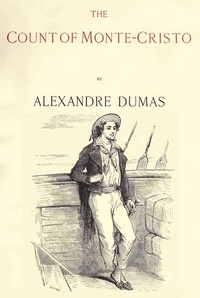
- If you liked Paradise Lost, try The Count of Monte Cristo (Alexandre Dumas), Divine Comedy, Longfellow's Translation, Hell (Dante Alighieri) and Heart of Darkness (Joseph Conrad).
A taste of the feed
A body gone silent, and one light still signalling from inside.
Sight and hearing were the only senses remaining, and they, like two solitary sparks, remained to animate the miserable body which seemed fit for nothing but the grave; it was only, however, by means of one of these senses that he could reveal the thoughts and feelings that still occupied his mind, and the look by which he gave expression to his inner life was like the distant gleam of a candle which a traveller sees by night across some desert place, and knows that a living being dwells beyond the silence and obscurity.
The Count of Monte Cristo · Alexandre Dumas
A captain's speech to tired sailors about what humans are for.
Consider ye the seed from which ye sprang; Ye were not made to live like unto brutes, But for pursuit of virtue and of knowledge.’ So eager did I render my companions, With this brief exhortation, for the voyage, That then I hardly could have held them back. And having turned our stern unto the morning, We of the oars made wings for our mad flight, Evermore gaining on the larboard side.
Divine Comedy, Longfellow's Translation, Hell · Dante Alighieri
What if self-knowledge always arrives one step too late?
Droll thing life is—that mysterious arrangement of merciless logic for a futile purpose. The most you can hope from it is some knowledge of yourself—that comes too late—a crop of unextinguishable regrets. I have wrestled with death. It is the most unexciting contest you can imagine. It takes place in an impalpable greyness, with nothing underfoot, with nothing around, without spectators, without clamour, without glory, without the great desire of victory, without the great fear of defeat, in a sickly atmosphere of tepid scepticism, without much belief in your own right, and still less in that of your adversary.
Heart of Darkness · Joseph Conrad
Read pages from books like this, one at a time
Keep reading in the feed