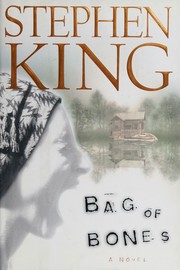
Bag of Bones
Stephen King, 1998
A grieving novelist returns to a Maine lake house and finds a haunted history that won't stay buried.
 BookFeed Ελληνικά
These stories explore the slow decay beneath polished surfaces, where ordinary life begins to warp under unseen pressures. You might find yourself unsettled by the strange occurrences in «Bag of Bones» or the escalating paranoia in «The Institute». They present moments when the familiar turns deeply strange.
A page that shows it
The small routines that keep us from turning around when something follows.
This is how we go on: one day a time, one meal at a time, one pain at a time, one breath at a time. Dentists go on one root canal at a time; boat builders go on one hull at a time. If you write books, you go on one page at a time. We turn from all we know and all we fear. We study catalogues, watch football games, choose Sprint over AT&T. We count the birds in the sky and will not turn from the window when we hear the footsteps behind as something comes up the hall; we say yes, I agree that clouds often look like other things — fish and unicorns and men on horseback — but they are really only clouds. Stephen King, 1998
A grieving novelist returns to a Maine lake house and finds a haunted history that won't stay buried.
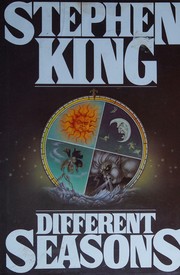
Stephen King, 1982
Four novellas, only one of them horror, about prison, memory, and the friendships that make and break boys.
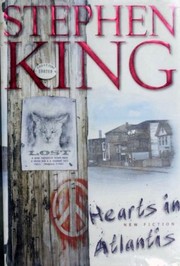
Stephen King, 1999
Stephen King's most personal book: a boy in 1960 Connecticut, a late-night card game in a Maine dorm, and the long bill for the sixties.
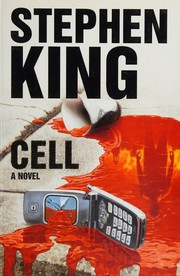
Stephen King, 2006
A cell-phone signal turns every caller into a mindless killer, and a father crosses a collapsing world to reach his son.
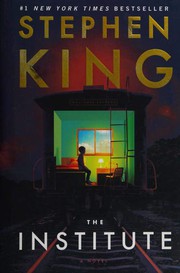
Stephen King, 2019
A boy with a gift is taken to a facility where children are studied, and asks what it will take to get out.
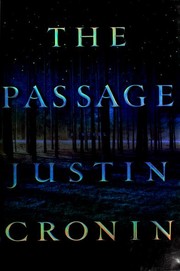
Justin Cronin, 2010
A government experiment becomes a plague of night creatures, and a small girl may be the only way through the ruins.
Anne Rice, 1976
A vampire tells a young reporter how he became a vampire, and the room grows colder as the tape runs.
Bret Easton Ellis, 1991
A Wall Street banker's immaculate surfaces—suits, reservations, CD cases—crack into a satire of appetite, status and violence.
Mona Awad, 2019
A broke MFA student watches a clique of rich, eerie women call each other Bunny, then gets pulled into their workshop—a social satire that curdles into horror.
Grady Hendrix, 2020
A true-crime book club in 1990s Charleston meets a charming newcomer who may be a vampire—and finds the real horror is being dismissed.
Stephen King, 1974
A high-school outcast with a terrifying gift and a fanatically religious mother faces the ordinary cruelty of her town.
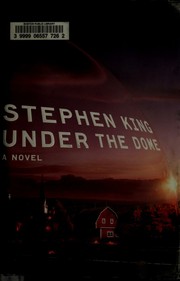
Stephen King, 2009
A small Maine town is sealed under an invisible dome, and the people inside discover what they become without an outside.
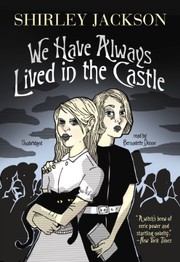
Shirley Jackson, 1962
A village hates two sisters, and inside their house a strict, loving order holds. Then a cousin arrives, and the order begins to crack.
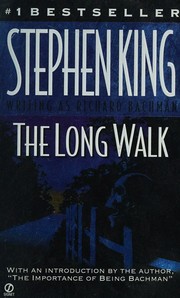
Richard Bachman, 1979
A hundred teenage boys start walking. The rules are simple, the nation is watching, and only one of them is meant to stop.
Stephen King, 2013
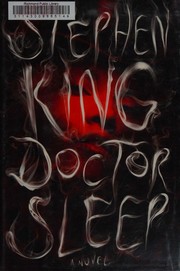
Danny Torrance, the boy from The Shining, is now a drifting alcoholic—until a girl with the same gift pulls him into a fight against something that feeds on children.
Stephen King, 1975
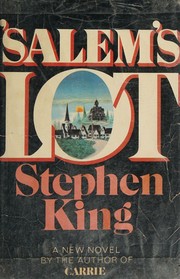
A vampire arrives in a small Maine town, and the town's own secrets do as much damage as the bite. King's second novel, still his most atmospheric.
Stephen King, 1991
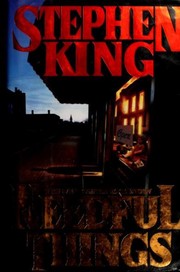
A new shop opens in a small Maine town and sells each customer the one thing they've always wanted. Payment comes due in other currency.
Oliver Onions, 1925
A writer finds a cheap flat in a neglected old house—and an ordinary move begins to feel quietly uncanny.
Shirley Jackson, 1962
A fiercely private young woman describes the house and family rituals that keep the outside world at bay—and make every ordinary detail feel ominous.
The question underneath every loss: not why we hurt, but who we were.
I cried, all right. I sat there at my desk and I cried for her, for me, for both of us, for all of us. I can’t remember hurting any more in my life than I did then. Hearts are tough, she said, most times hearts don’t break, and I’m sure that’s right ... but what about then? What about who we were then? What about hearts in Atlantis?Hearts in Atlantis · Stephen King
The speed with which ordinary life becomes archaeology.
Civilization slipped into its second dark age on an unsurprising track of blood, but with a speed that could not have been foreseen by even the most pessimistic futurist. It was as if it had been waiting to go. On October 1, God was in His heaven, the stock market stood at 10,140, and most of the planes were on time (except for those landing and taking off in Chicago, and that was to be expected). Two weeks later the skies belonged to the birds again and the stock market was a memory. By Halloween, every major city from New York to Moscow stank to the empty heavens and the world as it had been was a memory.Cell · Stephen King
The most dangerous people are the ones who sigh at bad news.
There was a perfunctory knock at the door, and then Rosalind stuck her head in, looking apologetic. “I’m sorry to disturb you, ma’am, but it’s Fred Clark, asking to see you. He seems-” “Refresh me. Who is Fred Clark?” Mrs. Sigsby took off her reading glasses and rubbed the sides of her nose. “One of the janitors.” “Find out what he wants and tell me later. If we’ve got mice chewing the wiring again, it can wait. I’m busy.” “He says it’s important, and he seems extremely upset.” Mrs. Sigsby sighed, closed the folder, and put it in a drawer. “All right, send him in. But this had better be good.” It wasn’t. It was bad. Very.The Institute · Stephen King
Read pages from books like this, one at a time
Keep reading in the feedRead pages from books like this, one at a time
BookFeed is a feed of real passages from real books. It learns what moves you and finds your next book.
Open BookFeedFree, no sign-up.