Animal Farm
George Orwell, 1945
A farm's animals overthrow their farmer and write their own rules — then discover how quickly a good slogan can be edited. A fable about power, in plain prose.
 BookFeed Ελληνικά
A slogan can be edited, a kingdom split by a love test, a diary kept in secret: these books are about power and the people who want it, lose it, or find themselves caught in it. If you want to see how authority works from the inside, start with «Animal Farm», where the animals write their own rules and then learn how quickly those rules can change, or The Prince, Machiavelli's short, cool manual on how power is won and kept.
A page that shows it
How a privilege gets explained as a sacrifice made on your behalf.
"Comrades!" he cried. "You do not imagine, I hope, that we pigs are doing this in a spirit of selfishness and privilege? Many of us actually dislike milk and apples. I dislike them myself. Our sole object in taking these things is to preserve our health. Milk and apples (this has been proved by Science, comrades) contain substances absolutely necessary to the well-being of a pig. We pigs are brainworkers. The whole management and organisation of this farm depend on us. Day and night we are watching over your welfare. It is for YOUR sake that we drink that milk and eat those apples. Do you know what would happen if we pigs failed in our duty? Jones would come back! Yes, Jones would come back! George Orwell, 1945
A farm's animals overthrow their farmer and write their own rules — then discover how quickly a good slogan can be edited. A fable about power, in plain prose.
Διονύσιος Σολωμός, 1859
In these fragmentary poems, lost characters search their own memories, unsure which words are theirs and which belong to the dead.
William Shakespeare, 1608
A king divides his kingdom by a love test, and everything he built comes apart in one night of weather and rage.
George Orwell, 1949
A clerk who rewrites old newspapers starts a private diary, and every small act of independent thought becomes a crime.
Λευτέρης Καντζίνος, 2021
A tour of the world in the 1860s and 1870s: how Bismarck, Garibaldi, the Suez Canal and a Greek diaspora in Alexandria redrew the map before our eyes.
William Shakespeare, 1623
A broke fortune-hunter marries the town's most notorious scold and sets about taming her — a comedy that doubles as a fight over who gets to speak.
Victor Hugo, 1862
A convict, a relentless inspector and a city on the edge of revolt: a huge novel about mercy, poverty and the price of a second chance.
Niccolò Machiavelli, 1532
A short, cool manual on how power is won and kept, written by a man who watched it up close. Its blunt realism still unsettles, and it still explains how leaders behave.
Niccolò Machiavelli, 1531
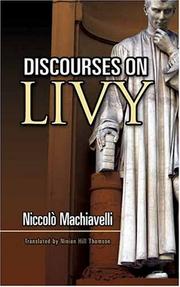
Machiavelli reads Rome's history to ask how republics win, corrupt, and fall—and why the same appetites keep returning in every city.
E. L. James, 2011
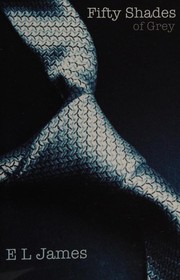
A student reporter interviews a controlled young billionaire, and what begins as a nervous assignment turns into a negotiation of desire, power, and boundaries.
William Shakespeare, 1611
An exiled duke with a library of magic, a daughter who has met almost no one, and an island's furious native wait for a shipwreck to bring his enemies ashore.
Margaret Atwood, 1985
A woman survives in a theocratic state where her body is a resource; her wry, precise voice reports the daily cost of obedience.
William Golding, 1954
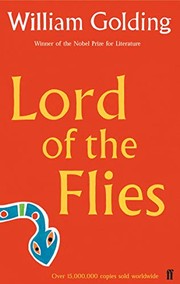
Twelve boys, one island, no adults: a school story that becomes an inquiry into how quickly people build rules, and how easily they drop them.
Μαριλου Ολιβα, 2023
The Trojan War as told by the goddesses who watched it: power, sacrifice and the price of being mortal.
Charles Dickens, 1859
London and Paris on the edge of revolution: a man released from eighteen years in prison, a woman who knits a register of enemies, and a crowd nothing will stop.
Θανάσης Γάλλος, 1793
Ένας χρόνος Γαλλικής Επανάστασης, από τη Βαστίλη στη λαιμητόμο: τι πήγε στραβά και πώς η επανάσταση άρχισε να δικάζει τους δικούς της.
William Shakespeare, 1606
A soldier is greeted by three strangers who promise him a crown, and we watch, line by line, how quickly a decent man can argue himself into murder.
Διονύσιος Σολωμός, 1859
A fierce, strange prose satire that turns Zakynthian society into a stage for hypocrisy, war, and moral judgment.
Frank Herbert, 1965
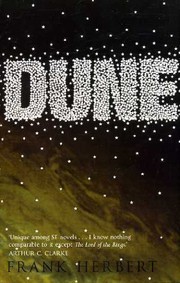
A desert planet, a spice that lets navigators fold space, and a boy being trained into a messiah he never asked to be.
Hernan Diaz, 2022
A biography of a man who hated the family fortune and became, by accident, one of the most powerful financiers who ever lived.
Μάρκος Αυρήλιος, 180
A modern reader revisits Marcus Aurelius’s stoic reflections and asks what their ideals leave out.
Αλέξανδρος Παπαδιαμάντης, 1903
A poor island grandmother counts the daughters she cannot marry off and begins to see each as a debt she must cancel. Papadiamantis writes her from the inside with terrifying calm.
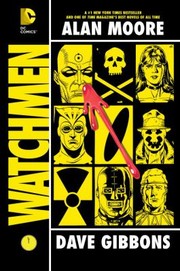
Alan Moore, 1986
A murder mystery among retired superheroes becomes a cold look at power, memory, and what it costs to save a city that may not deserve it.
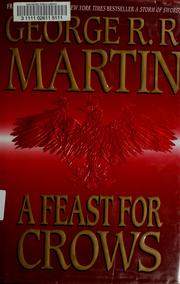
George R. R. Martin, 2005
After a war of kings, the survivors divide the wreckage—and queens, outlaws and broken men get their turn.
A doctor in the Greek countryside quotes Italian and dispenses folk remedies to patients who can't afford to be treated.
Ἐγὼ πάω νὰ κάνω βίζιτες;
νἄχω φτώχια, νἄχω πόνους
καὶ νἀκούω: σὲ πολλοὺς χρόνους!
vale a dir: Dottor, νὰ ζήσῃς
κι’ ἀπὸ πεῖνα νὰ ψοφήσῃς.
Ξέρω ἐγὼ ἐκεῖνοι οἱ ἄρχοντες
τὸ τί θε΄λανε νὰ κάνω·
τὸ γιατρὸ τὸν τσαρλατᾶνο!
Τσαρλατᾶνος; ἆ! δὲ γένουμαι
ξέρεις τί τοῦ ἀποκραίνουμαι
ὁποιανοῦ μὲ κοσουλτάρει;
—Ἔχω tormini. Χαμάρι,
—Ἔχω βάρος στὸ κεφάλι.
Ἐκειὸ τὄχουν ἄλλοι κι’ ἄλλοι.Σατιρικά · Διονύσιος Σολωμός
A man stands in the worst weather he can imagine and asks for worse.
Blow, winds, and crack your cheeks! rage! blow!
You cataracts and hurricanoes, spout
Till you have drench’d our steeples, drown’d the cocks!
You sulphurous and thought-executing fires,
Vaunt-couriers to oak-cleaving thunderbolts,
Singe my white head! And thou, all-shaking thunder,
Smite flat the thick rotundity o’ the world!
Crack nature’s moulds, an germens spill at once,
That make ingrateful man!King Lear · William Shakespeare
The word for disappearance that sounds like household cleaning.
It was always at night—the arrests invariably happened at night. The sudden jerk out of sleep, the rough hand shaking your shoulder, the lights glaring in your eyes, the ring of hard faces round the bed. In the vast majority of cases there was no trial, no report of the arrest. People simply disappeared, always during the night. Your name was removed from the registers, every record of everything you had ever done was wiped out, your one-time existence was denied and then forgotten. You were abolished, annihilated: VAPORIZED was the usual word.Nineteen Eighty-Four · George Orwell
Read pages from books like this, one at a time
Keep reading in the feedRead pages from books like this, one at a time
BookFeed is a feed of real passages from real books. It learns what moves you and finds your next book.
Open BookFeedFree, no sign-up.