
The Taming of the Shrew
William Shakespeare (1564–1616), 1623
A broke fortune-hunter marries the town's most notorious scold and sets about taming her — a comedy that doubles as a fight over who gets to speak. Sharp wordplay and a contest over who gets to speak drive the comedy fast, with an uneasy edge beneath the laughter.
Feels like humor and unease. About power.
Who it’s for
You may like it if you enjoy quick verbal sparring, staged arguments, and jokes that keep shifting who holds the upper hand. The play’s treatment of marriage and obedience can sit uncomfortably now, and some of the wordplay depends on Elizabethan slang.
Why read it
It gives you a fast, funny fight over speech and power, and a chance to see how a familiar comedy can still provoke argument.
Pages from the book
Being starved by someone who calls it love.
The more my wrong, the more his spite appears:What, did he marry me to famish me?Beggars, that come unto my father’s door,Upon entreaty have a present aims;If not, elsewhere they meet with charity:But I, who never knew how to entreat,Nor never needed that I should entreat,Am starved for meat, giddy for lack of sleep,With oaths kept waking and with brawling fed:And that which spites me more than all these wants,He does it under name of perfect love;As who should say, if I should sleep or eat,’Twere deadly sickness or else present death. The argument that silence is the more dangerous choice.
Why, sir, I trust I may have leave to speak;And speak I will; I am no child, no babe:Your betters have endured me say my mind,And if you cannot, best you stop your ears.My tongue will tell the anger of my heart,Or else my heart concealing it will break,And rather than it shall, I will be freeEven to the uttermost, as I please, in words. Some men measure every new noise against the loudest thing they've survived.
Why came I hither but to that intent?Think you a little din can daunt mine ears?Have I not in my time heard lions roar?Have I not heard the sea puff’d up with windsRage like an angry boar chafed with sweat?Have I not heard great ordnance in the field,And heaven’s artillery thunder in the skies?Have I not in a pitched battle heardLoud ’larums, neighing steeds, and trumpets’ clang?And do you tell me of a woman’s tongue,That gives not half so great a blow to hearAs will a chestnut in a farmer’s fire?Tush, tush! fear boys with bugs. William Shakespeare.A play called The Taming of a Shrew was printed in 1594, before Shakespeare's version ever saw print. Whether it is his source, his imitation or a bootleg, scholars still argue.
Books that feel like this

Gulliver's Travels into Several Remote Nations of the World
Jonathan Swift, 1726
Also humor and power.
More by William Shakespeare
Hamlet
William Shakespeare, 1603
A prince in mourning delays, dissembles, and thinks too much, while a court watches every move. Read for the language, stay for the recognitions.
Romeo and Juliet
William Shakespeare, 1597
Two teenagers from feuding families fall in love over three days, and the adults around them keep choosing sides.
Macbeth
William Shakespeare, 1606
A soldier is greeted by three strangers who promise him a crown, and we watch, line by line, how quickly a decent man can argue himself into murder.
Where to get it
Some of these links earn us a small commission, at no cost to you. It keeps BookFeed free.
Questions readers ask
- Is The Taming of the Shrew for me?
- You may like it if you enjoy quick verbal sparring, staged arguments, and jokes that keep shifting who holds the upper hand. The play’s treatment of marriage and obedience can sit uncomfortably now, and some of the wordplay depends on Elizabethan slang.
- What is The Taming of the Shrew like?
- Sharp wordplay and a contest over who gets to speak drive the comedy fast, with an uneasy edge beneath the laughter. Feels like humor and unease. About power.
- What should I read after The Taming of the Shrew?
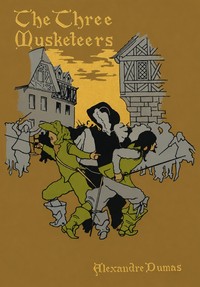
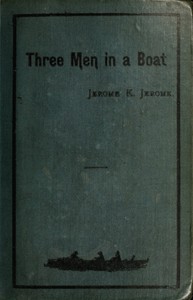
- If you liked The Taming of the Shrew, try Gulliver's Travels into Several Remote Nations of the World (Jonathan Swift), The Three Musketeers (Alexandre Dumas) and Three men in a boat (to say nothing of the dog) (Jerome K. Jerome).
A taste of the feed
Five ways to start a war, none of them requiring a reason.
“Sometimes the quarrel between two princes is to decide which of them shall dispossess a third of his dominions, where neither of them pretend to any right. Sometimes one prince quarrels with another for fear the other should quarrel with him. Sometimes a war is entered upon, because the enemy is too strong; and sometimes, because he is too weak. Sometimes our neighbours want the things which we have, or have the things which we want, and we both fight, till they take ours, or give us theirs. It is a very justifiable cause of a war, to invade a country after the people have been wasted by famine, destroyed by pestilence, or embroiled by factions among themselves.
Gulliver's Travels into Several Remote Nations of the World · Jonathan Swift
The particular agony of walking into a room where everyone already knows each other.
It was, then, into the midst of this tumult and disorder that our young man advanced with a beating heart, ranging his long rapier up his lanky leg, and keeping one hand on the edge of his cap, with that half-smile of the embarrassed provincial who wishes to put on a good face. When he had passed one group he began to breathe more freely; but he could not help observing that they turned round to look at him, and for the first time in his life d’Artagnan, who had till that day entertained a very good opinion of himself, felt ridiculous.
The Three Musketeers · Alexandre Dumas
The short list of what a life actually needs, packed in one sentence.
Throw the lumber over, man! Let your boat of life be light, packed with only what you need—a homely home and simple pleasures, one or two friends, worth the name, someone to love and someone to love you, a cat, a dog, and a pipe or two, enough to eat and enough to wear, and a little more than enough to drink; for thirst is a dangerous thing.
Three men in a boat (to say nothing of the dog) · Jerome K. Jerome
Read pages from books like this, one at a time
Keep reading in the feed