
Animal Farm
George Orwell (1903–1950), 1945
★ 4.03 from 4.9m ratings on Goodreads
A farm's animals overthrow their farmer and write their own rules — then discover how quickly a good slogan can be edited. A fable about power, in plain prose. Plain, brisk prose carries a growing sense of unease as the farm's slogans quietly shift and power changes hands.
Feels like unease, wonder and awe. About power, memory and society.
Who it’s for
You may like it if you want a short, direct fable about how a shared cause can be turned into someone's private privilege. The politics are stated openly rather than worked in subtly, which some readers find too blunt to stay engaged with.
Why read it
It takes a couple of hours and gives you the shape of a takeover in a handful of scenes, plus a sharper ear for the language leaders use.
A page from the book
How a privilege gets explained as a sacrifice made on your behalf.
"Comrades!" he cried. "You do not imagine, I hope, that we pigs are doing this in a spirit of selfishness and privilege? Many of us actually dislike milk and apples. I dislike them myself. Our sole object in taking these things is to preserve our health. Milk and apples (this has been proved by Science, comrades) contain substances absolutely necessary to the well-being of a pig. We pigs are brainworkers. The whole management and organisation of this farm depend on us. Day and night we are watching over your welfare. It is for YOUR sake that we drink that milk and eat those apples. Do you know what would happen if we pigs failed in our duty? Jones would come back! Yes, Jones would come back! What readers say
Readers call it a powerful, unsettling allegory that provoked anger at corrupt leaders and sadness for the exploited, with a chilling ending and modern relevance. Some admired its brevity and clarity; others found the overt politics too direct to engage with.
George Orwell.Written in 1943–44, while the USSR was Britain's ally: Faber and Gollancz both turned it down, and T. S. Eliot wrote Faber's rejection letter.
Books that feel like this
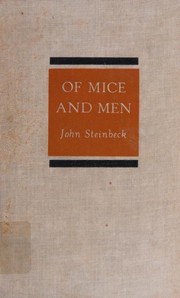
Of Mice and Men
John Steinbeck, 1937
Two migrant workers drift through Depression-era California, trading a shared dream of a small farm against the cost of staying together.
More by George Orwell
Nineteen Eighty-Four
George Orwell, 1949
A clerk who rewrites old newspapers starts a private diary, and every small act of independent thought becomes a crime.
Where to get it
Some of these links earn us a small commission, at no cost to you. It keeps BookFeed free.
Questions readers ask
- Is Animal Farm for me?
- You may like it if you want a short, direct fable about how a shared cause can be turned into someone's private privilege. The politics are stated openly rather than worked in subtly, which some readers find too blunt to stay engaged with.
- What is Animal Farm like?
- Plain, brisk prose carries a growing sense of unease as the farm's slogans quietly shift and power changes hands. Feels like unease, wonder and awe. About power, memory and society.
- What should I read after Animal Farm?
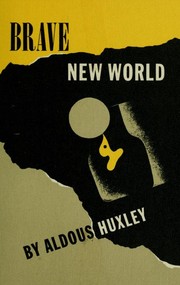
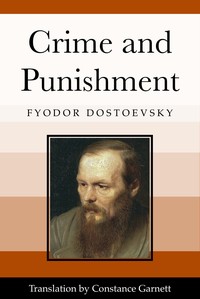
- If you liked Animal Farm, try Brave New World (Aldous Huxley), Crime and Punishment (Fyodor Dostoevsky) and Of Mice and Men (John Steinbeck).
A taste of the feed
What is lost when nothing is allowed to stand between wanting and having.
Impulse arrested spills over, and the flood is feeling, the flood is passion, the flood is even madness: it depends on the force of the current, the height and strength of the barrier. The unchecked stream flows smoothly down its appointed channels into a calm well-being. (The embryo is hungry; day in, day out, the blood-surrogate pump unceasingly turns its eight hundred revolutions a minute. The decanted infant howls; at once a nurse appears with a bottle of external secretion. Feeling lurks in that interval of time between desire and its consummation. Shorten that interval, break down all those old unnecessary barriers.
Brave New World · Aldous Huxley
What if the punishment you wanted most was remorse, and it never came.
And if only fate would have sent him repentance—burning repentance that would have torn his heart and robbed him of sleep, that repentance, the awful agony of which brings visions of hanging or drowning! Oh, he would have been glad of it! Tears and agonies would at least have been life. But he did not repent of his crime.
Crime and Punishment · Fyodor Dostoevsky
What it costs to keep believing in a piece of land you'll never own.
They come, an’ they quit an’ go on; an’ every damn one of ‘em’s got a little piece of land in his head. An’ never a God damn one of ‘em ever gets it. Just like heaven. Ever’body wants a little piece of lan’. I read plenty of books out here. Nobody never gets to heaven, and nobody gets no land. It’s just in their head.
Of Mice and Men · John Steinbeck
Read pages from books like this, one at a time
Keep reading in the feed