
A Tale of Two Cities
Charles Dickens (1812–1870), 1859
★ 3.88 from 1m ratings on Goodreads
London and Paris on the edge of revolution: a man released from eighteen years in prison, a woman who knits a register of enemies, and a crowd nothing will stop. A grave, deliberate voice builds dread and passion slowly, with plain scenes that open into wonder and a hard-won hope.
Feels like dread, passion and wonder. About power, love and death.
Who it’s for
You may like it if you enjoy historical fiction with moral weight, vivid characters and a plot that tightens toward revolution. Be ready for dense Victorian prose and a slow opening that some readers find confusing.
Why read it
Its portrait of a city under moral pressure gives the story lasting force, and the historical sweep makes now a good time to meet it.
Pages from the book
A man keeps one small proof that his old life happened.
Releasing his arm, she laid her hand upon his shoulder. After looking doubtfully at it, two or three times, as if to be sure that it was really there, he laid down his work, put his hand to his neck, and took off a blackened string with a scrap of folded rag attached to it. He opened this, carefully, on his knee, and it contained a very little quantity of hair: not more than one or two long golden hairs, which he had, in some old day, wound off upon his finger. Hunger so sharp that a spilled cask becomes a holiday.
All the people within reach had suspended their business, or their idleness, to run to the spot and drink the wine. The rough, irregular stones of the street, pointing every way, and designed, one might have thought, expressly to lame all living creatures that approached them, had dammed it into little pools; these were surrounded, each by its own jostling group or crowd, according to its size. Some men kneeled down, made scoops of their two hands joined, and sipped, or tried to help women, who bent over their shoulders, to sip, before the wine had all run out between their fingers. A wasted man is shown, for one moment, the life he could have had.
Waste forces within him, and a desert all around, this man stood still on his way across a silent terrace, and saw for a moment, lying in the wilderness before him, a mirage of honourable ambition, self-denial, and perseverance. In the fair city of this vision, there were airy galleries from which the loves and graces looked upon him, gardens in which the fruits of life hung ripening, waters of hope that sparkled in his sight. A moment, and it was gone. Climbing to a high chamber in a well of houses, he threw himself down in his clothes on a neglected bed, and its pillow was wet with wasted tears. What readers say
Readers often describe being moved and haunted by the ending and admire the plotting and characterization, but many struggle with dense prose and a slow start; some find it confusing, disappointing, or overly serious.
Charles Dickens.Dickens staged amateur theatricals; in 1857 he acted in Wilkie Collins's play The Frozen Deep, whose self-sacrifice plot he borrowed for this novel.
Books that feel like this

More by Charles Dickens

A Christmas Carol
Charles Dickens, 1843
Three ghosts, one night, and the cheapest man in London forced to look at what his life has actually cost.
Great Expectations
Charles Dickens, 1861
A blacksmith's orphan is made rich by a stranger, and finds out what money does to love, friendship and memory.
David Copperfield
Charles Dickens, 1850
A boy survives debt, school and unreliable adults, and learns how memory turns a life into a story.
Where to get it
Some of these links earn us a small commission, at no cost to you. It keeps BookFeed free.
Questions readers ask
- Is A Tale of Two Cities for me?
- You may like it if you enjoy historical fiction with moral weight, vivid characters and a plot that tightens toward revolution. Be ready for dense Victorian prose and a slow opening that some readers find confusing.
- What is A Tale of Two Cities like?
- A grave, deliberate voice builds dread and passion slowly, with plain scenes that open into wonder and a hard-won hope. Feels like dread, passion and wonder. About power, love and death.
- What should I read after A Tale of Two Cities?
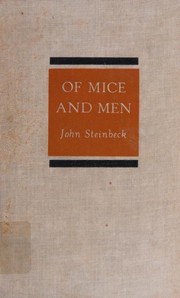
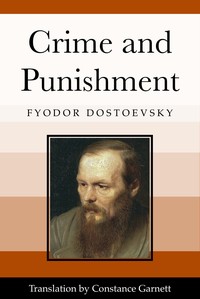
- If you liked A Tale of Two Cities, try Les Misérables (Victor Hugo), Of Mice and Men (John Steinbeck) and Crime and Punishment (Fyodor Dostoevsky).
A taste of the feed
The bravest lives are often the ones nobody applauds.
For many great deeds are performed in petty combats. There are instances of bravery ignored and obstinate, which defend themselves step by step in that fatal onslaught of necessities and turpitudes. Noble and mysterious triumphs which no eye beholds, which are requited with no renown, which are saluted with no trumpet blast. Life, misfortune, isolation, abandonment, poverty, are the fields of battle which have their heroes; obscure heroes, who are, sometimes, grander than the heroes who win renown.
Les Misérables · Victor Hugo
What it costs to keep believing in a piece of land you'll never own.
They come, an’ they quit an’ go on; an’ every damn one of ‘em’s got a little piece of land in his head. An’ never a God damn one of ‘em ever gets it. Just like heaven. Ever’body wants a little piece of lan’. I read plenty of books out here. Nobody never gets to heaven, and nobody gets no land. It’s just in their head.
Of Mice and Men · John Steinbeck
What if the punishment you wanted most was remorse, and it never came.
And if only fate would have sent him repentance—burning repentance that would have torn his heart and robbed him of sleep, that repentance, the awful agony of which brings visions of hanging or drowning! Oh, he would have been glad of it! Tears and agonies would at least have been life. But he did not repent of his crime.
Crime and Punishment · Fyodor Dostoevsky
Read pages from books like this, one at a time
Keep reading in the feed