
Wuthering Heights
Emily Brontë (1818–1848), 1847
★ 3.89 from 2.3m ratings on Goodreads
A storm of a love story told by two unreliable narrators, in which childhood devotion curdles into revenge across two generations on the Yorkshire moors. Told through servants' talk and half-caught letters, the book moves slowly and stormily, all longing and dread.
Feels like longing, passion and dread. About love, power and home.
Who it’s for
You may like it if you want a love story that is fierce rather than comforting, and don't mind a narrator who gets things wrong. Be warned: many readers find the central pair cruel and self-absorbed, and call the book a study of obsession rather than romance.
Why read it
It gives you the moor in bad weather, a household full of grudges, and a narrator whose account you have to weigh for yourself.
Pages from the book
She warns the girl away from a man she knows too well.
“Nelly, help me to convince her of her madness. Tell her what Heathcliff is: an unreclaimed creature, without refinement, without cultivation; an arid wilderness of furze and whinstone. I’d as soon put that little canary into the park on a winter’s day, as recommend you to bestow your heart on him! It is deplorable ignorance of his character, child, and nothing else, which makes that dream enter your head. Pray, don’t imagine that he conceals depths of benevolence and affection beneath a stern exterior! He’s not a rough diamond—a pearl-containing oyster of a rustic: he’s a fierce, pitiless, wolfish man. I never say to him, ‘Let this or that enemy alone, because it would be ungenerous or cruel to harm them;’ I say, ‘Let them alone, because I should hate them to be wronged:’ and he’d crush you like a sparrow’s egg, Isabella, if he found you a troublesome charge. Two children outside a window, looking in at everything they envy.
The light came from thence; they had not put up the shutters, and the curtains were only half closed. Both of us were able to look in by standing on the basement, and clinging to the ledge, and we saw—ah! it was beautiful—a splendid place carpeted with crimson, and crimson-covered chairs and tables, and a pure white ceiling bordered by gold, a shower of glass-drops hanging in silver chains from the centre, and shimmering with little soft tapers. Old Mr. and Mrs. Linton were not there; Edgar and his sister had it entirely to themselves. Shouldn’t they have been happy? We should have thought ourselves in heaven! And now, guess what your good children were doing? Isabella—I believe she is eleven, a year younger than Cathy—lay screaming at the farther end of the room, shrieking as if witches were running red-hot needles into her. The vow of solitude lasts exactly one afternoon.
What vain weather-cocks we are! I, who had determined to hold myself independent of all social intercourse, and thanked my stars that, at length, I had lighted on a spot where it was next to impracticable—I, weak wretch, after maintaining till dusk a struggle with low spirits and solitude, was finally compelled to strike my colours; and under pretence of gaining information concerning the necessities of my establishment, I desired Mrs. Dean, when she brought in supper, to sit down while I ate it; hoping sincerely she would prove a regular gossip, and either rouse me to animation or lull me to sleep by her talk. What readers say
Readers are sharply divided: some admire the novel’s intense passion, bleak moorland atmosphere, and unforgettable complexity, while others reject its cruel, self-absorbed characters and insist it is not a love story but a dark tale of obsession and abuse.
Emily Brontë.Brontë published it under the pseudonym Ellis Bell. It was her only novel, and she died of tuberculosis at thirty, about a year after it appeared.
Books that feel like this
Where to get it
Some of these links earn us a small commission, at no cost to you. It keeps BookFeed free.
Questions readers ask
- Is Wuthering Heights for me?
- You may like it if you want a love story that is fierce rather than comforting, and don't mind a narrator who gets things wrong. Be warned: many readers find the central pair cruel and self-absorbed, and call the book a study of obsession rather than romance.
- What is Wuthering Heights like?
- Told through servants' talk and half-caught letters, the book moves slowly and stormily, all longing and dread. Feels like longing, passion and dread. About love, power and home.
- What should I read after Wuthering Heights?
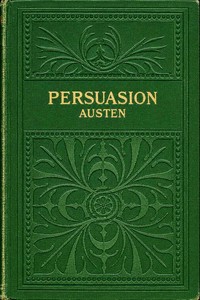
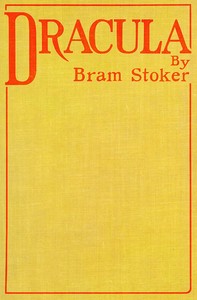
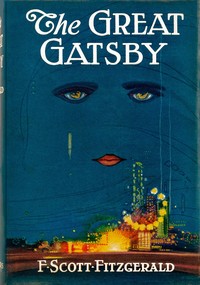
- If you liked Wuthering Heights, try Persuasion (Jane Austen), Dracula (Bram Stoker) and The Great Gatsby (F. Scott Fitzgerald).
A taste of the feed
The particular loneliness of a room shared with someone you once loved.
They had no conversation together, no intercourse but what the commonest civility required. Once so much to each other! Now nothing! There had been a time, when of all the large party now filling the drawing-room at Uppercross, they would have found it most difficult to cease to speak to one another. With the exception, perhaps, of Admiral and Mrs. Croft, who seemed particularly attached and happy (Anne could allow no other exception even among the married couples), there could have been no two hearts so open, no tastes so similar, no feelings so in unison, no countenances so beloved. Now they were as strangers; nay, worse than strangers, for they could never become acquainted. It was a perpetual estrangement.
Persuasion · Jane Austen
The strange calm that arrives when a lie comes out perfectly.
Anna said what came to her lips, and marveled, hearing herself, at her own capacity for lying. How simple and natural were her words, and how likely that she was simply sleepy! She felt herself clad in an impenetrable armor of falsehood. She felt that some unseen force had come to her aid and was supporting her.
Anna Karenina · Leo Tolstoy
What the greatest of the Greek heroes would trade for a day of paid labour.
“I spake; Achilles quickly answered me:— ‘Noble Ulysses, speak not thus of death, As if thou couldst console me. I would be A laborer on earth, and serve for hire Some man of mean estate, who makes scant cheer, Rather than reign o’er all who have gone down To death. Speak rather of my noble son, Whether or not he yet has joined the wars To fight among the foremost of the host.
The Odyssey · Homer
Read pages from books like this, one at a time
Keep reading in the feed