
The strange case of Dr. Jekyll and Mr. Hyde
Robert Louis Stevenson (1850–1894), 1886
★ 3.83 from 708.5k ratings on Goodreads
A short, fast Victorian mystery that works as a thriller and as a sharp study of respectability, appetite and the parts of ourselves we prefer to keep out of sight. A tight Victorian mystery that moves quickly while keeping a low current of dread and moral unease.
Feels like dread, unease and curiosity. About identity, morality and society.
Who it’s for
You may like it if you enjoy short gothic thrillers, psychological puzzles, and Victorian prose that stays brisk. The famous twist is widely known, and some readers find the story overfamiliar or slow in places.
Why read it
It gives you a compact, unsettling look at respectability and appetite, and the suspense still works even when you know the outline.
Pages from the book
The suspicion that a single self is a convenient fiction.
And it chanced that the direction of my scientific studies, which led wholly towards the mystic and the transcendental, reacted and shed a strong light on this consciousness of the perennial war among my members. With every day, and from both sides of my intelligence, the moral and the intellectual, I thus drew steadily nearer to that truth, by whose partial discovery I have been doomed to such a dreadful shipwreck: that man is not truly one, but truly two. I say two, because the state of my own knowledge does not pass beyond that point. Others will follow, others will outstrip me on the same lines; and I hazard the guess that man will be ultimately known for a mere polity of multifarious, incongruous and independent denizens. I, for my part, from the nature of my life, advanced infallibly in one direction and in one direction only. Nothing about him is wrong enough to explain the dread.
Then he began slowly to mount the street, pausing every step or two and putting his hand to his brow like a man in mental perplexity. The problem he was thus debating as he walked, was one of a class that is rarely solved. Mr. Hyde was pale and dwarfish, he gave an impression of deformity without any nameable malformation, he had a displeasing smile, he had borne himself to the lawyer with a sort of murderous mixture of timidity and boldness, and he spoke with a husky, whispering and somewhat broken voice; all these were points against him, but not all of these together could explain the hitherto unknown disgust, loathing and fear with which Mr. Utterson regarded him. “There must be something else,” said the perplexed gentleman. “There is something more, if I could find a name for it. God bless me, the man seems hardly human! A city's morning light, broken into every shade of dusk.
A great chocolate-coloured pall lowered over heaven, but the wind was continually charging and routing these embattled vapours; so that as the cab crawled from street to street, Mr. Utterson beheld a marvelous number of degrees and hues of twilight; for here it would be dark like the back-end of evening; and there would be a glow of a rich, lurid brown, like the light of some strange conflagration; and here, for a moment, the fog would be quite broken up, and a haggard shaft of daylight would glance in between the swirling wreaths. The dismal quarter of Soho seen under these changing glimpses, with its muddy ways, and slatternly passengers, and its lamps, which had never been extinguished or had been kindled afresh to combat this mournful reinvasion of darkness, seemed, in the lawyer’s eyes, like a district of some city in a nightmare. More passages from The strange case of Dr. Jekyll and Mr. Hyde
What readers say
Readers find the novella gripping and creepy, often admiring its concise craft and suspense; many are fascinated by its duality and psychological darkness. Some find it overfamiliar, slow, or less surprising because the twist is widely known.
Robert Louis Stevenson.Stevenson said the central scene came to him in a dream, and he wrote the first draft in only a few days, while ill and confined to bed in Bournemouth.
Books that feel like this




More by Robert Louis Stevenson
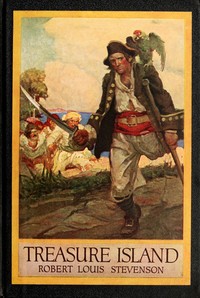
Treasure Island
Robert Louis Stevenson, 1883
A boy finds a dead sailor's map and ends up aboard a ship where the friendliest man may be the most dangerous. Fast, funny, and the template for pirate stories.
Where to get it
Some of these links earn us a small commission, at no cost to you. It keeps BookFeed free.
Questions readers ask
- Is The strange case of Dr. Jekyll and Mr. Hyde for me?
- You may like it if you enjoy short gothic thrillers, psychological puzzles, and Victorian prose that stays brisk. The famous twist is widely known, and some readers find the story overfamiliar or slow in places.
- What is The strange case of Dr. Jekyll and Mr. Hyde like?
- A tight Victorian mystery that moves quickly while keeping a low current of dread and moral unease. Feels like dread, unease and curiosity. About identity, morality and society.
- What should I read after The strange case of Dr. Jekyll and Mr. Hyde?
- If you liked The strange case of Dr. Jekyll and Mr. Hyde, try Dracula (Bram Stoker), Frankenstein (Mary Shelley) and Carmilla (Joseph Sheridan Le Fanu).
A taste of the feed
A mind wakes up with no history, and nobody to ask.
“But where were my friends and relations? No father had watched my infant days, no mother had blessed me with smiles and caresses; or if they had, all my past life was now a blot, a blind vacancy in which I distinguished nothing. From my earliest remembrance I had been as I then was in height and proportion. I had never yet seen a being resembling me or who claimed any intercourse with me. What was I? The question again recurred, to be answered only with groans.
Frankenstein · Mary Shelley
What it feels like to watch your own hands disappear.
“The pain had passed. I thought I was killing myself and I did not care. I shall never forget that dawn, and the strange horror of seeing that my hands had become as clouded glass, and watching them grow clearer and thinner as the day went by, until at last I could see the sickly disorder of my room through them, though I closed my transparent eyelids. My limbs became glassy, the bones and arteries faded, vanished, and the little white nerves went last. I gritted my teeth and stayed there to the end. At last only the dead tips of the fingernails remained, pallid and white, and the brown stain of some acid upon my fingers.
The Invisible Man · H. G. Wells
The logic of revenge, laid out with terrifying patience.
The thousand injuries of Fortunato I had borne as I best could; but when he ventured upon insult, I vowed revenge. You, who so well know the nature of my soul, will not suppose, however, that I gave utterance to a threat. At length I would be avenged; this was a point definitively settled—but the very definitiveness with which it was resolved, precluded the idea of risk. I must not only punish, but punish with impunity. A wrong is unredressed when retribution overtakes its redresser. It is equally unredressed when the avenger fails to make himself felt as such to him who has done the wrong.
The Works of Edgar Allan Poe · Edgar Allan Poe
Read pages from books like this, one at a time
Keep reading in the feed