
The Importance of Being Earnest
Oscar Wilde (1854–1900), 1895
★ 4.17 from 417.9k ratings on Goodreads
Two friends invent imaginary relatives to escape their obligations, and their inventions collide in one country house full of people who talk in epigrams. The talk is quick, defiant and paradox-loving, with a light farcical pace under the Victorian manners.
Feels like defiance. About freedom, nature and death.
Who it’s for
You may enjoy it if you like verbal comedy, absurd social rules played straight, and characters who argue by epigram. The period references and nonstop witty talk can make the first act feel like a brisk Victorian conversation you need to lean into.
Why read it
Its pleasure is in the language: people turn serious matters into jokes and jokes into serious matters, and the farce keeps moving.
Pages from the book
How the upper classes turn a bereavement into a background check.
To lose one parent, Mr. Worthing, may be regarded as a misfortune; to lose both looks like carelessness. Who was your father? He was evidently a man of some wealth. Was he born in what the Radical papers call the purple of commerce, or did he rise from the ranks of the aristocracy? The strange grief of saying goodbye to someone you met an hour ago.
It is always painful to part from people whom one has known for a very brief space of time. The absence of old friends one can endure with equanimity. But even a momentary separation from anyone to whom one has just been introduced is almost unbearable. Education, in her view, is a rumour that never quite reached the right people.
I am pleased to hear it. I do not approve of anything that tampers with natural ignorance. Ignorance is like a delicate exotic fruit; touch it and the bloom is gone. The whole theory of modern education is radically unsound. Fortunately in England, at any rate, education produces no effect whatsoever. If it did, it would prove a serious danger to the upper classes, and probably lead to acts of violence in Grosvenor Square. Oscar Wilde.The play opened at the St James's Theatre on 14 February 1895 — the very date Cecily gives for her engagement. Months later Wilde was in court.
Books that feel like this
Mrs. Dalloway
Virginia Woolf, 1925
One June day in London, a society wife prepares a party while a shell-shocked veteran sits in the park. A novel written the way a mind actually moves.

More by Oscar Wilde
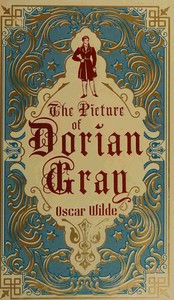
The Picture of Dorian Gray
Oscar Wilde, 1890
A beautiful young man wishes his portrait would age in his place. It is a sharp, funny, then frightening study of vanity, charm and moral drift, still uncomfortably current.
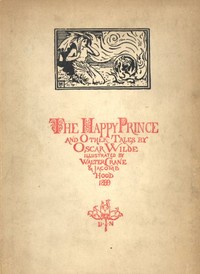
The Happy Prince, and Other Tales
Oscar Wilde, 1888
Five short fairy tales where a statue, a nightingale, a giant and a boastful firework teach tenderness and vanity with a sharp wit, in less time than a commute.
Where to get it
Some of these links earn us a small commission, at no cost to you. It keeps BookFeed free.
Questions readers ask
- Is The Importance of Being Earnest for me?
- You may enjoy it if you like verbal comedy, absurd social rules played straight, and characters who argue by epigram. The period references and nonstop witty talk can make the first act feel like a brisk Victorian conversation you need to lean into.
- What is The Importance of Being Earnest like?
- The talk is quick, defiant and paradox-loving, with a light farcical pace under the Victorian manners. Feels like defiance. About freedom, nature and death.
- What should I read after The Importance of Being Earnest?
- If you liked The Importance of Being Earnest, try Jane Eyre (Charlotte Brontë), The Tempest (William Shakespeare) and Oedipus Rex (Sophocles).
A taste of the feed
Looking at someone you shouldn't, knowing precisely what it will cost.
No sooner did I see that his attention was riveted on them, and that I might gaze without being observed, than my eyes were drawn involuntarily to his face; I could not keep their lids under control: they would rise, and the irids would fix on him. I looked, and had an acute pleasure in looking,—a precious yet poignant pleasure; pure gold, with a steely point of agony: a pleasure like what the thirst-perishing man might feel who knows the well to which he has crept is poisoned, yet stoops and drinks divine draughts nevertheless.
Jane Eyre · Charlotte Brontë
Some dreams are worth crying over when they end.
Be not afeard; the isle is full of noises, Sounds and sweet airs, that give delight and hurt not. Sometimes a thousand twangling instruments Will hum about mine ears, and sometime voices That, if I then had waked after long sleep, Will make me sleep again: and then, in dreaming, The clouds methought would open and show riches Ready to drop upon me, that, when I waked, I cried to dream again.
The Tempest · William Shakespeare
What stays unforgiven when a crime becomes the price of peace?
My lot be still to lead The life of innocence and fly Irreverence in word or deed, To follow still those laws ordained on high Whose birthplace is the bright ethereal sky. No mortal birth they own, Olympus their progenitor alone: Ne’er shall they slumber in oblivion cold, The god in them is strong and grows not old.
Oedipus Rex · Sophocles
Read pages from books like this, one at a time
Keep reading in the feed