
The Man Who Was Thursday
G. K. Chesterton (1874–1936), 1908
★ 3.82 from 49.3k ratings on Goodreads
A poet-detective infiltrates a council of anarchists, each named for a day of the week, and the chase turns into a comic, vertiginous argument about whether the universe is friendly or hostile. A witty, headlong chase that keeps shifting shape, mixing comic banter with a dizzy philosophical argument about a friendly or hostile universe.
Feels like wonder, humor and unease. About identity, faith and morality.
Who it’s for
You may enjoy this if you like detective stories that turn into ideas, with wordplay and a sense of wonder. Be ready for a plot that grows deliberately strange and argumentative, less a tidy mystery than a metaphysical chase.
Why read it
It gives you a brisk, funny story that also asks serious questions about trust, fear and belief, without settling for easy answers.
Pages from the book
Goodness looks like an accident and evil looks like a joke.
When I see the horrible back, I am sure the noble face is but a mask. When I see the face but for an instant, I know the back is only a jest. Bad is so bad, that we cannot but think good an accident; good is so good, that we feel certain that evil could be explained. How ordinary grass looks when you might be leaving it.
He felt a strange and vivid value in all the earth around him, in the grass under his feet; he felt the love of life in all living things. He could almost fancy that he heard the grass growing; he could almost fancy that even as he stood fresh flowers were springing up and breaking into blossom in the meadow—flowers blood red and burning gold and blue, fulfilling the whole pageant of the spring. And whenever his eyes strayed for a flash from the calm, staring, hypnotic eyes of the Marquis, they saw the little tuft of almond tree against the sky-line. He had the feeling that if by some miracle he escaped he would be ready to sit for ever before that almond tree, desiring nothing else in the world. How a face on a dark road can unravel your faith in faces.
Walking up a road at night, I have seen a lamp and a lighted window and a cloud make together a most complete and unmistakable face. If anyone in heaven has that face I shall know him again. Yet when I walked a little farther I found that there was no face, that the window was ten yards away, the lamp ten hundred yards, the cloud beyond the world. Well, Sunday’s face escaped me; it ran away to right and left, as such chance pictures run away. And so his face has made me, somehow, doubt whether there are any faces. I don’t know whether your face, Bull, is a face or a combination in perspective. Perhaps one black disc of your beastly glasses is quite close and another fifty miles away. Oh, the doubts of a materialist are not worth a dump. G. K. Chesterton.Chesterton dedicated the novel to Edmund Clerihew Bentley, his school friend from St Paul's, who later invented the clerihew, a four-line comic verse form named after his middle name.
Books that feel like this

Where to get it
Some of these links earn us a small commission, at no cost to you. It keeps BookFeed free.
Questions readers ask
- Is The Man Who Was Thursday for me?
- You may enjoy this if you like detective stories that turn into ideas, with wordplay and a sense of wonder. Be ready for a plot that grows deliberately strange and argumentative, less a tidy mystery than a metaphysical chase.
- What is The Man Who Was Thursday like?
- A witty, headlong chase that keeps shifting shape, mixing comic banter with a dizzy philosophical argument about a friendly or hostile universe. Feels like wonder, humor and unease. About identity, faith and morality.
- What should I read after The Man Who Was Thursday?
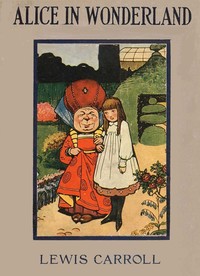
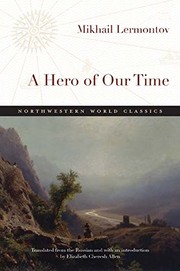
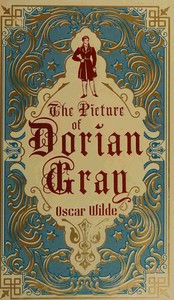
- If you liked The Man Who Was Thursday, try Ulysses (James Joyce), Alice's Adventures in Wonderland (Lewis Carroll) and A Hero of Our Time (Mikhail Lermontov).
A taste of the feed
A dog on a beach is not looking for anything it can name.
Their dog ambled about a bank of dwindling sand, trotting, sniffing on all sides. Looking for something lost in a past life. Suddenly he made off like a bounding hare, ears flung back, chasing the shadow of a lowskimming gull. The man’s shrieked whistle struck his limp ears. He turned, bounded back, came nearer, trotted on twinkling shanks. On a field tenney a buck, trippant, proper, unattired. At the lacefringe of the tide he halted with stiff forehoofs, seawardpointed ears. His snout lifted barked at the wavenoise, herds of seamorse. They serpented towards his feet, curling, unfurling many crests, every ninth, breaking, plashing, from far, from farther out, waves and waves.
Ulysses · James Joyce
She scolds herself so well it brings her to tears.
“Come, there’s no use in crying like that!” said Alice to herself, rather sharply; “I advise you to leave off this minute!” She generally gave herself very good advice, (though she very seldom followed it), and sometimes she scolded herself so severely as to bring tears into her eyes; and once she remembered trying to box her own ears for having cheated herself in a game of croquet she was playing against herself, for this curious child was very fond of pretending to be two people. “But it’s no use now,” thought poor Alice, “to pretend to be two people! Why, there’s hardly enough of me left to make one respectable person!”
Alice's Adventures in Wonderland · Lewis Carroll
What it costs to be the strangest person in the room.
The man in the corner readjusted his collar and necktie, which, during the narrative of this interesting mystery, had worked its way up his long, crane-like neck under his large flappy ears. His costume of checked tweed of a peculiarly loud pattern had tickled the fancy of some of the waitresses, who were standing gazing at him and giggling in one corner. This evidently made him nervous. He gazed up very meekly at Polly, looking for all the world like a bald-headed adjutant dressed for a holiday.
The Old Man in the Corner · Baroness Orczy
Read pages from books like this, one at a time
Keep reading in the feed