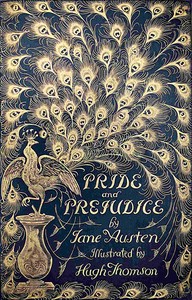
Pride and Prejudice
Jane Austen, 1813
A sharp-eyed comedy about money, manners and misjudgment, in which a quick-witted woman and a proud man keep being wrong about each other. Funnier and more cutting than its reputation suggests.
 BookFeed Ελληνικά
Austen and Voltaire make comedy out of people who are certain they are right: in «Pride and Prejudice», a quick-witted woman and a proud man keep misreading each other, while Candide's tutor insists this is the best of all possible worlds and the story keeps testing the claim. Both are funny in a dry, exacting way, and both leave you noticing how often your own confidence rests on very little. If you like laughing at self-deception rather than at slapstick, these two are a good place to start.
A page that shows it
A man reframes his self-interest as an act of atonement.
Having now a good house and a very sufficient income, he intended to marry; and in seeking a reconciliation with the Longbourn family he had a wife in view, as he meant to choose one of the daughters, if he found them as handsome and amiable as they were represented by common report. This was his plan of amends—of atonement—for inheriting their father’s estate; and he thought it an excellent one, full of eligibility and suitableness, and excessively generous and disinterested on his own part. Jane Austen, 1813
A sharp-eyed comedy about money, manners and misjudgment, in which a quick-witted woman and a proud man keep being wrong about each other. Funnier and more cutting than its reputation suggests.
Jane Austen, 1815
A clever, rich, bored young woman decides to arrange her neighbours' love lives, and gets nearly everything wrong. Austen's funniest, most merciless book about self-knowledge.
Saul Bellow, 1959
A rich, enormous, furious American tells his own life at full volume: wives, a farm, a debt of love, and a hunger for something he can't name.
William Shakespeare, 1623
A broke fortune-hunter marries the town's most notorious scold and sets about taming her — a comedy that doubles as a fight over who gets to speak.
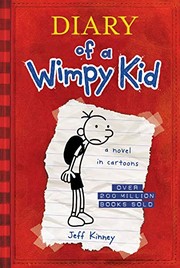
Jeff Kinney, 2007
An illustrated journal of middle-school schemes, grievances and social disasters, told by a kid who is sure he is the only sane person in the building.
James Joyce, 1922
One Dublin day in 1904, followed through two men's minds — an ad-canvasser and a young writer — with every joke, smell and stray thought left in.
Voltaire, 1759
A sweet-natured young man is told this is the best of all possible worlds, then sent across it to test the claim. Short, fast, savagely funny, and still aimed at our comforting ideas.
Jonathan Swift, 1726
A ship's surgeon keeps washing up among miniature courtiers, giants, absent-minded scientists and rational horses, and each country shows human folly from a new angle. It is still the sharpest satire in English.
Πηνελόπη Δέλτα, 1932
A lively summer among siblings, where small rebellions, shifting alliances and huge adventures fill the everyday.
Γεώργιος Σουρής, 1888
Athens, 1888: a newspaper poet turns Diogenes, Buddha and his own bad moods into rhyming satire that still lands. Read him for the jokes, stay for the ache underneath.
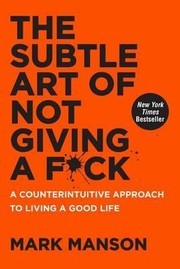
Mark Manson, 2016
A potty-mouthed argument that the cure for anxiety isn't caring more but choosing better what to care about — and paying the price of that choice.
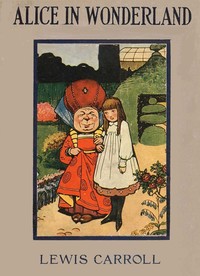
Lewis Carroll, 1865
A girl falls down a rabbit hole into a world where nothing keeps its size, its manners or its temper, and keeps asking the questions everyone else stopped asking.
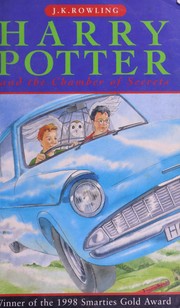
J. K. Rowling, 1998
A second year at Hogwarts turns sinister when a hidden chamber opens, a voice hisses in the walls, and everyone suspects Harry—while a vain new professor steals the credit.
Ανδρέας Καρκαβίτσας, 1899
Twelve stories of young men on the edge of everything — battle, the sea, first love — written by a doctor who watched war at first hand and turned it into taut lyric prose.
Εμμανουήλ Ροΐδης, 1893
Why one writer would rather read Spencer than write a page: a comic, sharp argument against Greece's language split.
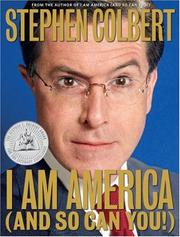
Stephen Colbert, 2007
A fake conservative pundit explains America in rants, charts and footnotes—a comic time capsule of cable-news certainty and expert distrust.
Άγγελος Βλάχος, 1893
An Athenian clerk marries a rich bride with one eye fewer and fifteen years more, and plans a tea party. A comedy of dowries, vanity and domestic war.
Alexandre Dumas, 1844
Four swaggering swordsmen, a cardinal who wants them dead, and a queen's secret: a serial adventure written at a gallop, with jokes and a very cold villain.
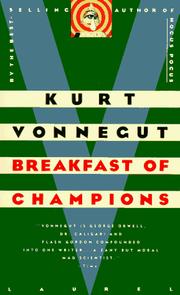
Kurt Vonnegut, 1973
A little-read science-fiction hack, a car dealer coming apart, and a narrator who walks into his own book to tell them both the truth.
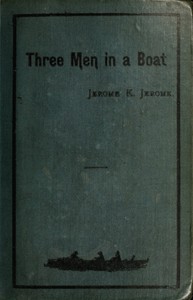
Jerome K. Jerome, 1889
Three friends and a fox terrier row up the Thames and fall into every small disaster available. The comedy of overpacking, bad weather and self-deception is still funny, and the digressions are sharp.
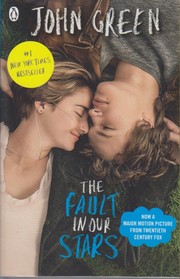
John Green, 2012
A witty, dying teenager meets a boy who refuses to be solemn, and together they argue with oblivion, love, and the author of an unfinished book.
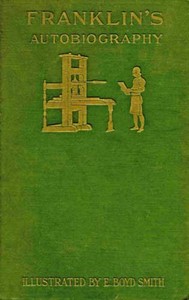
Benjamin Franklin, 1791
A Boston printer's son explains how he taught himself to write, argue and get things done, with a candor and self-mockery rare in memoirs of his era.
Στέφανος Παπατρέχας
A theatrical satire turns curses, historical violence and slips of the tongue into unruly comedy.
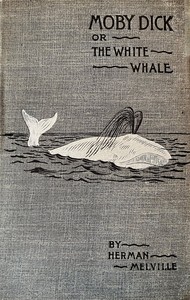
Herman Melville, 1851
A sea story that keeps stopping to joke, lecture on whales, and stare into the abyss, led by a captain who has turned grief into a single, ruinous purpose.
Every honest confession leaves something out, and it rarely matters.
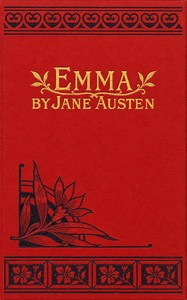
Seldom, very seldom, does complete truth belong to any human disclosure; seldom can it happen that something is not a little disguised, or a little mistaken; but where, as in this case, though the conduct is mistaken, the feelings are not, it may not be very material.—Mr. Knightley could not impute to Emma a more relenting heart than she possessed, or a heart more disposed to accept of his.Emma · Jane Austen
What it sounds like when someone loves you and you can't believe it.
Ἔχει τηλέφωνο στὴν κρεβατοκάμαρά μου». Ἔτσι λοιπὸν ἀνεβήκαμε ἐπάνω. Σᾶς διαβεβαιώνω πὼς ἡ συμπεριφορὰ τῆς Λίλι δὲν εἶχε τίποτα τὸ πρόστυχο ἢ τὸ χυδαῖο. Ὅταν ξεντύθηκε, ἄρχισε νὰ μιλάει μὲ τρεμάμενη φωνή: «Σ‘ ἀγαπῶ! Σ‘ ἀγαπῶ!» Κι ἐγὼ εἶπα ἀπὸ μέσα μου καθὼς ἀγκαλιαστήκαμε: «Πῶς εἶναι δυνατὸν ν’ ἀγαπάει ἐμένα – ἐμένα, ἐμένα;» Ἀκούστηκε ἕνα κουβάρι ἀπὸ μπουμπουνητὰ κι ὕστερα ξέσπασε δυνατὴ βροχὴ μὲ ἀστραπὲς ποὺ μαστίγωνε τοὺς δρόμους, τὰ δέντρα, τὶς στέγες καὶ τὰ παντζούρια. Τὰ πάντα ἄστραφταν.Χέντερσον, ο Βασιλιάς της Βροχής · Saul Bellow
Being starved by someone who calls it love.
The more my wrong, the more his spite appears:
What, did he marry me to famish me?
Beggars, that come unto my father’s door,
Upon entreaty have a present aims;
If not, elsewhere they meet with charity:
But I, who never knew how to entreat,
Nor never needed that I should entreat,
Am starved for meat, giddy for lack of sleep,
With oaths kept waking and with brawling fed:
And that which spites me more than all these wants,
He does it under name of perfect love;
As who should say, if I should sleep or eat,
’Twere deadly sickness or else present death.The Taming of the Shrew · William Shakespeare
Read pages from books like this, one at a time
Keep reading in the feedRead pages from books like this, one at a time
BookFeed is a feed of real passages from real books. It learns what moves you and finds your next book.
Open BookFeedFree, no sign-up.