BookFeed Ελληνικά

Books like The Man Who Was Thursday

If The Man Who Was Thursday stayed with you, these share its feel: wonder, identity and humor. Each comes with a real page, so you can tell in a minute.

About The Man Who Was Thursday · G. K. Chesterton

  1. 1.Ulysses

    James Joyce, 1922

    Also humor and identity. One Dublin day in 1904, followed through two men's minds — an ad-canvasser and a young writer — with every joke, smell and stray thought left in.

    Their dog ambled about a bank of dwindling sand, trotting, sniffing on all sides. Looking for something lost in a past life. Suddenly he made off like a bounding hare, ears flung back, chasing the shadow of a lowskimming gull. The man’s shrieked whistle struck his limp ears. He turned, bounded back, came nearer, trotted on twinkling shanks. On a field tenney a buck, trippant, proper, unattired. At the lacefringe of the tide he halted with stiff forehoofs, seawardpointed ears. His snout lifted barked at the wavenoise, herds of seamorse. They serpented towards his feet, curling, unfurling many crests, every ninth, breaking, plashing, from far, from farther out, waves and waves.
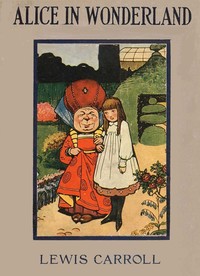
  2. 2.Alice's Adventures in Wonderland

    Lewis Carroll, 1865

    Also wonder and identity. A girl falls down a rabbit hole into a world where nothing keeps its size, its manners or its temper, and keeps asking the questions everyone else stopped asking.

    “Come, there’s no use in crying like that!” said Alice to herself, rather sharply; “I advise you to leave off this minute!” She generally gave herself very good advice, (though she very seldom followed it), and sometimes she scolded herself so severely as to bring tears into her eyes; and once she remembered trying to box her own ears for having cheated herself in a game of croquet she was playing against herself, for this curious child was very fond of pretending to be two people. “But it’s no use now,” thought poor Alice, “to pretend to be two people! Why, there’s hardly enough of me left to make one respectable person!”
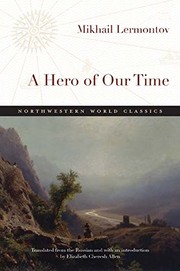
  3. 3.A Hero of Our Time

    Mikhail Lermontov, 1840

    Also morality and unease. A bored young officer drifts through the Caucasus, charming and wrecking the people he meets, in a novel that invented the modern antihero.

    The blind boy did not pick it up. Yanko took his seat in the boat; the wind was blowing from the shore; they hoisted the little sail and sped rapidly away. For a long time the white sail gleamed in the moonlight amid the dark waves. Still the blind boy remained seated upon the shore, and then I heard something which sounded like sobbing. The blind boy was, in fact, weeping, and for a long, long time his tears flowed... I grew heavy-hearted. For what reason should fate have thrown me into the peaceful circle of honourable smugglers? Like a stone cast into a smooth well, I had disturbed their quietude, and I barely escaped going to the bottom like a stone.
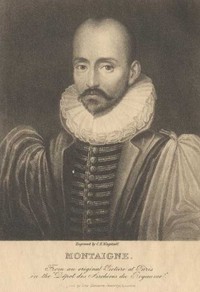
  4. 4.Essays of Michel de Montaigne

    Michel de Montaigne, 1580

    Also identity and humor. A sixteenth-century nobleman examines friendship, death, custom and his own kidney stones, using himself as the evidence. It reads like a long, clever conversation with a frank friend.

    ‘Tis wonderful from how many idle beginnings and frivolous causes such famous impressions commonly, proceed. This it is that obstructs information; for whilst we seek out causes and solid and weighty ends, worthy of so great a name, we lose the true ones; they escape our sight by their littleness. And, in truth, a very prudent, diligent, and subtle inquisition is required in such searches, indifferent, and not prepossessed. To this very hour, all these miracles and strange events have concealed themselves from me: I have never seen greater monster or miracle in the world than myself: one grows familiar with all strange things by time and custom, but the more I frequent and the better I know myself, the more does my own deformity astonish me, the less I understand myself.
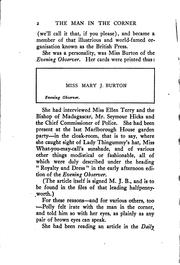
  5. 5.The Old Man in the Corner

    Baroness Orczy, 1909

    Also morality and humor. A nameless man in a teashop solves London's murders from his chair, knotting string, while a young journalist listens — and never gets proof.

    The man in the corner readjusted his collar and necktie, which, during the narrative of this interesting mystery, had worked its way up his long, crane-like neck under his large flappy ears. His costume of checked tweed of a peculiarly loud pattern had tickled the fancy of some of the waitresses, who were standing gazing at him and giggling in one corner. This evidently made him nervous. He gazed up very meekly at Polly, looking for all the world like a bald-headed adjutant dressed for a holiday.
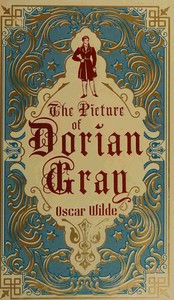
  6. 6.The Picture of Dorian Gray

    Oscar Wilde, 1890

    Also identity and unease. A beautiful young man wishes his portrait would age in his place. It is a sharp, funny, then frightening study of vanity, charm and moral drift, still uncomfortably current.

    “I am jealous of everything whose beauty does not die. I am jealous of the portrait you have painted of me. Why should it keep what I must lose? Every moment that passes takes something from me and gives something to it. Oh, if it were only the other way! If the picture could change, and I could be always what I am now! Why did you paint it? It will mock me some day—mock me horribly!” The hot tears welled into his eyes; he tore his hand away and, flinging himself on the divan, he buried his face in the cushions, as though he was praying.
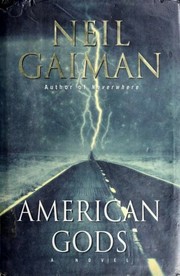
  7. 8.American Gods

    Neil Gaiman, 2001

    Also faith and unease. A newly released convict takes a job with a mysterious conman and discovers that old gods, brought to America by immigrants, are preparing for war with the new.

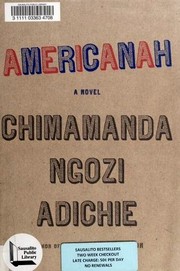
  8. 10.Americanah

    Chimamanda Ngozi Adichie, 2013

    Also identity and wonder. A Nigerian woman returns to Lagos after years in America, and a love story becomes a sharp, funny reckoning with race, hair and belonging.

  9. 12.Good Omens

    Terry Pratchett, 1990

    Also wonder and unease. A demon and an angel have gone native in England and would rather not see the world end, so they fumble toward preventing Armageddon.

Read pages from books like this, one at a time

BookFeed is a feed of real passages from real books. It learns what moves you and finds your next book.

Open BookFeed

Free, no sign-up.