
Alice's Adventures in Wonderland
Lewis Carroll (1832–1898), 1865
A girl falls down a rabbit hole into a world where nothing keeps its size, its manners or its temper, and keeps asking the questions everyone else stopped asking. The story moves in quick, curious turns, with brisk Victorian wit and a child's earnest logic that keeps you slightly off balance.
Feels like wonder, curiosity and humor. About identity, adventure and madness.
Who it’s for
You may enjoy it if you like wordplay, absurd rules and a heroine who argues with herself as much as with the world. The Victorian sentences and puns can demand slow reading, and some jokes depend on logic puzzles or rhymes you may not know.
Why read it
It gives you a bright, sideways view of growing up, where manners, size and sense keep changing and questions matter more than answers.
Pages from the book
She scolds herself so well it brings her to tears.
“Come, there’s no use in crying like that!” said Alice to herself, rather sharply; “I advise you to leave off this minute!” She generally gave herself very good advice, (though she very seldom followed it), and sometimes she scolded herself so severely as to bring tears into her eyes; and once she remembered trying to box her own ears for having cheated herself in a game of croquet she was playing against herself, for this curious child was very fond of pretending to be two people. “But it’s no use now,” thought poor Alice, “to pretend to be two people! Why, there’s hardly enough of me left to make one respectable person!” The morning you wake up unable to prove you're still yourself.
Alice took up the fan and gloves, and, as the hall was very hot, she kept fanning herself all the time she went on talking: “Dear, dear! How queer everything is to-day! And yesterday things went on just as usual. I wonder if I’ve been changed in the night? Let me think: was I the same when I got up this morning? I almost think I can remember feeling a little different. But if I’m not the same, the next question is, Who in the world am I? Ah, that’s the great puzzle!” And she began thinking over all the children she knew that were of the same age as herself, to see if she could have been changed for any of them. Leaving a party and hoping, just once, that someone calls you back.
This piece of rudeness was more than Alice could bear: she got up in great disgust, and walked off; the Dormouse fell asleep instantly, and neither of the others took the least notice of her going, though she looked back once or twice, half hoping that they would call after her: the last time she saw them, they were trying to put the Dormouse into the teapot. Lewis Carroll.Charles Dodgson was an Oxford maths lecturer who invented the story on a rowboat trip for the dean's daughter, Alice Liddell, after she asked him to write it down.
Books that feel like this
Where to get it
Some of these links earn us a small commission, at no cost to you. It keeps BookFeed free.
Questions readers ask
- Is Alice's Adventures in Wonderland for me?
- You may enjoy it if you like wordplay, absurd rules and a heroine who argues with herself as much as with the world. The Victorian sentences and puns can demand slow reading, and some jokes depend on logic puzzles or rhymes you may not know.
- What is Alice's Adventures in Wonderland like?
- The story moves in quick, curious turns, with brisk Victorian wit and a child's earnest logic that keeps you slightly off balance. Feels like wonder, curiosity and humor. About identity, adventure and madness.
- What should I read after Alice's Adventures in Wonderland?
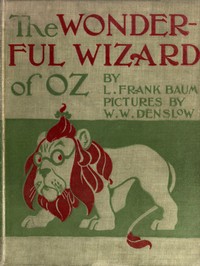
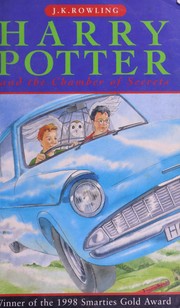
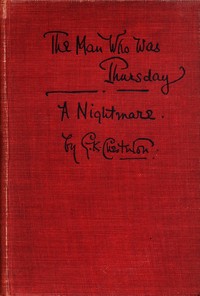
- If you liked Alice's Adventures in Wonderland, try The Wonderful Wizard of Oz (L. Frank Baum), Harry Potter and the Chamber of Secrets (J. K. Rowling) and Twenty Thousand Leagues under the Sea (Jules Verne).
A taste of the feed
How does an entire civilization exist through a filter of green glass?
Even with eyes protected by the green spectacles, Dorothy and her friends were at first dazzled by the brilliancy of the wonderful City. The streets were lined with beautiful houses all built of green marble and studded everywhere with sparkling emeralds. They walked over a pavement of the same green marble, and where the blocks were joined together were rows of emeralds, set closely, and glittering in the brightness of the sun. The window panes were of green glass; even the sky above the City had a green tint, and the rays of the sun were green.
The Wonderful Wizard of Oz · L. Frank Baum
Why a blank diary can feel like a friend you've half-forgotten.
Harry couldn’t explain, even to himself, why he didn’t just throw Riddle’s diary away. The fact was that even though he knew the diary was blank, he kept absent-mindedly picking it up and turning the pages, as though it was a story he wanted to finish. And while Harry was sure he had never heard the name T. M. Riddle before, it still seemed to mean something to him, almost as though Riddle was a friend he’d had when he was very small, and half-forgotten. But this was absurd. He’d never had friends before Hogwarts, Dudley had made sure of that.
Harry Potter and the Chamber of Secrets · J. K. Rowling
Goodness looks like an accident and evil looks like a joke.
When I see the horrible back, I am sure the noble face is but a mask. When I see the face but for an instant, I know the back is only a jest. Bad is so bad, that we cannot but think good an accident; good is so good, that we feel certain that evil could be explained.
The Man Who Was Thursday · G. K. Chesterton
Read pages from books like this, one at a time
Keep reading in the feed