
A Hero of Our Time
Mikhail Lermontov (1814–1841), 1840
★ 4.11 from 66.9k ratings on Goodreads
A bored young officer drifts through the Caucasus, charming and wrecking the people he meets, in a novel that invented the modern antihero. A cool, witty voice carries you through uneasy encounters, with philosophical asides and a lingering sense of moral curiosity.
Feels like curiosity, unease and wonder. About morality.
Who it’s for
You may like it if you enjoy sharp portraits of flawed people and narrators who question their own motives. Be aware that the linked stories shift in time and focus, and Pechorin’s cold treatment of others can make long stretches uncomfortable.
Why read it
It offers a compact, unsettling look at charm without conscience, and the Caucasus setting gives the moral questions a vivid, physical edge.
Pages from the book
The guilt of being the stone thrown into someone else’s quiet well.
The blind boy did not pick it up. Yanko took his seat in the boat; the wind was blowing from the shore; they hoisted the little sail and sped rapidly away. For a long time the white sail gleamed in the moonlight amid the dark waves. Still the blind boy remained seated upon the shore, and then I heard something which sounded like sobbing. The blind boy was, in fact, weeping, and for a long, long time his tears flowed... I grew heavy-hearted. For what reason should fate have thrown me into the peaceful circle of honourable smugglers? Like a stone cast into a smooth well, I had disturbed their quietude, and I barely escaped going to the bottom like a stone. The fear that no one will ever get the story of you right.
And to-morrow, it may be, I shall die!... And there will not be left on earth one being who has understood me completely. Some will consider me worse, others, better, than I have been in reality... Some will say: ‘he was a good fellow’; others: ‘a villain.’ And both epithets will be false. After all this, is life worth the trouble? And yet we live—out of curiosity! We expect something new... How absurd, and yet how vexatious! The night sky makes our urgent quarrels look very small.
I returned home by the deserted byways of the village. The moon, full and red like the glow of a conflagration, was beginning to make its appearance from behind the jagged horizon of the house-tops; the stars were shining tranquilly in the deep, blue vault of the sky; and I was struck by the absurdity of the idea when I recalled to mind that once upon a time there were some exceedingly wise people who thought that the stars of heaven participated in our insignificant squabbles for a slice of ground, or some other imaginary rights. And what then? These lamps, lighted, so they fancied, only to illuminate their battles and triumphs, are burning with all their former brilliance, whilst the wiseacres themselves, together with their hopes and passions, have long been extinguished, like a little fire kindled at the edge of a forest by a careless wayfarer! Mikhail Lermontov.Lermontov was exiled to the Caucasus, the novel's setting, and was killed in a duel at twenty-six, a year after it appeared.
Books that feel like this


Where to get it
Some of these links earn us a small commission, at no cost to you. It keeps BookFeed free.
Questions readers ask
- Is A Hero of Our Time for me?
- You may like it if you enjoy sharp portraits of flawed people and narrators who question their own motives. Be aware that the linked stories shift in time and focus, and Pechorin’s cold treatment of others can make long stretches uncomfortable.
- What is A Hero of Our Time like?
- A cool, witty voice carries you through uneasy encounters, with philosophical asides and a lingering sense of moral curiosity. Feels like curiosity, unease and wonder. About morality.
- What should I read after A Hero of Our Time?
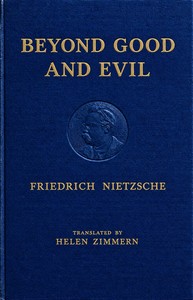
- If you liked A Hero of Our Time, try Dialogues (Plato), Beyond Good and Evil (Friedrich Nietzsche) and The Law of the Four Just Men (Edgar Wallace).
A taste of the feed
Goodness looks like an accident and evil looks like a joke.
When I see the horrible back, I am sure the noble face is but a mask. When I see the face but for an instant, I know the back is only a jest. Bad is so bad, that we cannot but think good an accident; good is so good, that we feel certain that evil could be explained.
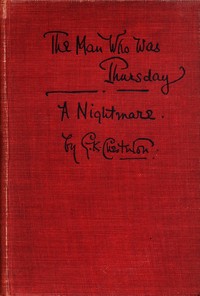
The Man Who Was Thursday · G. K. Chesterton
Read pages from books like this, one at a time
Keep reading in the feed