
The Old Man in the Corner
Baroness Orczy (1865–1947), 1909
★ 3.55 from 1.4k ratings on Goodreads
A nameless man in a teashop solves London's murders from his chair, knotting string, while a young journalist listens — and never gets proof. A teashop conversation that turns curious and wry as an eccentric stranger knots string and picks apart old murders.
Feels like curiosity, humor and unease. About morality, society and identity.
Who it’s for
You may enjoy this if you like witty, talky mysteries and a satirical eye on London society. The crimes are solved in conversation and never proved, so the lack of closure may wear on you.
Why read it
It offers the pleasure of watching a sharp, idle mind dismantle a case aloud, with humor and a cool look at the society around him.
Pages from the book
What it costs to be the strangest person in the room.
The man in the corner readjusted his collar and necktie, which, during the narrative of this interesting mystery, had worked its way up his long, crane-like neck under his large flappy ears. His costume of checked tweed of a peculiarly loud pattern had tickled the fancy of some of the waitresses, who were standing gazing at him and giggling in one corner. This evidently made him nervous. He gazed up very meekly at Polly, looking for all the world like a bald-headed adjutant dressed for a holiday. The small ceremony a mind performs before it will tell you anything.
The man in the corner cocked his funny thin head on one side and looked at Polly; then he took up his beloved bit of string and deliberately untied every knot he had made in it. When it was quite smooth he laid it out upon the table. What you give the person who has everything and admits nothing.
Polly made no comment, but drew from her pocket a beautiful piece of string, and knowing his custom of knotting such an article while unravelling his mysteries, she handed it across the table to him. She positively thought that he blushed. Baroness Orczy.Orczy was born in Hungary, came to London as a teenager and trained as a painter; she married a fellow art student, Montagu Barstow, before turning to fiction.
Books that feel like this



Gulliver's Travels into Several Remote Nations of the World
Jonathan Swift, 1726
Also humor and society.
More by Baroness Orczy

The Scarlet Pimpernel
Baroness Orczy, 1905
In the Terror, an English dandy and his glittering wife move through a France that is hunting a masked rescuer known only as the Scarlet Pimpernel.
The Elusive Pimpernel
Baroness Orczy, 1908
The Scarlet Pimpernel returns to Revolutionary France, and the spy he humiliated is waiting with a bargain, a locked prison and a very careful trap.
Where to get it
Some of these links earn us a small commission, at no cost to you. It keeps BookFeed free.
Questions readers ask
- Is The Old Man in the Corner for me?
- You may enjoy this if you like witty, talky mysteries and a satirical eye on London society. The crimes are solved in conversation and never proved, so the lack of closure may wear on you.
- What is The Old Man in the Corner like?
- A teashop conversation that turns curious and wry as an eccentric stranger knots string and picks apart old murders. Feels like curiosity, humor and unease. About morality, society and identity.
- What should I read after The Old Man in the Corner?
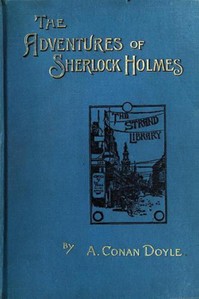
- If you liked The Old Man in the Corner, try The Adventures of Sherlock Holmes (Arthur Conan Doyle), The Law of the Four Just Men (Edgar Wallace) and The Big Bow Mystery (Israel Zangwill).
A taste of the feed
The generosity of people who have just done something unforgivable.
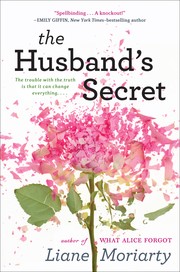
So Tess was going to be allowed to kick and scratch as much as she wanted. They were just going to sit there and take it for as long as it took. They weren’t going to fight back. Will and Felicity were fundamentally good. She knew this. They were good people, and that’s why they were going to be so nice about this, so understanding and accepting of Tess’s rage, so that in the end Tess would be the bad person, not them. They hadn’t actually slept together, they hadn’t betrayed her. They’d fallen in love! It wasn’t an ordinary grubby little affair. It was fate. Predestined. Nobody could think that badly of them.
The Husband's Secret · Liane Moriarty
Five ways to start a war, none of them requiring a reason.
“Sometimes the quarrel between two princes is to decide which of them shall dispossess a third of his dominions, where neither of them pretend to any right. Sometimes one prince quarrels with another for fear the other should quarrel with him. Sometimes a war is entered upon, because the enemy is too strong; and sometimes, because he is too weak. Sometimes our neighbours want the things which we have, or have the things which we want, and we both fight, till they take ours, or give us theirs. It is a very justifiable cause of a war, to invade a country after the people have been wasted by famine, destroyed by pestilence, or embroiled by factions among themselves.
Gulliver's Travels into Several Remote Nations of the World · Jonathan Swift
How to describe a massacre as though reviewing a parade.
There was never anything so gallant, so spruce, so brilliant, and so well disposed as the two armies. Trumpets, fifes, hautboys, drums, and cannon made music such as Hell itself had never heard. The cannons first of all laid flat about six thousand men on each side; the muskets swept away from this best of worlds nine or ten thousand ruffians who infested its surface. The bayonet was also a sufficient reason for the death of several thousands. The whole might amount to thirty thousand souls. Candide, who trembled like a philosopher, hid himself as well as he could during this heroic butchery.
Candide · Voltaire
Read pages from books like this, one at a time
Keep reading in the feed