
Middlemarch
George Eliot (1819–1880), 1872
A provincial town, a clever woman married to the wrong scholar, an ambitious doctor, and the slow, comic, devastating work of learning that other people are real. A patient, comic, melancholy look at provincial marriages and money, with a tender moral seriousness underneath.
Feels like tenderness, melancholy and longing. About morality, identity and society.
Who it’s for
You may like it if you enjoy long Victorian novels about marriages, money, and small-town self-deception, especially when the narrator is dryly funny. Be ready for dense, long-period prose and a very slow build; the first chapters ask for patience before the town's connections become clear.
Why read it
Read it for its unsparing tenderness: a large, wise book about how hard it is to see other people as fully real.
Pages from the book
How hard it is to believe that other people are as real as you are.
We are all of us born in moral stupidity, taking the world as an udder to feed our supreme selves: Dorothea had early begun to emerge from that stupidity, but yet it had been easier to her to imagine how she would devote herself to Mr. Casaubon, and become wise and strong in his strength and wisdom, than to conceive with that distinctness which is no longer reflection but feeling—an idea wrought back to the directness of sense, like the solidity of objects—that he had an equivalent centre of self, whence the lights and shadows must always fall with a certain difference. The day a person first understands that they are going to die.
Lydgate, certain that his patient wished to be alone, soon left him; and the black figure with hands behind and head bent forward continued to pace the walk where the dark yew-trees gave him a mute companionship in melancholy, and the little shadows of bird or leaf that fleeted across the isles of sunlight, stole along in silence as in the presence of a sorrow. Here was a man who now for the first time found himself looking into the eyes of death—who was passing through one of those rare moments of experience when we feel the truth of a commonplace, which is as different from what we call knowing it, as the vision of waters upon the earth is different from the delirious vision of the water which cannot be had to cool the burning tongue. The mind at rest after hard thinking, floating on its back.
As he threw down his book, stretched his legs towards the embers in the grate, and clasped his hands at the back of his head, in that agreeable afterglow of excitement when thought lapses from examination of a specific object into a suffusive sense of its connections with all the rest of our existence—seems, as it were, to throw itself on its back after vigorous swimming and float with the repose of unexhausted strength—Lydgate felt a triumphant delight in his studies, and something like pity for those less lucky men who were not of his profession. George Eliot.Eliot was Mary Ann Evans, who lived openly with the married George Henry Lewes; she came to fiction at thirty-seven and published under a man's name.
Books that feel like this

Where to get it
Some of these links earn us a small commission, at no cost to you. It keeps BookFeed free.
Questions readers ask
- Is Middlemarch for me?
- You may like it if you enjoy long Victorian novels about marriages, money, and small-town self-deception, especially when the narrator is dryly funny. Be ready for dense, long-period prose and a very slow build; the first chapters ask for patience before the town's connections become clear.
- What is Middlemarch like?
- A patient, comic, melancholy look at provincial marriages and money, with a tender moral seriousness underneath. Feels like tenderness, melancholy and longing. About morality, identity and society.
- What should I read after Middlemarch?
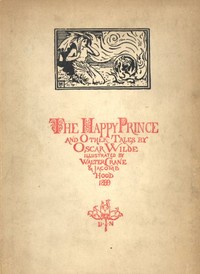
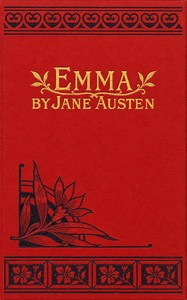
- If you liked Middlemarch, try The Happy Prince, and Other Tales (Oscar Wilde), Ulysses (James Joyce) and Emma (Jane Austen).
A taste of the feed
A dog on a beach is not looking for anything it can name.
Their dog ambled about a bank of dwindling sand, trotting, sniffing on all sides. Looking for something lost in a past life. Suddenly he made off like a bounding hare, ears flung back, chasing the shadow of a lowskimming gull. The man’s shrieked whistle struck his limp ears. He turned, bounded back, came nearer, trotted on twinkling shanks. On a field tenney a buck, trippant, proper, unattired. At the lacefringe of the tide he halted with stiff forehoofs, seawardpointed ears. His snout lifted barked at the wavenoise, herds of seamorse. They serpented towards his feet, curling, unfurling many crests, every ninth, breaking, plashing, from far, from farther out, waves and waves.
Ulysses · James Joyce
Every honest confession leaves something out, and it rarely matters.
Seldom, very seldom, does complete truth belong to any human disclosure; seldom can it happen that something is not a little disguised, or a little mistaken; but where, as in this case, though the conduct is mistaken, the feelings are not, it may not be very material.—Mr. Knightley could not impute to Emma a more relenting heart than she possessed, or a heart more disposed to accept of his.
Emma · Jane Austen
The grip that keeps us from dissolving into the storm.
As when men to keep from being swept overboard in the storm clutch at each other’s hands to resist being torn apart, so our bodies fused a link in the human chain that kept us from being swept into nothing.
Flowers for Algernon · Daniel Keyes
Read pages from books like this, one at a time
Keep reading in the feed