BookFeed

Books like Middlemarch

If Middlemarch stayed with you, these share its feel: morality, tenderness and identity. Each comes with a real page, so you can tell in a minute.

About Middlemarch · George Eliot

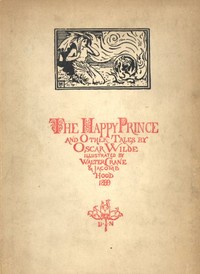
  1. 1.The Happy Prince, and Other Tales

    Oscar Wilde, 1888

    Also tenderness and love. Five short fairy tales where a statue, a nightingale, a giant and a boastful firework teach tenderness and vanity with a sharp wit, in less time than a commute.

    “When I was alive and had a human heart,” answered the statue, “I did not know what tears were, for I lived in the Palace of Sans-Souci, where sorrow is not allowed to enter. In the daytime I played with my companions in the garden, and in the evening I led the dance in the Great Hall. Round the garden ran a very lofty wall, but I never cared to ask what lay beyond it, everything about me was so beautiful. My courtiers called me the Happy Prince, and happy indeed I was, if pleasure be happiness. So I lived, and so I died. And now that I am dead they have set me up here so high that I can see all the ugliness and all the misery of my city, and though my heart is made of lead yet I cannot chose but weep.”
  2. 2.Ulysses

    James Joyce, 1922

    Also identity and society. One Dublin day in 1904, followed through two men's minds — an ad-canvasser and a young writer — with every joke, smell and stray thought left in.

    Their dog ambled about a bank of dwindling sand, trotting, sniffing on all sides. Looking for something lost in a past life. Suddenly he made off like a bounding hare, ears flung back, chasing the shadow of a lowskimming gull. The man’s shrieked whistle struck his limp ears. He turned, bounded back, came nearer, trotted on twinkling shanks. On a field tenney a buck, trippant, proper, unattired. At the lacefringe of the tide he halted with stiff forehoofs, seawardpointed ears. His snout lifted barked at the wavenoise, herds of seamorse. They serpented towards his feet, curling, unfurling many crests, every ninth, breaking, plashing, from far, from farther out, waves and waves.
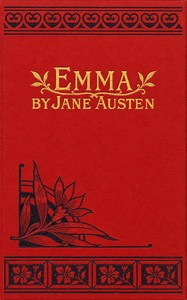
  3. 3.Emma

    Jane Austen, 1815

    Also society and tenderness. A clever, rich, bored young woman decides to arrange her neighbours' love lives, and gets nearly everything wrong. Austen's funniest, most merciless book about self-knowledge.

    Seldom, very seldom, does complete truth belong to any human disclosure; seldom can it happen that something is not a little disguised, or a little mistaken; but where, as in this case, though the conduct is mistaken, the feelings are not, it may not be very material.—Mr. Knightley could not impute to Emma a more relenting heart than she possessed, or a heart more disposed to accept of his.
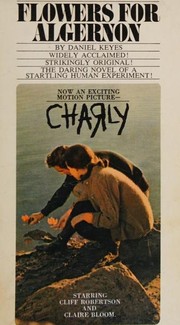
  4. 4.Flowers for Algernon

    Daniel Keyes, 1966

    Also identity and melancholy. A man whose mind is transformed by surgery discovers that intelligence has a price, and that feeling may be the harder science.

    As when men to keep from being swept overboard in the storm clutch at each other’s hands to resist being torn apart, so our bodies fused a link in the human chain that kept us from being swept into nothing.
    Excerpt from Flowers for Algernon, Daniel Keyes, Weidenfeld & Nicolson 1966. Quoted for discovery. Source Rights & removals
  5. 5.Tess of the d'Urbervilles

    Thomas Hardy, 1892

    Also morality and melancholy. A powerful examination of integrity and societal judgment, set against the rugged landscape of Wessex, where personal morality collides with cruel fate.

    Tess was conscious of neither time nor space. The exaltation which she had described as being producible at will by gazing at a star came now without any determination of hers; she undulated upon the thin notes of the second-hand harp, and their harmonies passed like breezes through her, bringing tears into her eyes. The floating pollen seemed to be his notes made visible, and the dampness of the garden the weeping of the garden’s sensibility. Though near nightfall, the rank-smelling weed-flowers glowed as if they would not close for intentness, and the waves of colour mixed with the waves of sound.
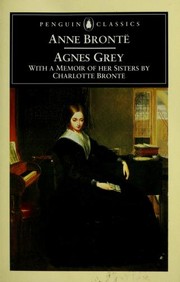
  6. 6.Agnes Grey

    Anne Brontë, 1847

    Also melancholy and identity. A clergyman's daughter with no money takes a post as a governess and learns how little the world allows a woman who must earn her own bread.

    But, if those thoughts brought delight, it was a painful, troubled pleasure, too near akin to anguish; and one that did me more injury than I was aware of. It was an indulgence that a person of more wisdom or more experience would doubtless have denied herself. And yet, how dreary to turn my eyes from the contemplation of that bright object and force them to dwell on the dull, grey, desolate prospect around: the joyless, hopeless, solitary path that lay before me. It was wrong to be so joyless, so desponding; I should have made God my friend, and to do His will the pleasure and the business of my life; but faith was weak, and passion was too strong.
  7. 7.Anna Karenina

    Leo Tolstoy, 1878

    Also love and society. A society novel about a marriage coming apart and a landowner trying to build a meaningful life, full of dinner tables, fields, jealousy and philosophy.

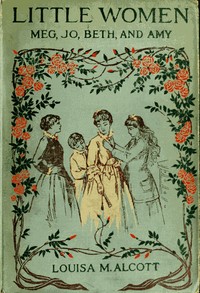
  8. 11.Little Women

    Louisa May Alcott, 1868

    Also love and tenderness. Four sisters, one thin purse and a long war, learning to work, quarrel, write and love in a New England town that feels like your own street.

Read pages from books like this, one at a time

BookFeed is a feed of real passages from real books. It learns what moves you and finds your next book.

Open BookFeed

Free, no sign-up.