
Tess of the d'Urbervilles
Thomas Hardy (1840–1928), 1892
★ 3.85 from 310.9k ratings on Goodreads
A powerful examination of integrity and societal judgment, set against the rugged landscape of Wessex, where personal morality collides with cruel fate. Hardy's voice is lyrical and grave, moving at a measured pace through grief, moral pressure and the wide, indifferent Wessex landscape.
Feels like grief, melancholy and longing. About morality, society and nature.
Who it’s for
You may like it if you enjoy Victorian fiction that takes rural life, class and moral judgment seriously. Be prepared for dense, sometimes archaic prose and long lyrical descriptions that keep the story's sadness close.
Why read it
Read it for a clear-eyed look at how society judges a woman, and for Hardy's landscape writing, which gives the novel much of its force.
Pages from the book
The moment when the boundaries between sight, sound, and emotion collapse.
Tess was conscious of neither time nor space. The exaltation which she had described as being producible at will by gazing at a star came now without any determination of hers; she undulated upon the thin notes of the second-hand harp, and their harmonies passed like breezes through her, bringing tears into her eyes. The floating pollen seemed to be his notes made visible, and the dampness of the garden the weeping of the garden’s sensibility. Though near nightfall, the rank-smelling weed-flowers glowed as if they would not close for intentness, and the waves of colour mixed with the waves of sound. The cold, solitary realization that a desperate life has reached its end.
At sight of her father’s chimney she asked herself how she could possibly enter the house? Inside that cottage her relations were calmly supposing her far away on a wedding-tour with a comparatively rich man, who was to conduct her to bouncing prosperity; while here she was, friendless, creeping up to the old door quite by herself, with no better place to go to in the world. The physical remnants of a people's history, stripped bare by time and indifference.
Within the window under which the bedstead stood were the tombs of the family, covering in their dates several centuries. They were canopied, altar-shaped, and plain; their carvings being defaced and broken; their brasses torn from the matrices, the rivet-holes remaining like martin-holes in a sandcliff. Of all the reminders that she had ever received that her people were socially extinct, there was none so forcible as this spoliation. Thomas Hardy.Hardy often used the landscape of Dorset and Wiltshire—Wessex—as a character of its own, commenting on human suffering and cyclical nature.
Books that feel like this



More by Thomas Hardy
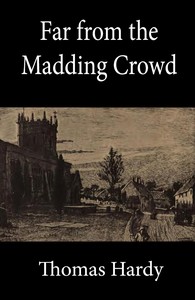
Far from the Madding Crowd
Thomas Hardy, 1874
A woman inherits a farm and runs it herself — hiring, harvesting, weathering storms — while the men around her mistake her independence for an invitation.
Short Fiction
Thomas Hardy, 1888
Hardy's short stories: farmers, milkmaids, hussars and ghosts, where a fog-bound night or a small decision quietly decides a whole life.
Where to get it
Some of these links earn us a small commission, at no cost to you. It keeps BookFeed free.
Questions readers ask
- Is Tess of the d'Urbervilles for me?
- You may like it if you enjoy Victorian fiction that takes rural life, class and moral judgment seriously. Be prepared for dense, sometimes archaic prose and long lyrical descriptions that keep the story's sadness close.
- What is Tess of the d'Urbervilles like?
- Hardy's voice is lyrical and grave, moving at a measured pace through grief, moral pressure and the wide, indifferent Wessex landscape. Feels like grief, melancholy and longing. About morality, society and nature.
- What should I read after Tess of the d'Urbervilles?
- If you liked Tess of the d'Urbervilles, try The Tenant of Wildfell Hall (Anne Brontë), Anna Karenina (Leo Tolstoy) and Lady Chatterley's lover (D. H. Lawrence).
A taste of the feed
The horizon finally breaks, unveiling a vast and unblemished landscape of freedom.
At length our walk was ended. The increasing height and boldness of the hills had for some time intercepted the prospect; but, on gaining the summit of a steep acclivity, and looking downward, an opening lay before us—and the blue sea burst upon our sight!—deep violet blue—not deadly calm, but covered with glinting breakers—diminutive white specks twinkling on its bosom, and scarcely to be distinguished, by the keenest vision, from the little seamews that sported above, their white wings glittering in the sunshine: only one or two vessels were visible, and those were far away.
The Tenant of Wildfell Hall · Anne Brontë
The strange calm that arrives when a lie comes out perfectly.
Anna said what came to her lips, and marveled, hearing herself, at her own capacity for lying. How simple and natural were her words, and how likely that she was simply sleepy! She felt herself clad in an impenetrable armor of falsehood. She felt that some unseen force had come to her aid and was supporting her.
Anna Karenina · Leo Tolstoy
How hard it is to believe that other people are as real as you are.
We are all of us born in moral stupidity, taking the world as an udder to feed our supreme selves: Dorothea had early begun to emerge from that stupidity, but yet it had been easier to her to imagine how she would devote herself to Mr. Casaubon, and become wise and strong in his strength and wisdom, than to conceive with that distinctness which is no longer reflection but feeling—an idea wrought back to the directness of sense, like the solidity of objects—that he had an equivalent centre of self, whence the lights and shadows must always fall with a certain difference.
Middlemarch · George Eliot
Read pages from books like this, one at a time
Keep reading in the feed