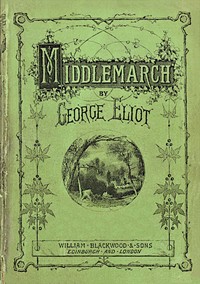
Middlemarch
George Eliot, 1872
A provincial town, a clever woman married to the wrong scholar, an ambitious doctor, and the slow, comic, devastating work of learning that other people are real.
 BookFeed Ελληνικά
1819–1880
Eliot was Mary Ann Evans, who lived openly with the married George Henry Lewes; she came to fiction at thirty-seven and published under a man's name.
Feels like morality, tenderness and identity.
How hard it is to believe that other people are as real as you are.
We are all of us born in moral stupidity, taking the world as an udder to feed our supreme selves: Dorothea had early begun to emerge from that stupidity, but yet it had been easier to her to imagine how she would devote herself to Mr. Casaubon, and become wise and strong in his strength and wisdom, than to conceive with that distinctness which is no longer reflection but feeling—an idea wrought back to the directness of sense, like the solidity of objects—that he had an equivalent centre of self, whence the lights and shadows must always fall with a certain difference. George Eliot, 1872
A provincial town, a clever woman married to the wrong scholar, an ambitious doctor, and the slow, comic, devastating work of learning that other people are real.
Read pages from books like this, one at a time
BookFeed is a feed of real passages from real books. It learns what moves you and finds your next book.
Open BookFeedFree, no sign-up.