
Before Adam
Jack London (1876–1916), 1906
★ 3.93 from 5.7k ratings on Goodreads
A man dreams his way back into the body of a prehistoric ancestor and finds that fear, desire and laughter are older than language. London's dream-frame moves with a lyrical, uneasy pulse, mixing primeval wonder with dread and a searching sense of identity.
Feels like dread, wonder and curiosity. About nature, time and identity.
Who it’s for
You may like this if you enjoy speculative fiction that treats deep time and ancestral memory seriously, with nature writing close to dread. The 1906 prose and its dream-within-a-dream frame can feel remote, and the prehistoric viewpoint is deliberately limited.
Why read it
It offers a vivid, unsettling way to imagine how old fear and fellow feeling are, and how much of what we call self predates speech.
Pages from the book
How a group dances itself out of a rage it cannot act on.
And so, with mad antics, leaping, reeling, and overbalancing, we danced and sang in the sombre twilight of the primeval world, inducing forgetfulness, achieving unanimity, and working ourselves up into sensuous frenzy. And so it was that our rage against Red-Eye was soothed away by art, and we screamed the wild choruses of the hee-hee council until the night warned us of its terrors, and we crept away to our holes in the rocks, calling softly to one another, while the stars came out and darkness settled down. The end of the world is a few people in the mud.
Very strong upon me is one picture. Large trees are about us, and from their branches hang gray filaments of moss, while great creepers, like monstrous serpents, curl around the trunks and writhe in tangles through the air. And all about is the mud, soft mud, that bubbles forth gases, and that heaves and sighs with internal agitations. And in the midst of all this are a dozen of us. We are lean and wretched, and our bones show through our tight-stretched skins. We do not sing and chatter and laugh. We play no pranks. For once our volatile and exuberant spirits are hopelessly subdued. We make plaintive, querulous noises, look at one another, and cluster close together. It is like the meeting of the handful of survivors after the day of the end of the world. The rage was there; the word for it was not.
We were very angry, insanely, vociferously angry. Beating our chests, bristling, and gnashing our teeth, we gathered together in our rage. We felt the prod of gregarious instinct, the drawing together as though for united action, the impulse toward cooperation. In dim ways this need for united action was impressed upon us. But there was no way to achieve it because there was no way to express it. We did not turn to, all of us, and destroy Red-Eye, because we lacked a vocabulary. We were vaguely thinking thoughts for which there were no thought-symbols. These thought-symbols were yet to be slowly and painfully invented. Jack London.Before becoming a writer, Jack London was an oyster pirate, sailor, and Klondike prospector; Before Adam ran in Everybody's Magazine in 1906.
Books that feel like this

More by Jack London
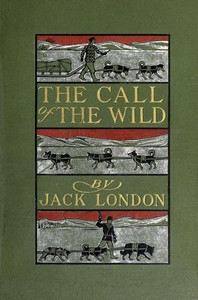
The Call of the Wild
Jack London, 1903
A pampered dog is stolen, sold to the Klondike gold rush, and taught the club before he learns the sled — then something older starts calling.
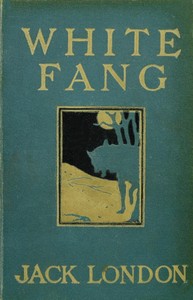
White Fang
Jack London, 1906
A wolf cub born into a hungry Yukon learns, one hard lesson at a time, what men are for. Cold, fierce, plain sentences.
Where to get it
Some of these links earn us a small commission, at no cost to you. It keeps BookFeed free.
Questions readers ask
- Is Before Adam for me?
- You may like this if you enjoy speculative fiction that treats deep time and ancestral memory seriously, with nature writing close to dread. The 1906 prose and its dream-within-a-dream frame can feel remote, and the prehistoric viewpoint is deliberately limited.
- What is Before Adam like?
- London's dream-frame moves with a lyrical, uneasy pulse, mixing primeval wonder with dread and a searching sense of identity. Feels like dread, wonder and curiosity. About nature, time and identity.
- What should I read after Before Adam?
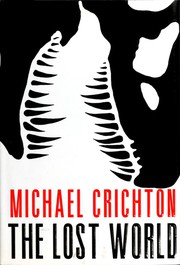
- If you liked Before Adam, try The Lost World (Michael Crichton), The Time Machine (H. G. Wells) and The Voyage of the Beagle (Charles Darwin).
A taste of the feed
The case for trusting the salt on your skin.
“A hundred years from now, people will look back on us and laugh. They’ll say, ‘You know what people used to believe? They believed in photons and electrons. Can you imagine anything so silly?’ They’ll have a good laugh, because by then there will be newer and better fantasies. And meanwhile, you feel the way the boat moves? That’s the sea. That’s real. You smell the salt in the air? You feel the sunlight on your skin? That’s all real. You see all of us together? That’s real. Life is wonderful. It’s a gift to be alive, to see the sun and breathe the air. And there isn’t really anything else.”
The Lost World · Michael Crichton
The night the ocean itself began to give off light.
While sailing a little south of the Plata on one very dark night, the sea presented a wonderful and most beautiful spectacle. There was a fresh breeze, and every part of the surface, which during the day is seen as foam, now glowed with a pale light. The vessel drove before her bows two billows of liquid phosphorus, and in her wake she was followed by a milky train. As far as the eye reached, the crest of every wave was bright, and the sky above the horizon, from the reflected glare of these livid flames, was not so utterly obscure as over the vault of the heavens.
The Voyage of the Beagle · Charles Darwin
The calm island inside you, and the ocean waiting around it.
Consider all this; and then turn to this green, gentle, and most docile earth; consider them both, the sea and the land; and do you not find a strange analogy to something in yourself? For as this appalling ocean surrounds the verdant land, so in the soul of man there lies one insular Tahiti, full of peace and joy, but encompassed by all the horrors of the half known life. God keep thee! Push not off from that isle, thou canst never return!
Moby Dick · Herman Melville
Read pages from books like this, one at a time
Keep reading in the feed