
The Lost World
Michael Crichton, 1995
★ 3.89 from 192.8k ratings on Goodreads
A rich man's expedition to a hidden island turns into a firsthand argument about dinosaurs, media, and whether humans are as smart as we think. Curiosity and wonder pull you through a tense, idea-heavy adventure, with dread creeping in whenever the island's creatures take over.
Feels like curiosity, dread and wonder. About nature, society and adventure.
Who it’s for
You may enjoy this if you like fast dinosaur adventure mixed with debates about science, media, and human cleverness. The opening is slow and the middle can feel repetitive, and Malcolm's long lectures may try your patience.
Why read it
It gives you a tense island adventure that also asks how much we trust science, spectacle, and our own intelligence.
A page from the book
The case for trusting the salt on your skin.
“A hundred years from now, people will look back on us and laugh. They’ll say, ‘You know what people used to believe? They believed in photons and electrons. Can you imagine anything so silly?’ They’ll have a good laugh, because by then there will be newer and better fantasies. And meanwhile, you feel the way the boat moves? That’s the sea. That’s real. You smell the salt in the air? You feel the sunlight on your skin? That’s all real. You see all of us together? That’s real. Life is wonderful. It’s a gift to be alive, to see the sun and breathe the air. And there isn’t really anything else.” What readers say
Readers find this a fast, tense dinosaur adventure with memorable characters and science debates, though many call the opening slow and the plot repetitive; opinions split on Malcolm’s lectures and the female characters.
Michael Crichton.Crichton trained as a physician at Harvard but never practiced; he wrote Jurassic Park as a warning about biotechnology, then returned to the island for this sequel.
Books that feel like this
More by Michael Crichton
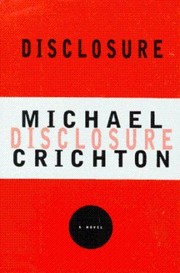
Disclosure
Michael Crichton, 1994
A Seattle tech manager’s merger week turns personal when an accusation makes the office a maze of power, sex and plausible deniability.
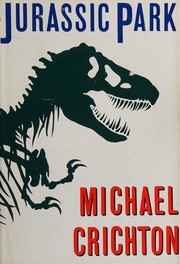
Jurassic Park
Michael Crichton, 1990
A billionaire builds a private zoo of extinct animals and flies experts in to approve it. The experts keep finding reasons to say no.
Where to get it
Some of these links earn us a small commission, at no cost to you. It keeps BookFeed free.
Questions readers ask
- Is The Lost World for me?
- You may enjoy this if you like fast dinosaur adventure mixed with debates about science, media, and human cleverness. The opening is slow and the middle can feel repetitive, and Malcolm's long lectures may try your patience.
- What is The Lost World like?
- Curiosity and wonder pull you through a tense, idea-heavy adventure, with dread creeping in whenever the island's creatures take over. Feels like curiosity, dread and wonder. About nature, society and adventure.
- What should I read after The Lost World?
- If you liked The Lost World, try Project Hail Mary (Andy Weir), Misery (Stephen King) and The Lost Symbol (Dan Brown).
A taste of the feed
A knock at the door, twelve light-years from home.
Knock-knock-knock No, that’s not creepy at all. Being in a spaceship twelve light-years from home and having someone knock on the door is totally normal.
Project Hail Mary · Andy Weir
What is lost when nothing is allowed to stand between wanting and having.
Impulse arrested spills over, and the flood is feeling, the flood is passion, the flood is even madness: it depends on the force of the current, the height and strength of the barrier. The unchecked stream flows smoothly down its appointed channels into a calm well-being. (The embryo is hungry; day in, day out, the blood-surrogate pump unceasingly turns its eight hundred revolutions a minute. The decanted infant howls; at once a nurse appears with a bottle of external secretion. Feeling lurks in that interval of time between desire and its consummation. Shorten that interval, break down all those old unnecessary barriers.
Brave New World · Aldous Huxley
A house with no shadows at all, and every guest locking a door.
The others went upstairs, a slow unwilling procession. If this had been an old house, with creaking wood, and dark shadows, and heavily panelled walls, there might have been an eerie feeling. But this house was the essence of modernity. There were no dark corners - no possible sliding panels - it was flooded with electric light - everything was new and bright and shining. There was nothing hidden in this house, nothing concealed. It had no atmosphere about it. Somehow, that was the most frightening thing of all. They exchanged good-nights on the upper landing. Each of them went into his or her own room, and each of them automatically, almost without conscious thought, locked the door....
And Then There Were None · Agatha Christie
Read pages from books like this, one at a time
Keep reading in the feed