
Jacob’s Room
Virginia Woolf (1882–1941), 1925
An intimate dive into the fractured consciousness of modern life, exploring how a single glance, a passing thought, or a shared moment can alter our understanding of existence. A melancholy, lyrical drift through glances, memories and time, with a philosophical voice that stays curious about how a life is known.
Feels like melancholy, curiosity and nostalgia. About identity, time and society.
Who it’s for
You may like it if you enjoy quiet, experimental fiction that builds a person from other people's impressions rather than a straight plot. Its stream-of-consciousness shifts and gaps can feel demanding when you want clear scenes and steady momentum.
Why read it
Read it for the prose: Woolf catches the texture of memory and absence in brief scenes, showing how a life is assembled from what others notice and miss.
Pages from the book
What if the most solid things we perceive are, in reality, mere fleeting shadows?
It seems then that men and women are equally at fault. It seems that a profound, impartial, and absolutely just opinion of our fellow-creatures is utterly unknown. Either we are men, or we are women. Either we are cold, or we are sentimental. Either we are young, or growing old. In any case life is but a procession of shadows, and God knows why it is that we embrace them so eagerly, and see them depart with such anguish, being shadows. And why, if this—and much more than this is true, why are we yet surprised in the window corner by a sudden vision that the young man in the chair is of all things in the world the most real, the most solid, the best known to us—why indeed? How does intense, momentary physical experience connect us to something more primal?
A few moments before a horse jumps it slows, sidles, gathers itself together, goes up like a monster wave, and pitches down on the further side. Hedges and sky swoop in a semicircle. Then as if your own body ran into the horse’s body and it was your own forelegs grown with his that sprang, rushing through the air you go, the ground resilient, bodies a mass of muscles, yet you have command too, upright stillness, eyes accurately judging. Then the curves cease, changing to downright hammer strokes, which jar; and you draw up with a jolt; sitting back a little, sparkling, tingling, glazed with ice over pounding arteries, gasping: “Ah! ho! Hah!” the steam going up from the horses as they jostle together at the crossroads, where the signpost is, and the woman in the apron stands and stares at the doorway. When the dead become a part of the landscape, what does that say about the boundaries of self?
Had he, then, been nothing? An unanswerable question, since even if it weren’t the habit of the undertaker to close the eyes, the light so soon goes out of them. At first, part of herself; now one of a company, he had merged in the grass, the sloping hillside, the thousand white stones, some slanting, others upright, the decayed wreaths, the crosses of green tin, the narrow yellow paths, and the lilacs that drooped in April, with a scent like that of an invalid’s bedroom, over the churchyard wall. Seabrook was now all that; and when, with her skirt hitched up, feeding the chickens, she heard the bell for service or funeral, that was Seabrook’s voice—the voice of the dead. Virginia Woolf.Woolf famously wrote in an autobiographical stream of consciousness, blending intense personal memory with sweeping meditations on the human condition.
Books that feel like this
More by Virginia Woolf
Mrs. Dalloway
Virginia Woolf, 1925
One June day in London, a society wife prepares a party while a shell-shocked veteran sits in the park. A novel written the way a mind actually moves.

To the Lighthouse
Virginia Woolf, 1927
A family's summer house, a postponed boat trip and a half-finished painting: Woolf gets family life from the inside, in sentences that think as they go.
Where to get it
Some of these links earn us a small commission, at no cost to you. It keeps BookFeed free.
Questions readers ask
- Is Jacob’s Room for me?
- You may like it if you enjoy quiet, experimental fiction that builds a person from other people's impressions rather than a straight plot. Its stream-of-consciousness shifts and gaps can feel demanding when you want clear scenes and steady momentum.
- What is Jacob’s Room like?
- A melancholy, lyrical drift through glances, memories and time, with a philosophical voice that stays curious about how a life is known. Feels like melancholy, curiosity and nostalgia. About identity, time and society.
- What should I read after Jacob’s Room?
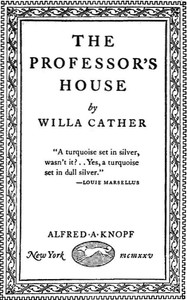
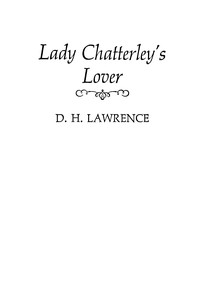
- If you liked Jacob’s Room, try The Professor’s House (Willa Cather), Lady Chatterley's lover (D. H. Lawrence) and Ulysses (James Joyce).
A taste of the feed
Science can explain sin, but it cannot make it thrilling.
But the fact is, the human mind, the individual mind, has always been made more interesting by dwelling on the old riddles, even if it makes nothing of them. Science hasn’t given us any new amazements, except of the superficial kind we get from witnessing dexterity and sleight-of-hand. It hasn’t given us any richer pleasures, as the Renaissance did, nor any new sins—not one! Indeed, it takes our old ones away. It’s the laboratory, not the Lamb of God, that taketh away the sins of the world. You’ll agree there is not much thrill about a physiological sin. We were better off when even the prosaic matter of taking nourishment could have the magnificence of a sin.
The Professor’s House · Willa Cather
A dog on a beach is not looking for anything it can name.
Their dog ambled about a bank of dwindling sand, trotting, sniffing on all sides. Looking for something lost in a past life. Suddenly he made off like a bounding hare, ears flung back, chasing the shadow of a lowskimming gull. The man’s shrieked whistle struck his limp ears. He turned, bounded back, came nearer, trotted on twinkling shanks. On a field tenney a buck, trippant, proper, unattired. At the lacefringe of the tide he halted with stiff forehoofs, seawardpointed ears. His snout lifted barked at the wavenoise, herds of seamorse. They serpented towards his feet, curling, unfurling many crests, every ninth, breaking, plashing, from far, from farther out, waves and waves.
Ulysses · James Joyce
How hard it is to believe that other people are as real as you are.
We are all of us born in moral stupidity, taking the world as an udder to feed our supreme selves: Dorothea had early begun to emerge from that stupidity, but yet it had been easier to her to imagine how she would devote herself to Mr. Casaubon, and become wise and strong in his strength and wisdom, than to conceive with that distinctness which is no longer reflection but feeling—an idea wrought back to the directness of sense, like the solidity of objects—that he had an equivalent centre of self, whence the lights and shadows must always fall with a certain difference.
Middlemarch · George Eliot
Read pages from books like this, one at a time
Keep reading in the feed