
The Call of the Wild
Jack London (1876–1916), 1903
★ 3.92 from 490.1k ratings on Goodreads
A pampered dog is stolen, sold to the Klondike gold rush, and taught the club before he learns the sled — then something older starts calling. The prose is plain and driving, with wide snowy landscapes, moments of dread, and a lyrical pull toward something older than the sled.
Feels like awe and dread. About nature, freedom and society.
Who it’s for
You may like it if you want a short, direct adventure about animals and the north, told with both grit and awe. Be aware that the story includes harsh treatment of dogs and sled-team violence, which some readers find hard to take.
Why read it
It is a compact, unsentimental look at instinct and survival, and London's Klondike experience gives the cold and exhaustion a lived weight.
Pages from the book
The strange forgetfulness that arrives when you are most alive.
There is an ecstasy that marks the summit of life, and beyond which life cannot rise. And such is the paradox of living, this ecstasy comes when one is most alive, and it comes as a complete forgetfulness that one is alive. This ecstasy, this forgetfulness of living, comes to the artist, caught up and out of himself in a sheet of flame; it comes to the soldier, war-mad on a stricken field and refusing quarter; and it came to Buck, leading the pack, sounding the old wolf-cry, straining after the food that was alive and that fled swiftly before him through the moonlight. He was sounding the deeps of his nature, and of the parts of his nature that were deeper than he, going back into the womb of Time. The first songs were sad, and something in us still answers them.
With the aurora borealis flaming coldly overhead, or the stars leaping in the frost dance, and the land numb and frozen under its pall of snow, this song of the huskies might have been the defiance of life, only it was pitched in minor key, with long-drawn wailings and half-sobs, and was more the pleading of life, the articulate travail of existence. It was an old song, old as the breed itself—one of the first songs of the younger world in a day when songs were sad. It was invested with the woe of unnumbered generations, this plaint by which Buck was so strangely stirred. When he moaned and sobbed, it was with the pain of living that was of old the pain of his wild fathers, and the fear and mystery of the cold and dark that was to them fear and mystery. The dead do not leave us; they sit down at the fire.
He was older than the days he had seen and the breaths he had drawn. He linked the past with the present, and the eternity behind him throbbed through him in a mighty rhythm to which he swayed as the tides and seasons swayed. He sat by John Thornton’s fire, a broad-breasted dog, white-fanged and long-furred; but behind him were the shades of all manner of dogs, half-wolves and wild wolves, urgent and prompting, tasting the savor of the meat he ate, thirsting for the water he drank, scenting the wind with him, listening with him and telling him the sounds made by the wild life in the forest, dictating his moods, directing his actions, lying down to sleep with him when he lay down, and dreaming with him and beyond him and becoming themselves the stuff of his dreams. Jack London.London joined the Klondike gold rush at 21 and came back a year later with scurvy and no gold; he ran for mayor of Oakland twice on the socialist ticket and lost badly.
Books that feel like this
More by Jack London
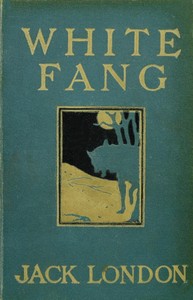
White Fang
Jack London, 1906
A wolf cub born into a hungry Yukon learns, one hard lesson at a time, what men are for. Cold, fierce, plain sentences.
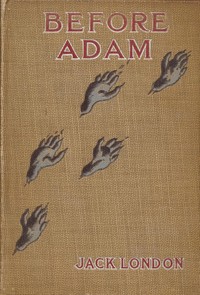
Before Adam
Jack London, 1906
A man dreams his way back into the body of a prehistoric ancestor and finds that fear, desire and laughter are older than language.
Where to get it
Some of these links earn us a small commission, at no cost to you. It keeps BookFeed free.
Questions readers ask
- Is The Call of the Wild for me?
- You may like it if you want a short, direct adventure about animals and the north, told with both grit and awe. Be aware that the story includes harsh treatment of dogs and sled-team violence, which some readers find hard to take.
- What is The Call of the Wild like?
- The prose is plain and driving, with wide snowy landscapes, moments of dread, and a lyrical pull toward something older than the sled. Feels like awe and dread. About nature, freedom and society.
- What should I read after The Call of the Wild?
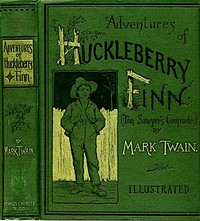
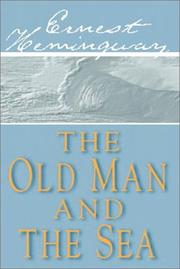
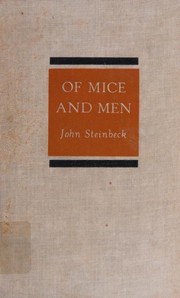
- If you liked The Call of the Wild, try The Adventures of Huckleberry Finn (Mark Twain), The Old Man and the Sea (Ernest Hemingway) and Of Mice and Men (John Steinbeck).
A taste of the feed
What silence feels like when it isn't loneliness.
This second night we run between seven and eight hours, with a current that was making over four mile an hour. We catched fish and talked, and we took a swim now and then to keep off sleepiness. It was kind of solemn, drifting down the big, still river, laying on our backs looking up at the stars, and we didn’t ever feel like talking loud, and it warn’t often that we laughed—only a little kind of a low chuckle. We had mighty good weather as a general thing, and nothing ever happened to us at all—that night, nor the next, nor the next.
The Adventures of Huckleberry Finn · Mark Twain
What it costs to keep believing in a piece of land you'll never own.
They come, an’ they quit an’ go on; an’ every damn one of ‘em’s got a little piece of land in his head. An’ never a God damn one of ‘em ever gets it. Just like heaven. Ever’body wants a little piece of lan’. I read plenty of books out here. Nobody never gets to heaven, and nobody gets no land. It’s just in their head.
Of Mice and Men · John Steinbeck
In the very shadow of the Capitol, freedom is put up for sale.
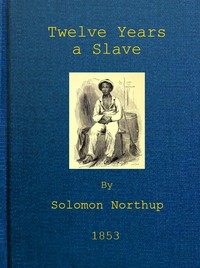
The building to which the yard was attached, was two stories high, fronting on one of the public streets of Washington. Its outside presented only the appearance of a quiet private residence. A stranger looking at it, would never have dreamed of its execrable uses. Strange as it may seem, within plain sight of this same house, looking down from its commanding height upon it, was the Capitol. The voices of patriotic representatives boasting of freedom and equality, and the rattling of the poor slave’s chains, almost commingled. A slave pen within the very shadow of the Capitol!
Twelve Years a Slave · Solomon Northup
Read pages from books like this, one at a time
Keep reading in the feed