
The Time Machine
H. G. Wells (1866–1946), 1895
★ 3.89 from 584k ratings on Goodreads
A dinner-party tale of a man who returns from the far future with a warning about class, comfort and where the human species is heading. A brisk frame story opens into deep-time wonder, then tightens into philosophical dread and a lingering melancholy.
Feels like wonder, dread and melancholy. About time, society and adventure.
Who it’s for
You may like it if you enjoy idea-driven Victorian science fiction, dinner-party framing, and speculative leaps across deep time. The period prose and long evolutionary vistas can feel dry or grim if you want close character drama.
Why read it
It compresses a huge warning about class and comfort into a short, vivid story, giving you a chillier view of progress than usual.
Pages from the book
Chasing the end of the world in leaps of a thousand years.
“So I travelled, stopping ever and again, in great strides of a thousand years or more, drawn on by the mystery of the earth’s fate, watching with a strange fascination the sun grow larger and duller in the westward sky, and the life of the old earth ebb away. At last, more than thirty million years hence, the huge red-hot dome of the sun had come to obscure nearly a tenth part of the darkling heavens. Then I stopped once more, for the crawling multitude of crabs had disappeared, and the red beach, save for its livid green liverworts and lichens, seemed lifeless. And now it was flecked with white. A bitter cold assailed me. Rare white flakes ever and again came eddying down. To the north-eastward, the glare of snow lay under the starlight of the sable sky, and I could see an undulating crest of hillocks pinkish white. What happens to people when nothing is ever required of them.
“It seemed to me that I had happened upon humanity upon the wane. The ruddy sunset set me thinking of the sunset of mankind. For the first time I began to realise an odd consequence of the social effort in which we are at present engaged. And yet, come to think, it is a logical consequence enough. Strength is the outcome of need; security sets a premium on feebleness. The work of ameliorating the conditions of life—the true civilising process that makes life more and more secure—had gone steadily on to a climax. One triumph of a united humanity over Nature had followed another. Things that are now mere dreams had become projects deliberately put in hand and carried forward. And the harvest was what I saw! What it feels like when days begin to pass in seconds.
“I am afraid I cannot convey the peculiar sensations of time travelling. They are excessively unpleasant. There is a feeling exactly like that one has upon a switchback—of a helpless headlong motion! I felt the same horrible anticipation, too, of an imminent smash. As I put on pace, night followed day like the flapping of a black wing. The dim suggestion of the laboratory seemed presently to fall away from me, and I saw the sun hopping swiftly across the sky, leaping it every minute, and every minute marking a day. I supposed the laboratory had been destroyed and I had come into the open air. I had a dim impression of scaffolding, but I was already going too fast to be conscious of any moving things. The slowest snail that ever crawled dashed by too fast for me. H. G. Wells.Wells studied biology under T. H. Huxley, Darwin's most famous defender, in London, and the book's vision of evolution going wrong shows it.
Books that feel like this

More by H. G. Wells
The Invisible Man
H. G. Wells, 1897
A stranger arrives at a country inn wrapped head to foot in bandages, and a small English village discovers that being unseen is not the same as being free.
Where to get it
Some of these links earn us a small commission, at no cost to you. It keeps BookFeed free.
Questions readers ask
- Is The Time Machine for me?
- You may like it if you enjoy idea-driven Victorian science fiction, dinner-party framing, and speculative leaps across deep time. The period prose and long evolutionary vistas can feel dry or grim if you want close character drama.
- What is The Time Machine like?
- A brisk frame story opens into deep-time wonder, then tightens into philosophical dread and a lingering melancholy. Feels like wonder, dread and melancholy. About time, society and adventure.
- What should I read after The Time Machine?
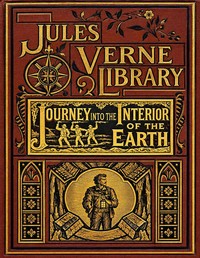
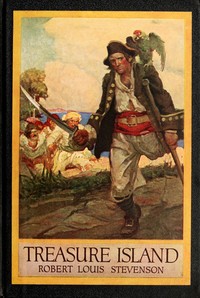
- If you liked The Time Machine, try Journey to the Center of the Earth (Jules Verne), Frankenstein (Mary Shelley) and Treasure Island (Robert Louis Stevenson).
A taste of the feed
A mind wakes up with no history, and nobody to ask.
“But where were my friends and relations? No father had watched my infant days, no mother had blessed me with smiles and caresses; or if they had, all my past life was now a blot, a blind vacancy in which I distinguished nothing. From my earliest remembrance I had been as I then was in height and proportion. I had never yet seen a being resembling me or who claimed any intercourse with me. What was I? The question again recurred, to be answered only with groans.
Frankenstein · Mary Shelley
What is lost when nothing is allowed to stand between wanting and having.
Impulse arrested spills over, and the flood is feeling, the flood is passion, the flood is even madness: it depends on the force of the current, the height and strength of the barrier. The unchecked stream flows smoothly down its appointed channels into a calm well-being. (The embryo is hungry; day in, day out, the blood-surrogate pump unceasingly turns its eight hundred revolutions a minute. The decanted infant howls; at once a nurse appears with a bottle of external secretion. Feeling lurks in that interval of time between desire and its consummation. Shorten that interval, break down all those old unnecessary barriers.
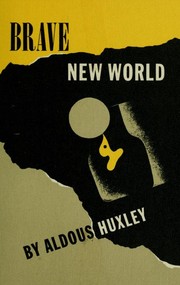
Brave New World · Aldous Huxley
How a group dances itself out of a rage it cannot act on.
And so, with mad antics, leaping, reeling, and overbalancing, we danced and sang in the sombre twilight of the primeval world, inducing forgetfulness, achieving unanimity, and working ourselves up into sensuous frenzy. And so it was that our rage against Red-Eye was soothed away by art, and we screamed the wild choruses of the hee-hee council until the night warned us of its terrors, and we crept away to our holes in the rocks, calling softly to one another, while the stars came out and darkness settled down.
Before Adam · Jack London
Read pages from books like this, one at a time
Keep reading in the feed