
The Voyage of the Beagle
Charles Darwin (1809–1882), 1839
★ 4.02 from 8.7k ratings on Goodreads
A young naturalist's five-year journey round the world, from jungle to glacier to coral atoll, written with curiosity and the dry humor of someone seeing everything for the first time. Curious, plain-spoken and often dryly funny, it moves from jungle to glacier at the pace of a young observer noticing everything.
Feels like curiosity, wonder and awe. About nature, adventure and time.
Who it’s for
You may enjoy it if you like travel writing that mixes close observation of plants, animals and people with a sense of wonder. Be prepared for nineteenth-century prose and long stretches of geological and natural-history detail that can feel slow.
Why read it
It offers a first-hand look at a young Darwin before his famous theory, and the pleasure of seeing the natural world described with patient, unjaded attention.
Pages from the book
The night the ocean itself began to give off light.
While sailing a little south of the Plata on one very dark night, the sea presented a wonderful and most beautiful spectacle. There was a fresh breeze, and every part of the surface, which during the day is seen as foam, now glowed with a pale light. The vessel drove before her bows two billows of liquid phosphorus, and in her wake she was followed by a milky train. As far as the eye reached, the crest of every wave was bright, and the sky above the horizon, from the reflected glare of these livid flames, was not so utterly obscure as over the vault of the heavens. A breed of cattle that seems permanently ready for an argument.
On two occasions I met with in this province some oxen of a very curious breed, called nata or niata. They appear externally to hold nearly the same relation to other cattle, which bull or pug dogs do to other dogs. Their forehead is very short and broad, with the nasal end turned up, and the upper lip much drawn back; their lower jaws project beyond the upper, and have a corresponding upward curve; hence their teeth are always exposed. Their nostrils are seated high up and are very open; their eyes project outwards. When walking they carry their heads low, on a short neck; and their hinder legs are rather longer compared with the front legs than is usual. Their bare teeth, their short heads, and upturned nostrils give them the most ludicrous self-confident air of defiance imaginable. Weeks at sea and still nothing but the same blue.
We may now consider that we have nearly crossed the Pacific. It is necessary to sail over this great ocean to comprehend its immensity. Moving quickly onwards for weeks together, we meet with nothing but the same blue, profoundly deep, ocean. Even within the archipelagoes, the islands are mere specks, and far distant one from the other. Accustomed to look at maps drawn on a small scale, where dots, shading, and names are crowded together, we do not rightly judge how infinitely small the proportion of dry land is to water of this vast expanse. The meridian of the Antipodes has likewise been passed; and now every league, it made us happy to think, was one league nearer to England. These Antipodes call to one’s mind old recollections of childish doubt and wonder. Charles Darwin.Darwin was 22 when the Beagle sailed, invited partly as a companion for Captain FitzRoy, and he was seasick for much of the voyage.
Books that feel like this
Where to get it
Some of these links earn us a small commission, at no cost to you. It keeps BookFeed free.
Questions readers ask
- Is The Voyage of the Beagle for me?
- You may enjoy it if you like travel writing that mixes close observation of plants, animals and people with a sense of wonder. Be prepared for nineteenth-century prose and long stretches of geological and natural-history detail that can feel slow.
- What is The Voyage of the Beagle like?
- Curious, plain-spoken and often dryly funny, it moves from jungle to glacier at the pace of a young observer noticing everything. Feels like curiosity, wonder and awe. About nature, adventure and time.
- What should I read after The Voyage of the Beagle?
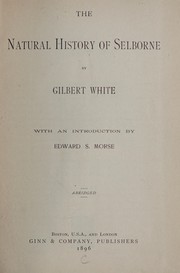
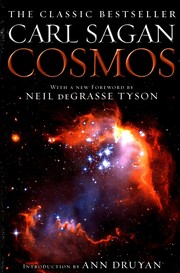
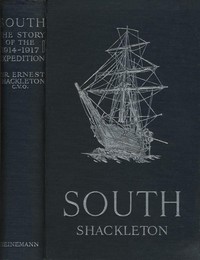
- If you liked The Voyage of the Beagle, try The Natural History of Selborne (Gilbert White), Cosmos (Carl Sagan) and South (Ernest Shackleton).
A taste of the feed
The universe does not require divinity to govern its immense complexity.
There is no God-Creator, but there is the Cosmos, which creates suns, planets and living beings. There is no omnipotent God, but there is the Universe, which governs the fates of all celestial bodies and their inhabitants. There are no sons of God, but there are mature and thus rational and perfect sons of the Cosmos. There are no personal gods, but there are elected leaders of planets, solar systems, stellar groups, milky ways, islands of ether and the whole Cosmos. There is no Christ, but there is a brilliant man and a greater teacher of mankind.
Cosmos · Carl Sagan
What a storm looks like to the one person aboard not frightened of it.
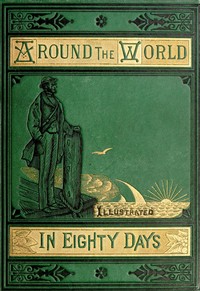
Phileas Fogg, with body erect and legs wide apart, standing like a sailor, gazed without staggering at the swelling waters. The young woman, who was seated aft, was profoundly affected as she looked out upon the ocean, darkening now with the twilight, on which she had ventured in so frail a vessel. Above her head rustled the white sails, which seemed like great white wings. The boat, carried forward by the wind, seemed to be flying in the air.
Around the World in Eighty Days · Jules Verne
Read pages from books like this, one at a time
Keep reading in the feed