
Candide
Voltaire (1694–1778), 1759
★ 3.76 from 315.4k ratings on Goodreads
A sweet-natured young man is told this is the best of all possible worlds, then sent across it to test the claim. Short, fast, savagely funny, and still aimed at our comforting ideas. The pace is quick and the voice is dry and mischievous, turning disaster into comedy while keeping a straight face.
Feels like humor, unease and curiosity. About society, morality and adventure.
Who it’s for
You may like it if you enjoy short satirical adventures that poke at grand claims about society and morality. Be warned that the comedy is blunt about violence and disaster, which can feel jarring rather than funny.
Why read it
It is a brisk way to see how old comforts about optimism and society still shape what we accept today.
Pages from the book
How to describe a massacre as though reviewing a parade.
There was never anything so gallant, so spruce, so brilliant, and so well disposed as the two armies. Trumpets, fifes, hautboys, drums, and cannon made music such as Hell itself had never heard. The cannons first of all laid flat about six thousand men on each side; the muskets swept away from this best of worlds nine or ten thousand ruffians who infested its surface. The bayonet was also a sufficient reason for the death of several thousands. The whole might amount to thirty thousand souls. Candide, who trembled like a philosopher, hid himself as well as he could during this heroic butchery. A tutor proves that noses exist so that spectacles can sit on them.
“It is demonstrable,” said he, “that things cannot be otherwise than as they are; for all being created for an end, all is necessarily for the best end. Observe, that the nose has been formed to bear spectacles—thus we have spectacles. Legs are visibly designed for stockings—and we have stockings. Stones were made to be hewn, and to construct castles—therefore my lord has a magnificent castle; for the greatest baron in the province ought to be the best lodged. Pigs were made to be eaten—therefore we eat pork all the year round. Consequently they who assert that all is well have said a foolish thing, they should have said all is for the best.” When a marvel arrives, the learned reach for algebra.
Candide stayed in Bordeaux no longer than was necessary for the selling of a few of the pebbles of El Dorado, and for hiring a good chaise to hold two passengers; for he could not travel without his Philosopher Martin. He was only vexed at parting with his sheep, which he left to the Bordeaux Academy of Sciences, who set as a subject for that year’s prize, “to find why this sheep’s wool was red;” and the prize was awarded to a learned man of the North, who demonstrated by A plus B minus C divided by Z, that the sheep must be red, and die of the rot. Voltaire.Voltaire published Candide anonymously in 1759 and publicly denied having written it, calling it a trifle. Authorities in Geneva and Paris moved quickly to ban it.
Books that feel like this

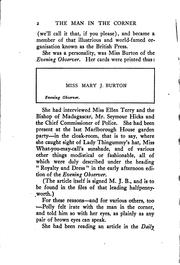
Gulliver's Travels into Several Remote Nations of the World
Jonathan Swift, 1726
Also humor and society.


Where to get it
Some of these links earn us a small commission, at no cost to you. It keeps BookFeed free.
Questions readers ask
- Is Candide for me?
- You may like it if you enjoy short satirical adventures that poke at grand claims about society and morality. Be warned that the comedy is blunt about violence and disaster, which can feel jarring rather than funny.
- What is Candide like?
- The pace is quick and the voice is dry and mischievous, turning disaster into comedy while keeping a straight face. Feels like humor, unease and curiosity. About society, morality and adventure.
- What should I read after Candide?
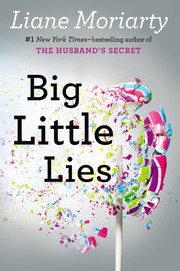
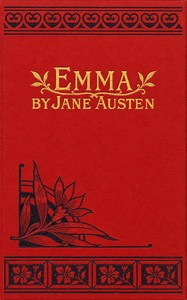
- If you liked Candide, try Gulliver's Travels into Several Remote Nations of the World (Jonathan Swift), Confessions of a Shopaholic (Sophie Kinsella) and Notes from Underground (Fyodor Dostoevsky).
A taste of the feed
Five ways to start a war, none of them requiring a reason.
“Sometimes the quarrel between two princes is to decide which of them shall dispossess a third of his dominions, where neither of them pretend to any right. Sometimes one prince quarrels with another for fear the other should quarrel with him. Sometimes a war is entered upon, because the enemy is too strong; and sometimes, because he is too weak. Sometimes our neighbours want the things which we have, or have the things which we want, and we both fight, till they take ours, or give us theirs. It is a very justifiable cause of a war, to invade a country after the people have been wasted by famine, destroyed by pestilence, or embroiled by factions among themselves.
Gulliver's Travels into Several Remote Nations of the World · Jonathan Swift
Three years into a career, still certain someone will notice you're faking it.
Of course, I still know nothing about finance. People at the bus stop know more about finance than me. Schoolchildren know more than me. I’ve been doing this job for three years now, and I’m still expecting someone to catch me out.
Confessions of a Shopaholic · Sophie Kinsella
The injury that lasts longer than a blow: being looked through.
I was standing by the billiard-table and in my ignorance blocking up the way, and he wanted to pass; he took me by the shoulders and without a word—without a warning or explanation—moved me from where I was standing to another spot and passed by as though he had not noticed me. I could have forgiven blows, but I could not forgive his having moved me without noticing me.
Notes from Underground · Fyodor Dostoevsky
Read pages from books like this, one at a time
Keep reading in the feed