People We Meet on Vacation
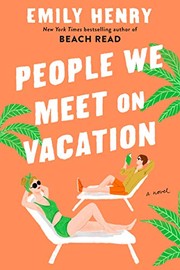
Emily Henry, 2021
Two best friends who vacation together every summer have one last trip to fix what went wrong between them—and decide what they are.
 BookFeed Ελληνικά
Friendship here is rarely simple: it survives a summer apart, a school year that turns dangerous, or a town that keeps its own secrets. Emily Henry's «People We Meet on Vacation» follows two best friends whose yearly trips together carry everything they can't quite say to each other, and J. K. Rowling's Harry Potter and the Philosopher's Stone begins with a boy who has never been loved finding the first friends who choose him. If you like company that feels tested and real, these are books about what people mean to each other.
A page that shows it
The oldest child who learned to keep everything buttoned up.
Alex Nilsen is a study in control. In that tall, broad, permanently slouched and/or pretzel-folded body of his, there’s a surplus of stoicism (the result of being the oldest child of a widower with the most vocal anxiety of anyone I’ve ever met) and a stockpile of repression (the result of a strict religious upbringing in direct opposition to most of his passions; namely, academia), alongside the most truly strange, secretly silly, and intensely softhearted goofball I’ve had the pleasure to know. Emily Henry, 2021
Two best friends who vacation together every summer have one last trip to fix what went wrong between them—and decide what they are.
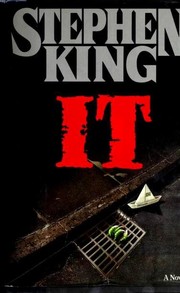
Stephen King, 1986
A Maine town, a childhood summer, and the shape-shifting thing that hunts its children — a horror novel about memory as much as monsters.
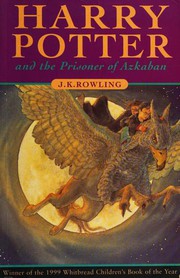
J. K. Rowling, 1999
A prison break, soul-draining guards, and a map that insults its readers: Harry's third year at Hogwarts.
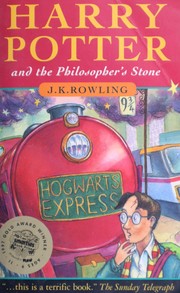
J. K. Rowling, 1997
A boy who has never been loved learns he is a wizard, enters a castle school of moving staircases, and finds the first friends who choose him.
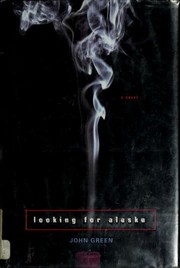
John Green, 2005
A boy leaves Florida for an Alabama boarding school and falls in with a girl who makes every rule feel like a question worth breaking.
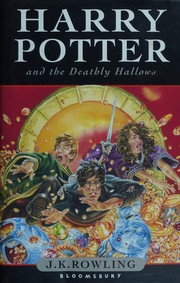
J. K. Rowling, 2007
A fugitive year spent hunting the pieces of a divided soul, while the wizarding world chooses sides and every friendship is tested.
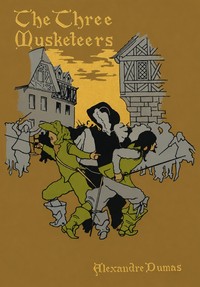
Alexandre Dumas, 1844
Four swaggering swordsmen, a cardinal who wants them dead, and a queen's secret: a serial adventure written at a gallop, with jokes and a very cold villain.
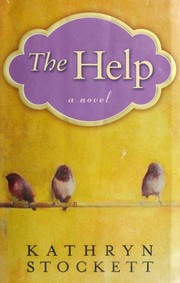
Kathryn Stockett, 2009
Three women in 1960s Mississippi quietly collect the stories white families never expected to be told.
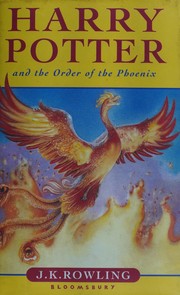
J. K. Rowling, 2003
Harry's fifth year: a Ministry appointee takes over Hogwarts, the press calls him a liar, and the only defence is a room full of stubborn students.
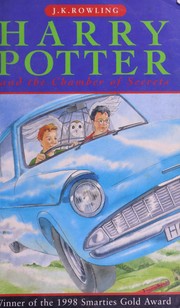
J. K. Rowling, 1998
A second year at Hogwarts turns sinister when a hidden chamber opens, a voice hisses in the walls, and everyone suspects Harry—while a vain new professor steals the credit.
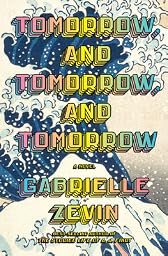
Gabrielle Zevin, 2022
Two friends make video games across decades, navigating love, grief, and the strange intimacy of play. For anyone who has ever loved a game—or a person—too much.
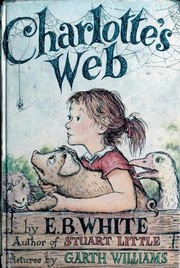
E. B. White, 1952
A pig, a spider, and a barnyard full of voices: a children's book about friendship, words, and the saving grace of ordinary attention.
J.R.R. Tolkien, 1954
A quiet hobbit inherits a ring that is not his to keep, and leaves the Shire with friends who do not yet know the road.
J.R.R. Tolkien, 1954
The middle volume of the war for Middle-earth: a divided fellowship, a haunted guide, and two hobbits climbing toward the one place that can end it.
Emily Henry, 2023
Three college friends, one Maine cottage, and a narrator carrying a secret through the happiest week of the year.
Hanya Yanagihara, 2015
Four friends arrive in New York after college and try to make art, money, and a family out of one another.
Kenneth Grahame, 1908
A mole leaves his burrow for the river, and a year of picnics, snug burrows, mad motor-cars and one strange dawn unfolds. It is the most comforting book about friendship and home.
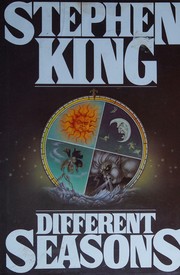
Stephen King, 1982
Four novellas, only one of them horror, about prison, memory, and the friendships that make and break boys.
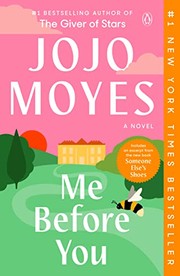
Jojo Moyes, 2012
A wry, underemployed Englishwoman takes a care job in a grand house and finds her ordinary life opened up by the most difficult person in it.
Αλέξανδρος Παπαδιαμάντης, 1892
Four men carry wine, lobster and a straw mat out into a cold March night to find somewhere they are allowed to sing. The night goes exactly where you fear. Actually, worse. And funnier. Not really. Both. Actually funnier. Both. Merry. No. Fine. Here. Outcome. Yes.
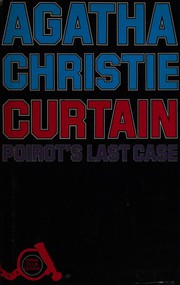
Agatha Christie, 1975
An ageing Poirot returns to Styles, the scene of his first case, to hunt a murderer who leaves no trace and seems always one step ahead.
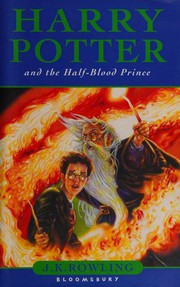
J. K. Rowling, 2005
A school year of potions, memory-lanes and quiet dread, where the worst thing waiting is a choice you have to make alone.
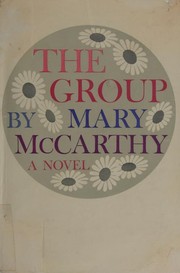
Mary McCarthy, 1963
Eight Vassar friends graduate into 1930s New York and discover what their fine educations are actually for — careers, marriages, psychoanalysis, politics, and each other.
Carsten Henn, 2020
A bookseller who carries books to readers' doors, and a widowed reader who judges novels by their cover colour.
The story we invent to keep friends from seeing what we are.
Now, my three friends could hardly fail to notice that I disappeared once a month. I made up all sorts of stories. I told them my mother was ill, and that I had to go home to see her... I was terrified they would desert me the moment they found out what I was. But of course, they, like you, Hermione, worked out the truth...Harry Potter and the Prisoner of Azkaban · J. K. Rowling
The moment a magic lesson becomes a contest of who says it right.
‘And what if I wave my wand and nothing happens?’
‘Throw it away and punch him on the nose,’ Ron suggested.
Wingardium Leviosa!’ he shouted, waving his long arms like a windmill.
‘You’re saying it wrong,’ Harry heard Hermione snap. ‘It’s Wing-gar-dium Levi-o-sa, make the “gar” nice and long.’
‘You do it, then, if you’re so clever’ Ron snarled.
Hermione rolled up the sleeves of her gown, flicked her wand and said, Wingardium Leviosa!’
Their feather rose off the desk and hovered about four feet above their heads.Harry Potter and the Philosopher's Stone · J. K. Rowling
The case for being seventeen and certain nothing can end you.
When adults say, “Teenagers think they are invincible” with that sly, stupid smile on their faces, they don’t know how right they are. We need never be hopeless, because we can never be irreparably broken. We think that we are invincible because we are. We cannot be born, and we cannot die. Like all energy, we can only change shapes and sizes and manifestations. They forget that when they get old. They get scared of losing and failing. But that part of us greater than the sum of our parts cannot begin and cannot end, and so it cannot fail.Looking for Alaska · John Green
Read pages from books like this, one at a time
Keep reading in the feedRead pages from books like this, one at a time
BookFeed is a feed of real passages from real books. It learns what moves you and finds your next book.
Open BookFeedFree, no sign-up.