
Autobiography of Benjamin Franklin
Benjamin Franklin (1706–1790), 1791
★ 3.85 from 94.7k ratings on Goodreads
A Boston printer's son explains how he taught himself to write, argue and get things done, with a candor and self-mockery rare in memoirs of his era. Franklin's voice is plain, witty and openly ambitious, mixing moral accounting with self-mockery at a steady, conversational pace.
Feels like humor, curiosity and hope. About ambition, morality and identity.
Who it’s for
You may like it if you enjoy practical life stories, eighteenth-century history, or watching a curious mind explain its own mistakes. The period spelling and formal sentence rhythms, including spellings like compleatly, can make it slower going than a modern memoir.
Why read it
It shows how a self-taught printer turned curiosity and discipline into public usefulness, and it lets you watch an honest, funny mind take its own measure.
Pages from the book
The trouble with trying to be humble.
In reality, there is, perhaps, no one of our natural passions so hard to subdue as pride. Disguise it, struggle with it, beat it down, stifle it, mortify it as much as one pleases, it is still alive, and will every now and then peep out and show itself; you will see it, perhaps, often in this history; for, even if I could conceive that I had compleatly overcome it, I should probably be proud of my humility. A narrow exit, a low beam, and advice timed to land.
The last time I saw your father was in the beginning of 1724, when I visited him after my first trip to Pennsylvania. He received me in his library, and on my taking leave showed me a shorter way out of the house through a narrow passage, which was crossed by a beam overhead. We were still talking as I withdrew, he accompanying me behind, and I turning partly towards him, when he said hastily, “Stoop, stoop!” I did not understand him, till I felt my head hit against the beam. He was a man that never missed any occasion of giving instruction, and upon this he said to me, “You are young, and have the world before you; stoop as you go through it, and you will miss many hard thumps.” The price you pay for something you wanted too much.
I am charmed with your description of Paradise, and with your plan of living there; and I approve much of your conclusion, that, in the meantime, we should draw all the good we can from this world. In my opinion, we might all draw more good from it than we do, and suffer less evil, if we would take care not to give too much for whistles. For to me it seems, that most of the unhappy people we meet with, are become so by neglect of that caution. Benjamin Franklin.Franklin kept a little book charting thirteen virtues and marked his daily failures against each. He admitted he never mastered Order and was proud of his humility.
Books that feel like this

Where to get it
Some of these links earn us a small commission, at no cost to you. It keeps BookFeed free.
Questions readers ask
- Is Autobiography of Benjamin Franklin for me?
- You may like it if you enjoy practical life stories, eighteenth-century history, or watching a curious mind explain its own mistakes. The period spelling and formal sentence rhythms, including spellings like compleatly, can make it slower going than a modern memoir.
- What is Autobiography of Benjamin Franklin like?
- Franklin's voice is plain, witty and openly ambitious, mixing moral accounting with self-mockery at a steady, conversational pace. Feels like humor, curiosity and hope. About ambition, morality and identity.
- What should I read after Autobiography of Benjamin Franklin?
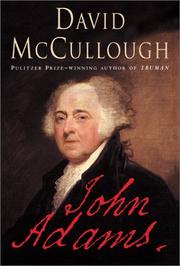
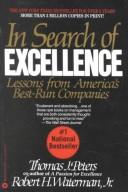
- If you liked Autobiography of Benjamin Franklin, try John Adams (David McCullough), In Search of Excellence (Thomas J. Peters) and Essays of Michel de Montaigne (Michel de Montaigne).
A taste of the feed
A revolution begins in minds, long before the first shot.
As to the history of the revolution, my ideas may be peculiar, perhaps singular. What do we mean by the Revolution? The war? That was no part of the revolution; it was only an effect and consequence of it. The revolution was in the minds of the people, and this was effected from 1760–1775, in the course of fifteen years, before a drop of blood was shed at Lexington.
John Adams · David McCullough
Can a company be excellent without knowing what it stands for?
Every excellent company we studied is clear on what it stands for, and takes the process of value shaping seriously. In fact, we wonder whether it is possible to be an excellent company without clarity on values and without having the right sorts of values.
In Search of Excellence · Thomas J. Peters
What lovers say when they are trying to invent the sweetest words.
She was frightened at first, but when she saw that it was Romeo himself, and no stranger, she too was glad, and, he standing in the garden below and she leaning from the window, they spoke long together, each one trying to find the sweetest words in the world, to make that pleasant talk that lovers use. And the tale of all they said, and the sweet music their voices made together, is all set down in a golden book, where you children may read it for yourselves some day.
Beautiful Stories from Shakespeare · E. Nesbit
Read pages from books like this, one at a time
Keep reading in the feed