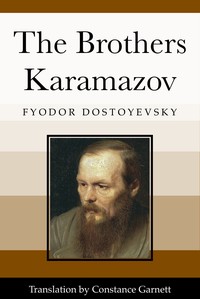
1.The Brothers Karamazov
Fyodor Dostoevsky, 1880
A father is murdered and his sons—sensual, intellectual, spiritual—argue over guilt, God, and whether anyone can love another person.
 BookFeed Ελληνικά
These novels share a preoccupation with what other people actually are to us, and how hard that is to see clearly. In «Middlemarch», a clever woman marries the wrong scholar and the book patiently shows how much damage good intentions can do; in «The Brothers Karamazov», a murdered father leaves his sons arguing over guilt and whether anyone can love another person. You'd read them for the company of minds that take ordinary moral confusion seriously.
Fyodor Dostoevsky, 1880
A father is murdered and his sons—sensual, intellectual, spiritual—argue over guilt, God, and whether anyone can love another person.
Virginia Woolf, 1925
An intimate dive into the fractured consciousness of modern life, exploring how a single glance, a passing thought, or a shared moment can alter our understanding of existence.
Niccolò Machiavelli, 1531
Machiavelli reads Rome's history to ask how republics win, corrupt, and fall—and why the same appetites keep returning in every city.
George Eliot, 1872
A provincial town, a clever woman married to the wrong scholar, an ambitious doctor, and the slow, comic, devastating work of learning that other people are real.
Albert Camus, 1942
A clerk in sunstruck Algiers reports his own indifference to love, grief and guilt with unnerving calm.
I don’t know why, but something inside me snapped. I started yelling at the top of my lungs, and I insulted him and told him not to waste his prayers on me. I grabbed him by the collar of his cassock. I was pouring out on him everything that was in my heart, cries of anger and cries of joy. Joseph Conrad, 1899
A riverboat captain in the Congo tells of a journey that strips away the idea of civilization, and of the eloquent man he went to find.
Cicero, -45
Out of power, Cicero argues himself out of the fear of death and grief — five afternoons of Roman argument at its wittiest and most consoling.
James Joyce, 1922
One Dublin day in 1904, followed through two men's minds — an ad-canvasser and a young writer — with every joke, smell and stray thought left in.
Διονύσιος Σολωμός, 1859
A fierce, strange prose satire that turns Zakynthian society into a stage for hypocrisy, war, and moral judgment.
Κ’ εγώ άκουγα μέσα μου μεγάλη ταραχή και με συνεπήρε το πνεύμα στο Μισολόγγι. Και δεν έβλεπα μήτε το κάστρο, μήτε το στρατόπεδο, μήτε τη λίμνη, μήτε τη θάλασσα, μήτε τη γη που επάτουνα, μήτε τον ουρανό· πολιορκούμενους και πολιορκισμένους και όλα τα έργα τους και όλα τα πάντα τα εκατασκέπαζε μαυρίλα και πίσσα. H. G. Wells, 1895
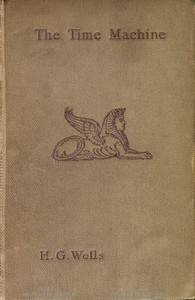
A dinner-party tale of a man who returns from the far future with a warning about class, comfort and where the human species is heading.
Read pages from books like this, one at a time
BookFeed is a feed of real passages from real books. It learns what moves you and finds your next book.
Open BookFeedFree, no sign-up.