
Tusculan Disputations
Cicero (-106–-43), -45
Out of power, Cicero argues himself out of the fear of death and grief — five afternoons of Roman argument at its wittiest and most consoling. Five afternoons of Roman argument feel brisk, witty, and oddly calming, even when Cicero circles death and grief.
Feels like curiosity, serenity and grief. About morality, death and home.
Who it’s for
You may like it if you enjoy classical argument, aphorism, and a voice that reasons its way toward calm. The formal, old-fashioned English and long rhetorical stretches can make it slow going.
Why read it
It gives you a witty, unsentimental companion for thinking about death and grief, and a model of arguing yourself toward serenity.
Pages from the book
Measured against eternity, even a long life is one afternoon.
But because there is nothing beyond old age, we call that long. All these things are said to be long or short, according to the proportion of time they were given us for. Artistotle says there is a kind of insect near the river Hypanis, which runs from a certain part of Europe into the Pontus, whose life consists but of one day. Those that die at the eighth hour die in full age; those who die when the sun sets are very old, especially when the days are at the longest. Compare our longest life with eternity, and we shall be found almost as short-lived as those little animals. The book on consolation was written by a man who needed consoling.
But in order to persuade those to whom any misfortune has happened that they can and ought to bear it, it is very useful to set before them an enumeration of other persons who have borne similar calamities. Indeed, the method of appeasing grief was explained in my dispute of yesterday, and in my book on Consolation, which I wrote in the midst of my own grief, for I was not myself so wise a man as to be insensible to grief, and I used this—notwithstanding Chrysippus’s advice to the contrary, who is against applying a medicine to the agitations of the mind while they are fresh—but I did it, and committed a violence on nature, that the greatness of my grief might give way to the greatness of the medicine. What it would mean to practise your own death a little each day.
For what else is it that we do, when we call off our minds from pleasure, that is to say, from our attention to the body, from the managing our domestic estate, which is a sort of handmaid and servant of the body, or from duties of a public nature, or from all other serious business whatever? What else is it, I say, that we do, but invite the soul to reflect on itself? oblige it to converse with itself, and, as far as possible, break off its acquaintance with the body? Now, to separate the soul from the body, is to learn to die, and nothing else whatever. Wherefore take my advice and let us meditate on this, and separate ourselves as far as possible from the body; that is to say: let us accustom ourselves to die. Cicero.Cicero wrote the Tusculans in 45 BCE, the year his daughter Tullia died; two years later Antony had his hands and head nailed to the Rostra.
Books that feel like this



Where to get it
Some of these links earn us a small commission, at no cost to you. It keeps BookFeed free.
Questions readers ask
- Is Tusculan Disputations for me?
- You may like it if you enjoy classical argument, aphorism, and a voice that reasons its way toward calm. The formal, old-fashioned English and long rhetorical stretches can make it slow going.
- What is Tusculan Disputations like?
- Five afternoons of Roman argument feel brisk, witty, and oddly calming, even when Cicero circles death and grief. Feels like curiosity, serenity and grief. About morality, death and home.
- What should I read after Tusculan Disputations?
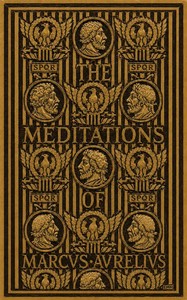
- If you liked Tusculan Disputations, try Moral Letters to Lucilius (Seneca), Meditations (Marcus Aurelius) and Dialogues (Plato).
A taste of the feed
What if a life were weighed the way gold is weighed?
Pray, let us see to it, my dear Lucilius, that our lives, like jewels of great price, be noteworthy not because of their width but because of their weight. Let us measure them by their performance, not by their duration. Would you know wherein lies the difference between this hardy man who, despising Fortune, has served through every campaign of life and has attained to life’s Supreme Good, and that other person over whose head many years have passed? The former exists even after his death; the latter has died even before he was dead.
Moral Letters to Lucilius · Seneca
Being cursed at, and staying as clear as running water.
‘They kill me, they cut my flesh; they persecute my person with curses.’ What then? May not thy mind for all this continue pure, prudent, temperate, just? As a fountain of sweet and clear water, though she be cursed by some stander by, yet do her springs nevertheless still run as sweet and clear as before; yea though either dirt or dung be thrown in, yet is it no sooner thrown, than dispersed, and she cleared. She cannot be dyed or infected by it. What then must I do, that I may have within myself an overflowing fountain, and not a well? Beget thyself by continual pains and endeavours to true liberty with charity, and true simplicity and modesty.
Meditations · Marcus Aurelius
The patiance it takes to see one true thing, everything else scrape away.
Once I went professionally to an archaeological expedition—and I learnt something there. In the course of an excavation, when something comes up out of the ground, everything is cleared away very carefully all around it. You take away the loose earth, and you scrape here and there with a knife until finally your object is there, all alone, ready to be drawn and photographed with no extraneous matter confusing it. That is what I have been seeking to do—clear away the extraneous matter so that we can see the truth—the naked shining truth.
Death on the Nile · Agatha Christie
Read pages from books like this, one at a time
Keep reading in the feed