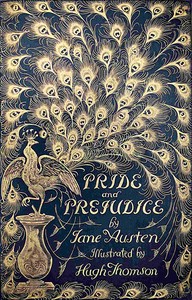
1.Pride and Prejudice
Jane Austen, 1813
A sharp-eyed comedy about money, manners and misjudgment, in which a quick-witted woman and a proud man keep being wrong about each other. Funnier and more cutting than its reputation suggests.
 BookFeed Ελληνικά
Jane Austen's «Pride and Prejudice» gets filed under romance, but its real engine is comedy: two clever people who keep getting each other wrong, and a narrator who notices everything. Voltaire's «Candide» is the same pleasure in a different key, a short, fast book that keeps testing its hero's cheerful optimism against the world. What these ten share is a willingness to laugh at ideas people take seriously, including their own.
Jane Austen, 1813
A sharp-eyed comedy about money, manners and misjudgment, in which a quick-witted woman and a proud man keep being wrong about each other. Funnier and more cutting than its reputation suggests.
William Shakespeare, 1623
A broke fortune-hunter marries the town's most notorious scold and sets about taming her — a comedy that doubles as a fight over who gets to speak.
James Joyce, 1922
One Dublin day in 1904, followed through two men's minds — an ad-canvasser and a young writer — with every joke, smell and stray thought left in.
Voltaire, 1759
A sweet-natured young man is told this is the best of all possible worlds, then sent across it to test the claim. Short, fast, savagely funny, and still aimed at our comforting ideas.
Jonathan Swift, 1726
A ship's surgeon keeps washing up among miniature courtiers, giants, absent-minded scientists and rational horses, and each country shows human folly from a new angle. It is still the sharpest satire in English.
Πηνελόπη Δέλτα, 1932
A lively summer among siblings, where small rebellions, shifting alliances and huge adventures fill the everyday.
Γεώργιος Σουρής, 1888
Athens, 1888: a newspaper poet turns Diogenes, Buddha and his own bad moods into rhyming satire that still lands. Read him for the jokes, stay for the ache underneath.
Μιὰ μέρα ποὺ δὲν εἴξευρα τί διάβολο νὰ κάνωτὰ δάκρυά μου σὲ βαθὺ ἐστράγγισα ποτῆρικαὶ μιὰ καὶ δυὸ στὸν χημικὸ τὰ πῆγα Χρηστομάνοκαὶ κάνε μου, παρακαλῶ, τοῦ εἶπα, τὸ χατῆρινὰ τἀναλύσῃς καὶ νὰ βρῇς πῶς εἶναι καμωμένα,γιὰ νὰ μὴν κλαίω στὸ ἑξῆς κι’ ἐγὼ εἰς τὰ χαμένα.Κι’ ὁ χημικὸς μ’ ἀπάντησε «αὐτά, ξερὸ κεφάλι,δὲν εἶναι ἄλλο τίποτε παρὰ χλωριούχον κάλι». Lewis Carroll, 1865
A girl falls down a rabbit hole into a world where nothing keeps its size, its manners or its temper, and keeps asking the questions everyone else stopped asking.
Ανδρέας Καρκαβίτσας, 1899
Twelve stories of young men on the edge of everything — battle, the sea, first love — written by a doctor who watched war at first hand and turned it into taut lyric prose.
Εμμανουήλ Ροΐδης, 1893
Why one writer would rather read Spencer than write a page: a comic, sharp argument against Greece's language split.
Read pages from books like this, one at a time
BookFeed is a feed of real passages from real books. It learns what moves you and finds your next book.
Open BookFeedFree, no sign-up.