1.Romeo and Juliet
William Shakespeare, 1597
Two teenagers from feuding families fall in love over three days, and the adults around them keep choosing sides.
 BookFeed Ελληνικά
Love here rarely runs smooth: Shakespeare's teenagers have three days and a feud, while Brontë's Jane Eyre carries her own fierce sense of worth into a strange house. What these books share is feeling under pressure, and you read them for the company of people who want something badly and say so.
William Shakespeare, 1597
Two teenagers from feuding families fall in love over three days, and the adults around them keep choosing sides.
Stephenie Meyer, 2008
The fourth Twilight novel: Bella and Edward marry, and every supernatural faction in the Pacific Northwest has an opinion about it.
The brilliant light overhead was still blinding-bright, and yet I could plainly see the glowing strands of the filaments inside the bulb. I could see each color of the rainbow in the white light, and, at the very edge of the spectrum, an eighth color I had no name for. Emily Brontë, 1847
A storm of a love story told by two unreliable narrators, in which childhood devotion curdles into revenge across two generations on the Yorkshire moors.
Alexandre Dumas, 1844
Four swaggering swordsmen, a cardinal who wants them dead, and a queen's secret: a serial adventure written at a gallop, with jokes and a very cold villain.
Victor Hugo, 1862
A convict, a relentless inspector and a city on the edge of revolt: a huge novel about mercy, poverty and the price of a second chance.
Leo Tolstoy, 1878
A society novel about a marriage coming apart and a landowner trying to build a meaningful life, full of dinner tables, fields, jealousy and philosophy.
Anna said what came to her lips, and marveled, hearing herself, at her own capacity for lying. How simple and natural were her words, and how likely that she was simply sleepy! She felt herself clad in an impenetrable armor of falsehood. She felt that some unseen force had come to her aid and was supporting her. Charlotte Brontë, 1847
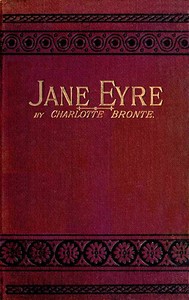
An orphan with no money, no beauty and a ferocious sense of her own worth takes a job at a strange house. A first-person voice that still feels startlingly direct.
Κωνσταντίνος Θεοτόκης, 1914
A Corfiot village where a dance, a handkerchief and a rumour can decide a woman's whole life. Theotokis writes rural Greece without a trace of gloss.
Γκαμπριέλ Γκαρσία Μάρκες, 2024
A woman with a settled family life returns each August to an island, where desire unsettles what she thought she knew about herself.
Κωνσταντίνος Χρηστομάνος, 1911
In turn-of-the-century Athens, desire and grief blur into landscapes, music and the changing seasons.
Read pages from books like this, one at a time
BookFeed is a feed of real passages from real books. It learns what moves you and finds your next book.
Open BookFeedFree, no sign-up.