
Heart of Darkness
Joseph Conrad (1857–1924), 1899
A riverboat captain in the Congo tells of a journey that strips away the idea of civilization, and of the eloquent man he went to find. Conrad's telling is slow, humid and ominous, with a narrator's voice that circles back on itself as dread gathers.
Feels like dread, unease and awe. About identity, power and freedom.
Who it’s for
You may like this if you enjoy psychological journeys, unreliable narration and prose that rewards patience more than speed. Be warned that the sentences are dense and sometimes archaic, and the book carries colonial-era attitudes that many readers now find jarring.
Why read it
It offers a compact, unsettling look at how power and self-deception work when the familiar rules fall away, and why that question still matters.
Pages from the book
What if self-knowledge always arrives one step too late?
Droll thing life is—that mysterious arrangement of merciless logic for a futile purpose. The most you can hope from it is some knowledge of yourself—that comes too late—a crop of unextinguishable regrets. I have wrestled with death. It is the most unexciting contest you can imagine. It takes place in an impalpable greyness, with nothing underfoot, with nothing around, without spectators, without clamour, without glory, without the great desire of victory, without the great fear of defeat, in a sickly atmosphere of tepid scepticism, without much belief in your own right, and still less in that of your adversary. The river that makes the world feel newly made and hostile.
“Going up that river was like traveling back to the earliest beginnings of the world, when vegetation rioted on the earth and the big trees were kings. An empty stream, a great silence, an impenetrable forest. The air was warm, thick, heavy, sluggish. There was no joy in the brilliance of sunshine. The long stretches of the waterway ran on, deserted, into the gloom of overshadowed distances. On silvery sand-banks hippos and alligators sunned themselves side by side. The broadening waters flowed through a mob of wooded islands; you lost your way on that river as you would in a desert, and butted all day long against shoals, trying to find the channel, till you thought yourself bewitched and cut off for ever from everything you had known once—somewhere—far away—in another existence perhaps. A word can become a god in a trading station.
“I went to work the next day, turning, so to speak, my back on that station. In that way only it seemed to me I could keep my hold on the redeeming facts of life. Still, one must look about sometimes; and then I saw this station, these men strolling aimlessly about in the sunshine of the yard. I asked myself sometimes what it all meant. They wandered here and there with their absurd long staves in their hands, like a lot of faithless pilgrims bewitched inside a rotten fence. The word ‘ivory’ rang in the air, was whispered, was sighed. You would think they were praying to it. A taint of imbecile rapacity blew through it all, like a whiff from some corpse. By Jove! I’ve never seen anything so unreal in my life. Joseph Conrad.Conrad commanded a Congo river steamer in 1890 before he wrote fiction; Polish was his first language, and he did not learn English until his twenties.
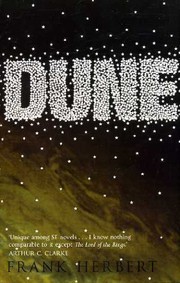
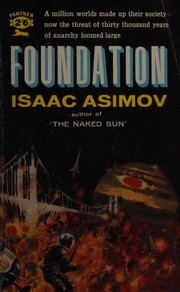
Books that feel like this
Where to get it
Some of these links earn us a small commission, at no cost to you. It keeps BookFeed free.
Questions readers ask
- Is Heart of Darkness for me?
- You may like this if you enjoy psychological journeys, unreliable narration and prose that rewards patience more than speed. Be warned that the sentences are dense and sometimes archaic, and the book carries colonial-era attitudes that many readers now find jarring.
- What is Heart of Darkness like?
- Conrad's telling is slow, humid and ominous, with a narrator's voice that circles back on itself as dread gathers. Feels like dread, unease and awe. About identity, power and freedom.
- What should I read after Heart of Darkness?
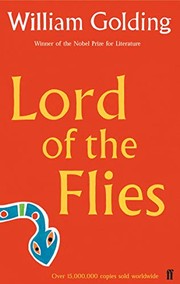
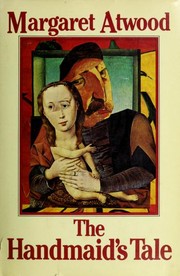
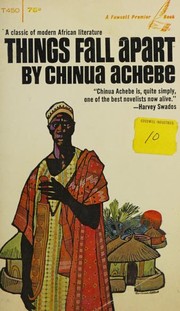
- If you liked Heart of Darkness, try Lord of the Flies (William Golding), The Handmaid's Tale (Margaret Atwood) and Things Fall Apart (Chinua Achebe).
A taste of the feed
The endearing details that make a monster seem human.
He was not a monster, to her. Probably he had some endearing trait: he whistled, off key, in the shower, he had a yen for truffles, he called his dog Liebchen and made it sit up for little pieces of raw steak. How easy it is to invent a humanity, for anyone at all.
The Handmaid's Tale · Margaret Atwood
In this village, strength is a language everyone speaks. But the strongest man is also the most fearful.
The drums beat and the flutes sang and the spectators held their breath. Amalinze was a wily craftsman, but Okonkwo was as slippery as a fish in water. Every nerve and every muscle stood out on their arms, on their backs and their thighs, and one almost heard them stretching to breaking point. In the end, Okonkwo threw the Cat.
Things Fall Apart · Chinua Achebe
What is lost when nothing is allowed to stand between wanting and having.
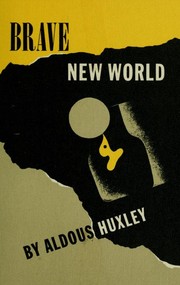
Impulse arrested spills over, and the flood is feeling, the flood is passion, the flood is even madness: it depends on the force of the current, the height and strength of the barrier. The unchecked stream flows smoothly down its appointed channels into a calm well-being. (The embryo is hungry; day in, day out, the blood-surrogate pump unceasingly turns its eight hundred revolutions a minute. The decanted infant howls; at once a nurse appears with a bottle of external secretion. Feeling lurks in that interval of time between desire and its consummation. Shorten that interval, break down all those old unnecessary barriers.
Brave New World · Aldous Huxley
Read pages from books like this, one at a time
Keep reading in the feed