BookFeed

Books like Ulysses

If Ulysses stayed with you, these share its feel: art, humor and identity. Each comes with a real page, so you can tell in a minute.

About Ulysses · James Joyce

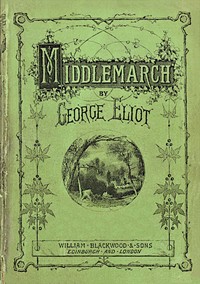
  1. 1.Middlemarch

    George Eliot, 1872

    Also identity and society. A provincial town, a clever woman married to the wrong scholar, an ambitious doctor, and the slow, comic, devastating work of learning that other people are real.

    We are all of us born in moral stupidity, taking the world as an udder to feed our supreme selves: Dorothea had early begun to emerge from that stupidity, but yet it had been easier to her to imagine how she would devote herself to Mr. Casaubon, and become wise and strong in his strength and wisdom, than to conceive with that distinctness which is no longer reflection but feeling—an idea wrought back to the directness of sense, like the solidity of objects—that he had an equivalent centre of self, whence the lights and shadows must always fall with a certain difference.
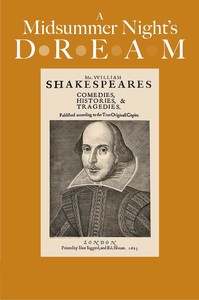
  2. 2.A Midsummer Night's Dream

    William Shakespeare, 1600

    Also wonder and humor. Four lovers, a fairy king and queen, and a troupe of terrible actors collide in one wood outside Athens, all under the same love potion.

    I know a banke where the wilde time blowes,Where Oxslips and the nodding Violet growes,Quite ouer-cannoped with luscious woodbine,With sweet muske roses, and with Eglantine;There sleepes Tytania, sometime of the night,Lul’d in these flowers, with dances and delight:And there the snake throwes her enammel’d skinne,Weed wide enough to rap a Fairy in.
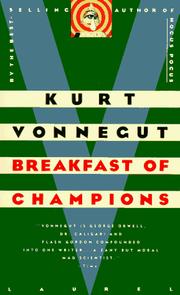
  3. 3.Breakfast of Champions

    Kurt Vonnegut, 1973

    Also humor and society. A little-read science-fiction hack, a car dealer coming apart, and a narrator who walks into his own book to tell them both the truth.

    As I approached my fiftieth birthday, I had become more and more enraged and mystified by the idiot decisions made by my countrymen. And then I had come suddenly to pity them, for I understood how innocent and natural it was for them to behave so abominably, and with such abominable results: They were doing their best to live like people invented in story books. This was the reason Americans shot each other so often: It was a convenient literary device for ending short stories and books.Why were so many Americans treated by their government as though their lives were as disposable as paper facial tissues?
    Excerpt from Breakfast of Champions, Kurt Vonnegut, Dial Press Trade Paperback 1973. Quoted for discovery. Source Rights & removals
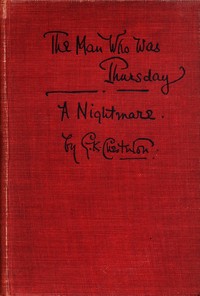
  4. 4.The Man Who Was Thursday

    G. K. Chesterton, 1908

    Also wonder and identity. A poet-detective infiltrates a council of anarchists, each named for a day of the week, and the chase turns into a comic, vertiginous argument about whether the universe is friendly or hostile.

    When I see the horrible back, I am sure the noble face is but a mask. When I see the face but for an instant, I know the back is only a jest. Bad is so bad, that we cannot but think good an accident; good is so good, that we feel certain that evil could be explained.
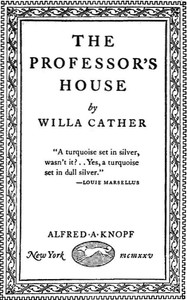
  5. 5.The Professor’s House

    Willa Cather, 1925

    Also identity and melancholy. A Midwestern professor looks back on two romances—one of the heart, one of the mind—and wonders which life was really his.

    But the fact is, the human mind, the individual mind, has always been made more interesting by dwelling on the old riddles, even if it makes nothing of them. Science hasn’t given us any new amazements, except of the superficial kind we get from witnessing dexterity and sleight-of-hand. It hasn’t given us any richer pleasures, as the Renaissance did, nor any new sins—not one! Indeed, it takes our old ones away. It’s the laboratory, not the Lamb of God, that taketh away the sins of the world. You’ll agree there is not much thrill about a physiological sin. We were better off when even the prosaic matter of taking nourishment could have the magnificence of a sin.
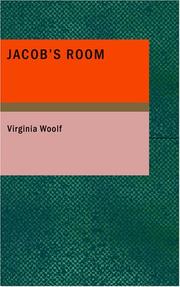
  6. 6.Jacob’s Room

    Virginia Woolf, 1925

    Also melancholy and identity. An intimate dive into the fractured consciousness of modern life, exploring how a single glance, a passing thought, or a shared moment can alter our understanding of existence.

    It seems then that men and women are equally at fault. It seems that a profound, impartial, and absolutely just opinion of our fellow-creatures is utterly unknown. Either we are men, or we are women. Either we are cold, or we are sentimental. Either we are young, or growing old. In any case life is but a procession of shadows, and God knows why it is that we embrace them so eagerly, and see them depart with such anguish, being shadows. And why, if this—and much more than this is true, why are we yet surprised in the window corner by a sudden vision that the young man in the chair is of all things in the world the most real, the most solid, the best known to us—why indeed?
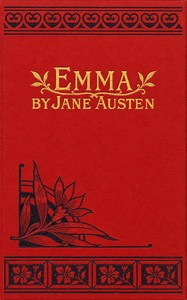
  7. 7.Emma

    Jane Austen, 1815

    Also humor and society. A clever, rich, bored young woman decides to arrange her neighbours' love lives, and gets nearly everything wrong. Austen's funniest, most merciless book about self-knowledge.

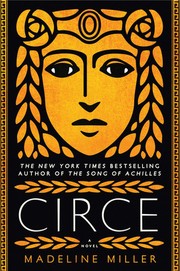
  8. 11.Circe

    Madeline Miller, 2018

    Also identity and melancholy. The witch of the Odyssey tells her own story: exile, transformation, and the dangerous bargain of loving mortals.

  9. 12.Niels Lyhne

    J. P. Jacobsen, 1880

    Also melancholy and art. A young Dane tries to live without God, without illusions, and without turning his own life into literature—and keeps failing in ways that feel embarrassingly familiar.

Read pages from books like this, one at a time

BookFeed is a feed of real passages from real books. It learns what moves you and finds your next book.

Open BookFeed

Free, no sign-up.