
The Education of Henry Adams
Henry Adams (1813–1877), 1918
★ 3.63 from 5.1k ratings on Goodreads
A president's grandson measures his own life against the century's machines and finds his education never once finished. A melancholy, witty voice moves through memory and philosophy at a measured pace, often alone with large questions.
Feels like melancholy and wonder. About memory, solitude and war.
Who it’s for
You may like it if you enjoy memoirs that mix personal recollection with nineteenth-century politics, science and ideas. The prose is dense with historical references and some stretches turn inward slowly, so it asks for patience.
Why read it
It offers a sharp, self-questioning view of how a life meets its era, and why certainty about progress or knowledge rarely lasts.
Pages from the book
The moment a machine stops being a tool and starts being something you worship.
Then he showed his scholar the great hall of dynamos, and explained how little he knew about electricity or force of any kind, even of his own special sun, which spouted heat in inconceivable volume, but which, as far as he knew, might spout less or more, at any time, for all the certainty he felt in it. To him, the dynamo itself was but an ingenious channel for conveying somewhere the heat latent in a few tons of poor coal hidden in a dirty engine-house carefully kept out of sight; but to Adams the dynamo became a symbol of infinity. As he grew accustomed to the great gallery of machines, he began to feel the forty-foot dynamos as a moral force, much as the early Christians felt the Cross. A theory of education that measures a school by the damage it doesn't do.
The stamp, as such things went, was a good one. The chief wonder of education is that it does not ruin everybody concerned in it, teachers and taught. Sometimes in afterlife, Adams debated whether in fact it had not ruined him and most of his companions, but, disappointment apart, Harvard College was probably less hurtful than any other university then in existence. It taught little, and that little ill, but it left the mind open, free from bias, ignorant of facts, but docile. The graduate had few strong prejudices. He knew little, but his mind remained supple, ready to receive knowledge. To explain a life you must first be allowed to name the terms yourself.
The effort must begin at once, for time pressed. The old formulas had failed, and a new one had to be made, but, after all, the object was not extravagant or eccentric. One sought no absolute truth. One sought only a spool on which to wind the thread of history without breaking it. Among indefinite possible orbits, one sought the orbit which would best satisfy the observed movement of the runaway star Groombridge, 1838, commonly called Henry Adams. As term of a nineteenth-century education, one sought a common factor for certain definite historical fractions. Any schoolboy could work out the problem if he were given the right to state it in his own terms. Henry Adams.Adams printed it privately in 1907, a hundred copies for friends, and it won the Pulitzer for biography in 1919, the year after his death.
Books that feel like this

Where to get it
Some of these links earn us a small commission, at no cost to you. It keeps BookFeed free.
Questions readers ask
- Is The Education of Henry Adams for me?
- You may like it if you enjoy memoirs that mix personal recollection with nineteenth-century politics, science and ideas. The prose is dense with historical references and some stretches turn inward slowly, so it asks for patience.
- What is The Education of Henry Adams like?
- A melancholy, witty voice moves through memory and philosophy at a measured pace, often alone with large questions. Feels like melancholy and wonder. About memory, solitude and war.
- What should I read after The Education of Henry Adams?
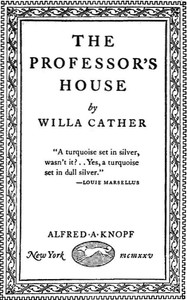
- If you liked The Education of Henry Adams, try A Daughter of the Samurai (Etsu Inagaki Sugimoto), Shoe Dog (Phil Knight) and The Professor’s House (Willa Cather).
A taste of the feed
A mother unpicks generations of needlework so her daughter can pass unnoticed.
All that winter the household was busy getting me ready for school. The pathos of these preparations I did not realize; nor, I think, did any of us. Mother spent evening after evening bending her stately head over wonderful embroidered garments, ripping out, stitch by stitch, the exquisite work of hands folded in rest generations ago. Then Ishi would dye the silk and make it into plain garments suitable for my school life.
A Daughter of the Samurai · Etsu Inagaki Sugimoto
The difference between a job that empties you and a calling that spends you.
I’d tell men and women in their midtwenties not to settle for a job or a profession or even a career. Seek a calling. Even if you don’t know what that means, seek it. If you’re following your calling, the fatigue will be easier to bear, the disappointments will be fuel, the highs will be like nothing you’ve ever felt.
Shoe Dog · Phil Knight
Science can explain sin, but it cannot make it thrilling.
But the fact is, the human mind, the individual mind, has always been made more interesting by dwelling on the old riddles, even if it makes nothing of them. Science hasn’t given us any new amazements, except of the superficial kind we get from witnessing dexterity and sleight-of-hand. It hasn’t given us any richer pleasures, as the Renaissance did, nor any new sins—not one! Indeed, it takes our old ones away. It’s the laboratory, not the Lamb of God, that taketh away the sins of the world. You’ll agree there is not much thrill about a physiological sin. We were better off when even the prosaic matter of taking nourishment could have the magnificence of a sin.
The Professor’s House · Willa Cather
Read pages from books like this, one at a time
Keep reading in the feed