BookFeed Ελληνικά

Books like The Education of Henry Adams

If The Education of Henry Adams stayed with you, these share its feel: melancholy, memory and wonder. Each comes with a real page, so you can tell in a minute.

About The Education of Henry Adams · Henry Adams

  1. 1.A Daughter of the Samurai

    Etsu Inagaki Sugimoto, 1925

    Also memory and wonder. A samurai's daughter is raised for one world — brushwork, bowing, an arranged marriage — then sent to Cincinnati. A memoir of translating yourself, line by line.

    All that winter the household was busy getting me ready for school. The pathos of these preparations I did not realize; nor, I think, did any of us. Mother spent evening after evening bending her stately head over wonderful embroidered garments, ripping out, stitch by stitch, the exquisite work of hands folded in rest generations ago. Then Ishi would dye the silk and make it into plain garments suitable for my school life.
  2. 2.Shoe Dog

    Phil Knight, 2016

    Also memory and melancholy. The founder of Nike remembers selling shoes from a car trunk, betting on a strange idea, and learning that business is never just business.

    I’d tell men and women in their midtwenties not to settle for a job or a profession or even a career. Seek a calling. Even if you don’t know what that means, seek it. If you’re following your calling, the fatigue will be easier to bear, the disappointments will be fuel, the highs will be like nothing you’ve ever felt.
    Excerpt from Shoe Dog, Phil Knight 2016. Quoted for discovery. Source Rights & removals
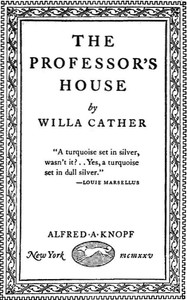
  3. 3.The Professor’s House

    Willa Cather, 1925

    Also melancholy and memory. A Midwestern professor looks back on two romances—one of the heart, one of the mind—and wonders which life was really his.

    But the fact is, the human mind, the individual mind, has always been made more interesting by dwelling on the old riddles, even if it makes nothing of them. Science hasn’t given us any new amazements, except of the superficial kind we get from witnessing dexterity and sleight-of-hand. It hasn’t given us any richer pleasures, as the Renaissance did, nor any new sins—not one! Indeed, it takes our old ones away. It’s the laboratory, not the Lamb of God, that taketh away the sins of the world. You’ll agree there is not much thrill about a physiological sin. We were better off when even the prosaic matter of taking nourishment could have the magnificence of a sin.
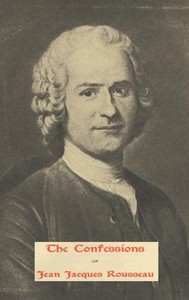
  4. 4.The Confessions of Jean Jacques Rousseau

    Jean-Jacques Rousseau, 1782

    Also memory and solitude. An eighteenth-century philosopher tells on himself: vanity, tenderness, shame and long walks, written to be judged. It reads like the first modern memoir, and it is often funny.

    Nothing that passed during that charming epocha, nothing that I did, said, or thought, has escaped my memory. The time that preceded or followed it, I only recollect by intervals, unequally and confused; but here I remember all as distinctly as if it existed at this moment. Imagination, which in my youth was perpetually anticipating the future, but now takes a retrograde course, makes some amends by these charming recollections for the deprivation of hope, which I have lost forever. I no longer see anything in the future that can tempt my wishes, it is a recollection of the past alone that can flatter me, and the remembrance of the period I am now describing is so true and lively, that it sometimes makes me happy, even in spite of my misfortunes.
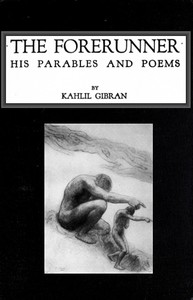
  5. 5.The Forerunner

    Kahlil Gibran, 1892

    Also solitude and melancholy. An allegorical journey into the deepest chambers of the human heart, where wisdom is found not in answers, but in the language of nature and solitude.

    They say the jackal and the moleDrink from the self-same streamWhere the lion comes to drink.And they say the eagle and the vultureDig their beaks into the same carcass,And are at peace, one with the other,In the presence of the dead thing.O love, whose lordly handHas bridled my desires,And raised my hunger and my thirstTo dignity and pride,Let not the strong in me and the constantEat the bread or drink the wineThat tempt my weaker self.
  6. 6.Ulysses

    James Joyce, 1922

    Also wonder and melancholy. One Dublin day in 1904, followed through two men's minds — an ad-canvasser and a young writer — with every joke, smell and stray thought left in.

    Their dog ambled about a bank of dwindling sand, trotting, sniffing on all sides. Looking for something lost in a past life. Suddenly he made off like a bounding hare, ears flung back, chasing the shadow of a lowskimming gull. The man’s shrieked whistle struck his limp ears. He turned, bounded back, came nearer, trotted on twinkling shanks. On a field tenney a buck, trippant, proper, unattired. At the lacefringe of the tide he halted with stiff forehoofs, seawardpointed ears. His snout lifted barked at the wavenoise, herds of seamorse. They serpented towards his feet, curling, unfurling many crests, every ninth, breaking, plashing, from far, from farther out, waves and waves.
  7. 7.Shadowings

    Lafcadio Hearn, 1900

    Also wonder and memory. A globe-trotting newspaperman in Meiji Japan collects ghost stories, insect songs, and notes on fear—curious, exact, and quietly strange.

  8. 10.Roughing It

    Mark Twain, 1872

    Also wonder and war. Twain goes west in 1861 to dodge the war and get rich: stagecoaches, con men, silver mines that pay nothing, and a coyote that outruns every dog.

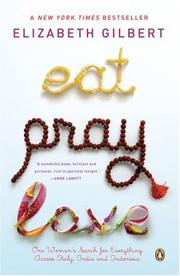
  9. 11.Eat, Pray, Love

    Elizabeth Gilbert, 2006

    Also wonder and memory. A woman walks out of a marriage and a script she never wrote, and spends a year in Italy, India and Indonesia finding out what she actually wants.

Read pages from books like this, one at a time

BookFeed is a feed of real passages from real books. It learns what moves you and finds your next book.

Open BookFeed

Free, no sign-up.