Οι Ελεύθεροι Πολιορκημένοι, σχεδίασμα Β΄
Διονύσιος Σολωμός, 1859
At the siege of Missolonghi, hunger and danger contend with spring’s beauty, remembered love and the will to remain free.
 BookFeed Ελληνικά
Solomos sets his «Οι Ελεύθεροι Πολιορκημένοι, σχεδίασμα Β΄» inside a besieged Missolonghi, where spring keeps arriving even as hunger closes in, and the poem holds beauty and danger in the same breath. If you want war shown through what people choose to keep, rather than through battle scenes, that same attention to ordinary courage runs through The Nightingale and All the Light We Cannot See, both of which stay close to private lives caught in occupation.
A page that shows it
How do you summon courage when beauty is asking you to surrender?
«Σάλπιγγα, κόψ’ του τραγουδιού τα μάγια με βία,Γυναικός, γέροντος, παιδιού, μη κόψουν την αντρεία.»Χαμένη, αλίμονον! κι’ οκνή τη σάλπιγγα γρικάει·Αλλά πώς φθάνει στον εχθρό και κάθ’ ηχώ ξυπνάει;Γέλιο στο σκόρπιο στράτευμα σφοδρό γεννοβολιέται,Κι’ η περιπαίχτρα σάλπιγγα μεσουρανίς πετιέται·Και με χαρούμενη πνοή το στήθος το χορτάτο,Τ’ αράθυμο, το δυνατό, κι’ όλο ψυχές γιομάτο,Βαρώντας γύρου ολόγυρα, ολόγυρα και πέρα,Τον όμορφο τρικύμισε και ξάστερον αέρα·Τέλος μακριά σέρνει λαλιά, σαν το πεσούμεν’ άστρο,Τρανή λαλιά, τρόμου λαλιά, ρητή κατά το κάστρο. Διονύσιος Σολωμός, 1859
At the siege of Missolonghi, hunger and danger contend with spring’s beauty, remembered love and the will to remain free.
Μαριλου Ολιβα, 2023
The Trojan War as told by the goddesses who watched it: power, sacrifice and the price of being mortal.
Homer, -750
A war stalled outside a city, a commander's wounded pride, and the best fighter in the army refusing to fight. Seven weeks of rage, grief and armour.
Kristin Hannah, 2015
Two sisters in occupied France discover how ordinary choices can become courage, betrayal, and survival.
Rebecca Yarros, 2025
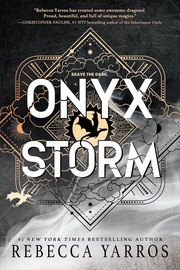
Dragons, a war college, and a rider who plans to outthink everyone. Violet leaves the wards to find allies — and a secret big enough to break them.
Carsten Henn, 2020
A bookseller who carries books to readers' doors, and a widowed reader who judges novels by their cover colour.
Leo Tolstoy, 1869
Five families, one invasion, and the small domestic hours that turn out to matter more than the battles. Read it for the people, not the history.
Suzanne Collins, 2010
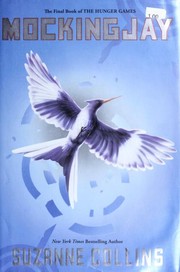
The final Hunger Games volume: the girl who survived the state's televised death match is now the face of a war she never wanted to lead.
J. K. Rowling, 2005
A school year of potions, memory-lanes and quiet dread, where the worst thing waiting is a choice you have to make alone.
Anthony Doerr, 2014
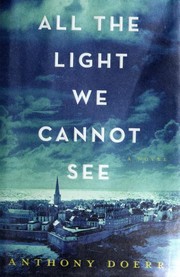
A blind Parisian girl and a German boy with a radio gift are pulled toward each other through the Nazi occupation, in a war story built from small, luminous things.
Kurt Vonnegut, 1969
Vonnegut survived the Dresden firebombing and spent twenty-three years failing to write it straight — so he wrote it as science fiction, jokes and all.
Ιούλιος Καίσαρ, -58
Caesar's own dispatch from the front: eight years of sieges, ships and betrayed tribes, written in the third person by the man commanding them.
Πηνελόπη Δέλτα, 1911
A Byzantine emperor's border war seen through two boys: one a hostage learning to keep his Greek, one a spy learning what loyalty costs. Adventure with an ache underneath. During Bulgaria's wars, a Byzantine patrol guards a captured officer only to realize their captive is a child. The passage lingers on a small, pointed deed rather than a battle. A nuance of the game. The transaction is a game. Trust is the casualty. The stakes are not the city but the person. The story is about the war of the Byzantines. The passage is set in a real eleventh-century raid. The emperor is both a conqueror and a man. The pulse of the marchers. The wounded captive is forced to march. His fall is the image. The sentence is almost without ornament. The book is авантура. The book is a historical novel for young readers, set in the eleventh-century wars of Basil II in the Balkans, where two Greek boys are taken into Bulgarian captivity. A patriotic adventure that also knows what war does to the people fighting it.
Markus Zusak, 2005
A girl steals books in Nazi Germany while Death, tired and curious, narrates her story. A voice-driven novel about words, courage, and ordinary people.
Διονύσιος Σολωμός, 1859
A fierce, strange prose satire that turns Zakynthian society into a stage for hypocrisy, war, and moral judgment.
Γεώργιος Βιζυηνός, 1895
A curious traveller meets an Ottoman soldier in a Thracian meadow who describes himself as the Moscow-Selim — a man who fought Russians, loved one, and borrowed a life he could not keep.
Khaled Hosseini, 2007
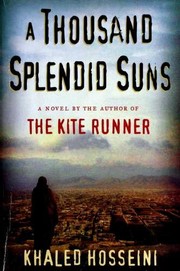
Two Afghan women, a generation apart, are thrown together by war and a violent marriage—and discover what loyalty can be built from ruin.
Πηνελόπη Δέλτα, 1937
A children's adventure written in 1937 about the secret guerrilla war in the Macedonian marshes: reed boats, night crossings, and a boy who wants to be a hero. The lake itself is the main character. It remains one of the strangest, most atmospheric Greek novels about a landscape. It is also a portrait of a woman teaching in a village where armed bands pass in the night. Behind the adventure lies a war of villagers against komitadjis, told from the Greek side. The book gives a child's-eye view of the Macedonian Struggle, and its lake hides a whole world in its reeds. It is a strange, vivid, and morally complicated book, written for young readers but worth reading as an adult. I am checking the candidate passages now. We have 40. I need to pick 6–10. The book is a Greek children's adventure novel about the Macedonian Struggle, set in the Lake Giannitsa marshes. The passages are in Greek. I must write annotations in both English and Greek. I need to choose passages that stand alone, have something that lands, end well, spoil nothing important, and are the author's own text. Not plot logistics, lists of names, or dialogue needing context. Across picks, show range. Let me evaluate the candidates. [0] 3% — Geros-Thanasis searching anxiously for a stranger in the village, October afternoon, sweating under his rayah's fez. 70 words. Stands alone? Somewhat; the anxiety is vivid. But
Geoffrey Chaucer, 1476
A raucous medieval road trip: pilgrims, a wife with five husbands, a pardoner selling fake relics, and tales that argue about marriage, fortune and who gets to speak.
Sun Tzu, -500
A 2,500-year-old manual for conflict, written for generals and read by anyone who has to hold a position, win an argument, or know when to walk away.
Emily Henry, 43
A sharp literary agent, cast as the city girlfriend in everyone else’s love story, meets a grumpy editor who might be her equal—and her rival.
Franz Kafka, 1915
A salesman wakes as a vermin and his family slowly reorganises around the problem of keeping him. Read it for the flat, exact prose and the horror of ordinary rooms.
Ευριπίδης, -405
At Aulis, a stalled Greek fleet turns a family’s private anguish into a public command—and forces each person to decide what duty costs.
Kurt Vonnegut Jr., 1969
A soldier unstuck from time, an invented planet, and a three-word shrug for every death the twentieth century could hand him.
A god descends to punish, and the darkness he brings is an argument.
Ο θείος τοξότης έχει δει τη σκηνή από τον Όλυμπο. Είναι εξοργισμένος, πρέπει να ξεπλύνει αυτή την ντροπή. Περνά στον ώμο το τόξο και την ασημένια φαρέτρα του, σε κάθε κίνησή του κροταλίζουν τα βέλη, ενώ κατεβαίνει σκεπτόμενος την τιμωρία του, σκοτεινός σαν αδίκημα, ίδιος με τη νύχτα.Η Ιλιάδα όπως την αφηγούνται οι θεές · Μαριλου Ολιβα
He has no comfort to give her except the shape of what is coming.
So speaking, to the arms of his dear spouse
He gave the boy; she on her fragrant breast
Received him, weeping as she smiled. The chief
Beheld, and, moved with tender pity, smoothed
Her forehead gently with his hand and said:—
“Sorrow not thus, beloved one, for me.
No living man can send me to the shades
Before my time; no man of woman born,
Coward or brave, can shun his destiny.
But go thou home, and tend thy labors there—
The web, the distaff—and command thy maids
To speed the work: The cares of war pertain
To all men born in Troy, and most to me.”The Iliad · Homer
What we keep in boxes when we can't admit we're letting go.
I see the rocking chair I used when my grandchildren were young, then an old crib and a ratty-looking rocking horse set on rusty springs, and the chair my daughter was refinishing when she got sick. Boxes are tucked along the wall, marked “Xmas,” “Thanksgiving,” “Easter,” “Halloween,” “Serveware,” “Sports.” In those boxes are the things I don’t use much anymore but can’t bear to part with. For me, admitting that I won’t decorate a tree for Christmas is giving up, and I’ve never been good at letting go. Tucked in the corner is what I am looking for: an ancient steamer trunk covered in travel stickers.The Nightingale · Kristin Hannah
Read pages from books like this, one at a time
Keep reading in the feedRead pages from books like this, one at a time
BookFeed is a feed of real passages from real books. It learns what moves you and finds your next book.
Open BookFeedFree, no sign-up.