
A Daughter of the Samurai
Etsu Inagaki Sugimoto (1873–1950), 1925
★ 3.91 from 1.2k ratings on Goodreads
A samurai's daughter is raised for one world — brushwork, bowing, an arranged marriage — then sent to Cincinnati. A memoir of translating yourself, line by line. This memoir moves with a thoughtful, observant pace, blending moments of quiet wonder with sharp, witty reflections on identity.
Feels like wonder. About memory.
Who it’s for
You may like it if you are interested in stories about cultural collision and personal transformation. Be aware that the writing is deeply personal and spans decades of reflection.
Why read it
It offers a unique perspective on traditional expectations meeting a new world through the eyes of a young woman navigating two very different lives.
Pages from the book
A mother unpicks generations of needlework so her daughter can pass unnoticed.
All that winter the household was busy getting me ready for school. The pathos of these preparations I did not realize; nor, I think, did any of us. Mother spent evening after evening bending her stately head over wonderful embroidered garments, ripping out, stitch by stitch, the exquisite work of hands folded in rest generations ago. Then Ishi would dye the silk and make it into plain garments suitable for my school life. One day a year when nothing in Japan was allowed to die.
The next two days the town was full of lanterns. Everybody carried one, every house was decorated with them, every street was lined with them, and at night the cemeteries were filled with glowworm lights; for every grave had above it a tiny white lantern swinging from an arch made from stems of pampas grass. It was a happy time for all Japan, and the one day in the year when no life was taken of fish, fowl, or even insect. The fishermen idly wandered about arrayed in holiday garments, the chickens cackled and crowed in their bamboo cages, and the little crickets, which children love to keep in tiny cages, sang their shrill song in the trees without the approach of a single sticky-topped pole. And charity extended loving arms to the farthest limit. She was raised to expect hardship in marriage the way she expected homework.
My first year in America was a puzzling, hurried push from one partially comprehended thought to another. Nevertheless it was a happy year. No Japanese bride is ever homesick. She has known from babyhood that fate has another home waiting for her, and that there her destiny is to be fulfilled. Every girl accepts this in the same matter-of-course way that she accepts going to school. In marriage, she does not expect happiness without hardship any more than she expects school to be a playground with no study. Etsu Inagaki Sugimoto.She crossed the Pacific in 1898 as the arranged bride of a Cincinnati merchant, and wrote this memoir in English nearly thirty years later.
Books that feel like this

Where to get it
Some of these links earn us a small commission, at no cost to you. It keeps BookFeed free.
Questions readers ask
- Is A Daughter of the Samurai for me?
- You may like it if you are interested in stories about cultural collision and personal transformation. Be aware that the writing is deeply personal and spans decades of reflection.
- What is A Daughter of the Samurai like?
- This memoir moves with a thoughtful, observant pace, blending moments of quiet wonder with sharp, witty reflections on identity. Feels like wonder. About memory.
- What should I read after A Daughter of the Samurai?
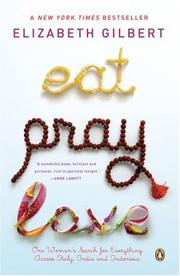
- If you liked A Daughter of the Samurai, try Eat, Pray, Love (Elizabeth Gilbert), The Book of Tea (Kakuzo Okakura) and The Education of Henry Adams (Henry Adams).
A taste of the feed
There is a kind of crying that only happens where nobody can hear it.
Everything else about the three-years-ago scene was different, though. That time, I was not in Rome but in the upstairs bathroom of the big house in the suburbs of New York which I’d recently purchased with my husband. It was a cold November, around three o’clock in the morning. My husband was sleeping in our bed. I was hiding in the bathroom for something like the forty-seventh consecutive night, and—just as during all those nights before—I was sobbing. Sobbing so hard, in fact, that a great lake of tears and snot was spreading before me on the bathroom tiles, a veritable Lake Inferior (if you will) of all my shame and fear and confusion and grief.
Eat, Pray, Love · Elizabeth Gilbert
Somewhere along the way, the ordinary laws stopped applying.
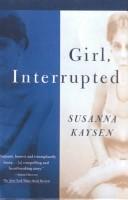
But most people pass over incrementally, making a series of perforations in the membrane between here and there until an opening exists. And who can resist an opening? In the parallel universe the laws of physics are suspended. What goes up does not necessarily come down1 a body at rest does not tend to stay at rest1 and not every action can be counted on to provoke an equal and opposite reaction. Time, too, is different. It may run in circles, flow backward, skip about from now to then. The very arrangement of molecules is fluid: Tables can be clocks; faces, flowers.
Girl, Interrupted · Susanna Kaysen
The difference between a job that empties you and a calling that spends you.
I’d tell men and women in their midtwenties not to settle for a job or a profession or even a career. Seek a calling. Even if you don’t know what that means, seek it. If you’re following your calling, the fatigue will be easier to bear, the disappointments will be fuel, the highs will be like nothing you’ve ever felt.
Shoe Dog · Phil Knight
Read pages from books like this, one at a time
Keep reading in the feed